As homelessness changes in Las Cruces, so does Community of Hope
As Mesilla Valley Community of Hope expands its campus and services, Executive Director Nicole Martinez says more first-time homelessness and rising housing costs are reshaping how Las Cruces responds to housing instability.
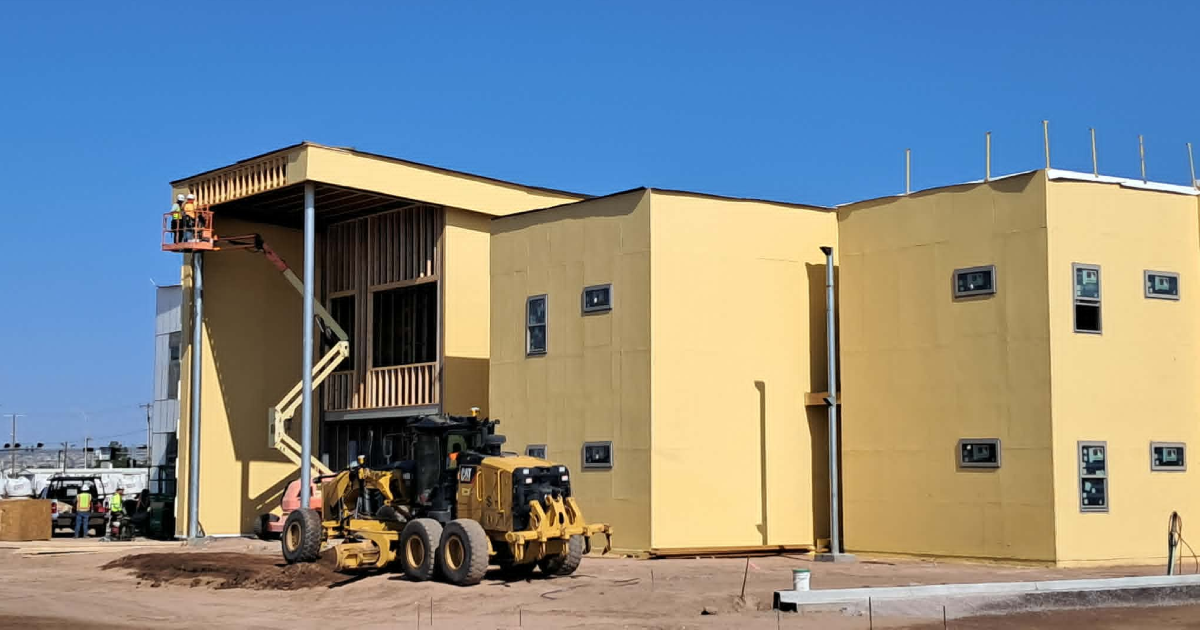
Rising rents, more first-time homelessness and an expanding focus on housing are reshaping Las Cruces' main hub for homeless services
Damien Willis, for the Southern New Mexico Journalism Collaborative
LAS CRUCES - When Mesilla Valley Community of Hope cut the ribbon on a recent expansion project, the celebration marked more than the completion of a renovation.
For Executive Director Nicole Martinez, it represented another step in the organization's effort to respond to a changing unhoused population and a growing housing crisis that is bringing more first-time clients through its doors.
"We have had some recent expansions, especially as the city has agreed to purchase a warehouse at the end of our block," Martinez said. "I want to be clear that this is not about building an empire or a legacy kind of a thing. This is really addressing the need and trying to meet the capacity.”
The recent renovation expanded Community of Hope's footprint after Casa de Peregrinos relocated operations into a separate facility nearby, freeing space for additional staff, case management and client services. But Martinez said the larger story is about how both the organization and homelessness itself have changed during her 20 years on the campus.
The renovation is one of three major projects completed or underway around the busy, multi-agency campus that are expected to boost services for homeless residents of Las Cruces.
More ‘first-time’ homeless
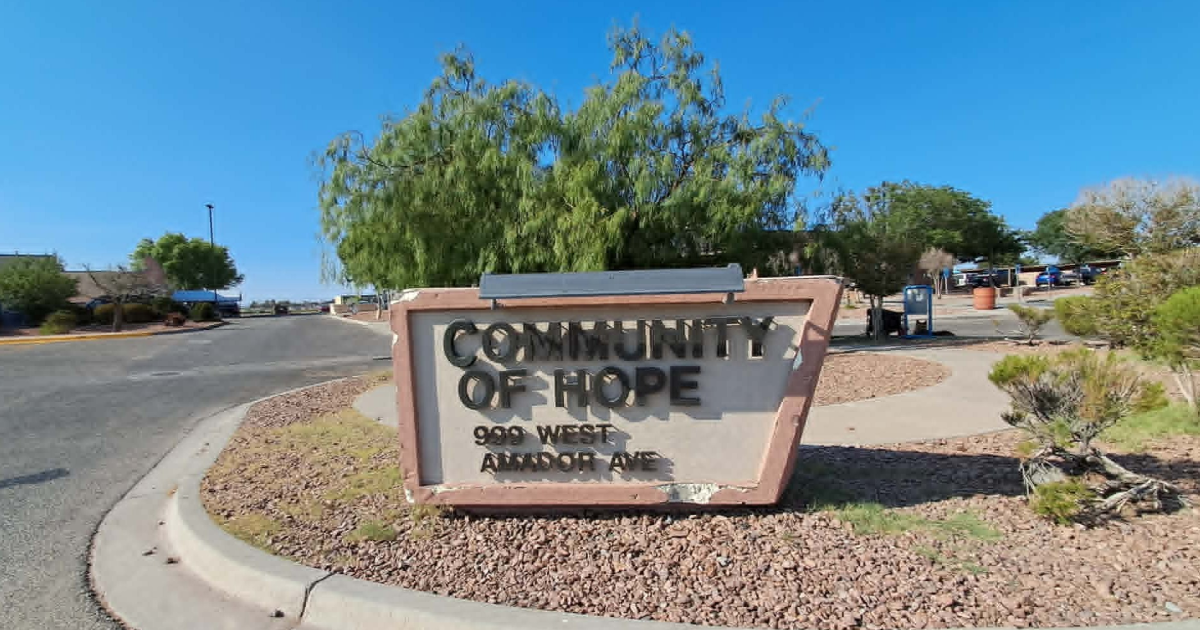
Community of Hope and its partners are serving more people than ever from the campus hub at 999 W. Amador Ave., Martinez said, driven largely by a shortage of affordable housing both locally and nationwide.
"We are all serving record numbers of clients, and a lot of that has to do with affordable housing and lack thereof, not only in our community but nationwide," Martinez said.
What concerns her most is the growing number of people experiencing homelessness for the first time.
"We're housing people every day," Martinez said. "But because so many people are unable to keep up with the unaffordable rents, they are entering the realm of homelessness. And there's no real stopgap for that."
She said many of the people now seeking help do not fit traditional stereotypes about homelessness. Some had previously maintained housing and employment but were unable to absorb rising rents, unexpected expenses, medical bills or other financial pressures.
"People are choosing between having a vehicle, driving their kids to school, or having their rent paid, or having enough food in their cupboards and on the table," Martinez said.
The trend is reflected, at least in part, in recent Point-in-Time counts, the annual nationwide census of people experiencing homelessness conducted by communities across the country each January.
According to Martinez, the annual count identified 339 people experiencing homelessness in Las Cruces this year, up from 312 last year and 281 in 2024.
But she cautioned that the increase should not be viewed as a simple year-over-year comparison.
Community of Hope's outreach team now spends much of its time in the field identifying people living outside, connecting them with services and documenting where they are staying. As those efforts have become more formalized, she said, the community has become better at finding and counting people who may previously have been missed.
"So yes, I do think that there are more people," Martinez said. "Again, a lot of them (are) first-time homeless that we are counting, but we've also gotten better at finding where people are staying and counting them."
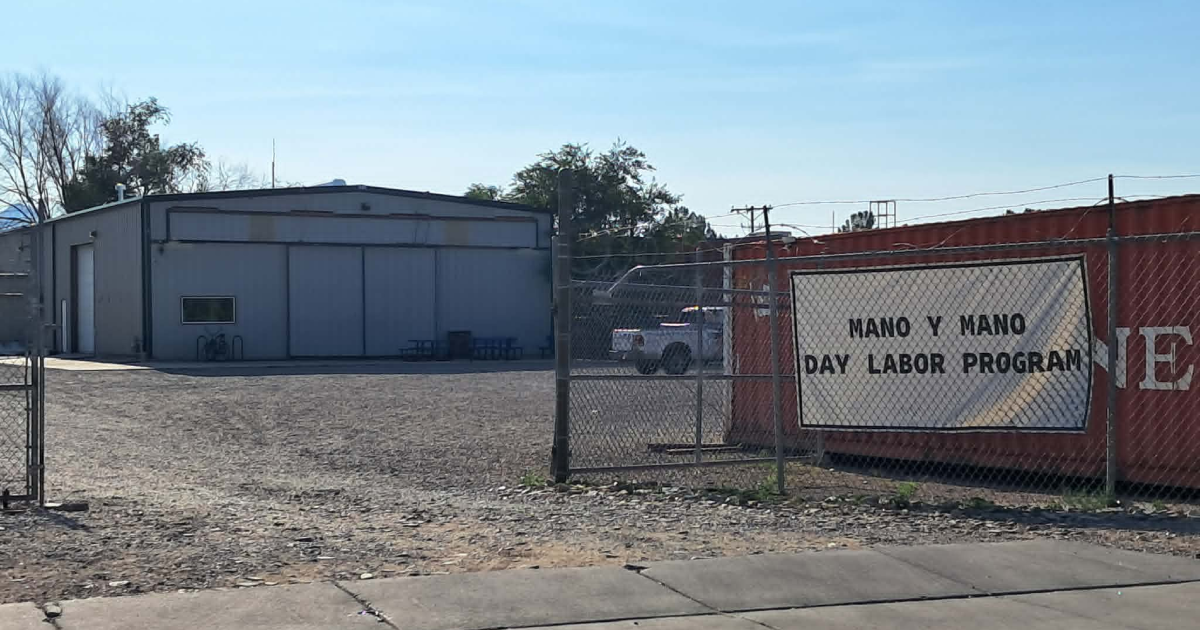
She pointed to the organization's Mano y Mano day labor program as one example of how new services have revealed previously unseen need.
"We started to see a lot of people who weren't visiting us before," Martinez said. "There are a lot of hidden homeless."
She said prevention remains one of the community's biggest unmet needs.
More than a day shelter
The growth of Community of Hope mirrors a broader evolution in how the organization approaches homelessness.
"We were originally organized as a day shelter," Martinez said.
Today, the organization provides far more than daytime services. Its programs include outreach, case management, housing assistance, Camp Hope and a range of support services designed to help clients move into permanent housing.
That shift reflects a belief that emergency services alone cannot solve homelessness.
Support local journalism
Organ Mountain News provides independent reporting for southern New Mexico without a paywall. If you value this work, please consider supporting the newsroom with a one-time or monthly contribution.
Support Organ Mountain News"I would really be disappointed to see if the city took a direction like our federal government is thinking, that building a brick-and-mortar shelter is the answer," Martinez said. "It's just keeping people homeless. It's not ending people's homelessness."
Instead, Martinez said, the organization increasingly views housing as the central solution.
"We believe in housing and that people just have a right to have housing," she said.
That philosophy has shaped both Community of Hope's programs and its physical growth.
Renovation eases cramped offices
The renovation addressed longstanding space constraints that had become increasingly difficult as programs and staffing grew.
"In the old Community of Hope, six feet apart was not a thing, even in the hallways," Martinez said.
As services expanded, so did staffing needs.
"We just kept piling staff in, even in hallway corners and things like that," Martinez said.
A 2022 master plan documented many of those same challenges, noting that Community of Hope had long outgrown its facility. Administrative staff shared offices, interview rooms had been converted into workspaces and some workstations had been installed in corridors.
The master plan also outlined a broader vision for the campus, which includes Community of Hope, Casa de Peregrinos, Amador Health Center, El Caldito Soup Kitchen and Jardin de los Niños.
Martinez said one of the campus' strengths is that services are concentrated in a single location: a soup kitchen, a childcare program serving unhoused families, an emergency food pantry and homelessness services.
"We want to make sure that we have facilities all close to each other," she said. "That reduces foot traffic of unhoused populations throughout the city so that they can access all of the things that they need right here on the campus."
Natalie Green, the city’s housing and neighborhood revitalization administrator, said the campus is one of Las Cruces’ strongest tools for responding to homelessness because it brings multiple layers of care into one place.
“Homelessness and housing are part of the same continuum, and people need different types of responses depending on where they are in their journey,” Green said. “The goal is to create a system where there is no wrong door.”
City Councilor Johana Bencomo, whose District 4 includes the Community of Hope campus, said the concentration of services is one of the campus’ strengths.
“I am very proud that the Community of Hope campus is in District 4,” Bencomo said. “Any councilor elected to this district should be deeply invested in supporting the powerful work that happens on this campus and its five organizations.”
Green said the planned warehouse and outreach space are important because outreach is often where people first begin building trust with service providers.
“It is often the first connection someone has to services, and that relationship building is what helps move people toward stability,” she said.
The master plan grew out of a desire to ensure future growth happened strategically.
"We worked with the city on a 10-year master plan to help sort of outline what that growth might look like over 10 years," Martinez said. "Kind of as a really strategic way to address homelessness."
Warehouse to become services center
That long-term vision continues to shape the campus today. In 2023, the Las Cruces City Council approved the purchase of two properties at 915 W. Amador Ave. and 921 W. Amador Ave., adjacent to the Community of Hope campus. The $438,000 acquisition included a 5,000-square-foot industrial building that the master plan had identified for future use. More funding is needed to further renovate the structure.
Bencomo said public investment remains critical as housing and homelessness policy becomes more contested.
“Because the housing conversation is becoming increasingly more hostile, at the national and local levels, with increased cuts to funding and a push for criminalization of unhoused folks, we must do everything in our power to not only protect the good work happening locally but also work toward getting even more resources for some of our most vulnerable neighbors,” she said.
Martinez said the warehouse is now being renovated for expanded outreach efforts to people who are homeless. The facility is envisioned as a cooling and warming center, a space for case management services and a place where people experiencing homelessness can access assistance. But Martinez said there is not yet an estimated opening date. Although the city has purchased the property and renovations are underway, the building still needs bathrooms and dedicated staffing before it can begin serving clients.
"We feel having this new warehouse really fits in with our mission," Martinez said.
The additional space could also help address one of the challenges Martinez identified in the organization's previous facility: helping people in crisis navigate an often-crowded environment while seeking services.
"So we're going to keep it as a big warehouse, but we're going to be able to bring people in and use it as a massive cooling station and warming station," Martinez said. "Also, to have a lot of case management services accessible to people who are there."
She said the space will allow Community of Hope to provide services in a calmer environment while continuing to expand its outreach efforts.
Angela Calhoun and her boyfriend visited the campus recently in hopes of getting a spot in the Camp Hope tent city for the homeless. She said police had kicked them out of their former camping spot near a city street. While she received word she’ll be placed in more permanent housing in a couple weeks, the two need a place to stay until then.
Calhoun expressed mixed feelings about the campus. She said expanded living spaces, like at the tent city, are much needed and she does appreciate the services. But some staff aren’t helpful, she said. The processes and decisions — like who’s accepted and who’s rejected from Camp Hope — aren’t clear, she said. For people with few resources, the systems are difficult to navigate. She’s hoping to get a job, but she can’t search for one until she has a secure place for her personal belongings.
“We’re trying to become sober, and this gives us that chance to come back and try to be a sober citizen,” she said. “But we take a step forward and two steps back.”
New apartments to serve homeless
The next major phase of that growth is already rising on the campus.
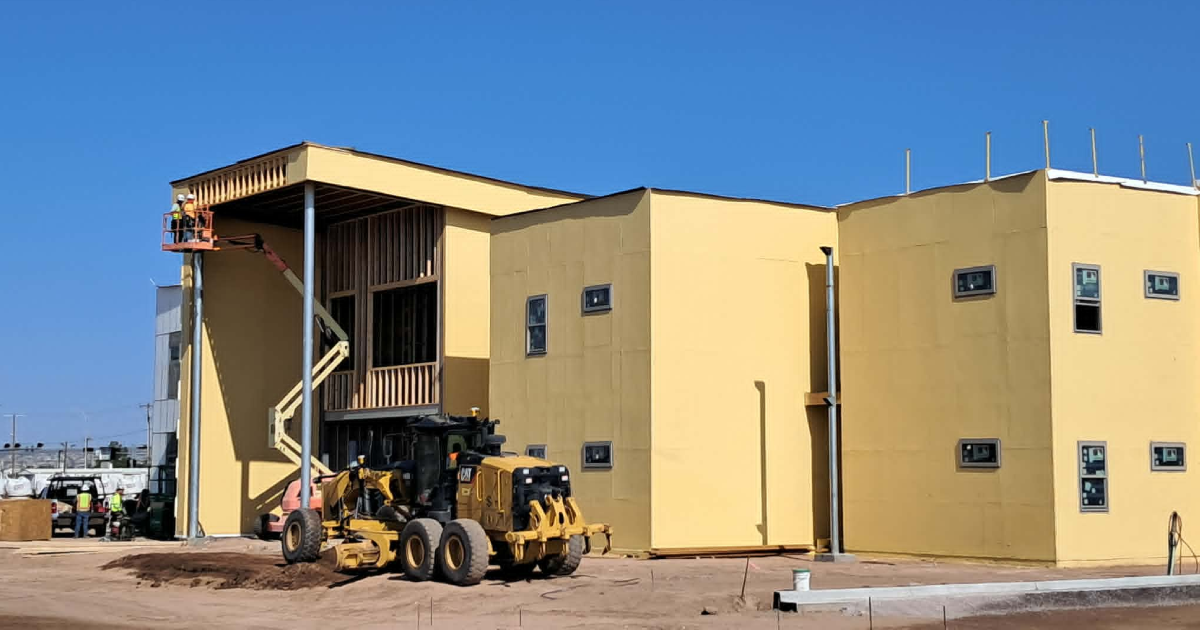
Amador Crossing, an affordable housing development under construction on the recently expanded Community of Hope campus, is expected to provide 50 housing units along with supportive services designed to help residents maintain long-term stability. The development will include 25 zero-bedroom efficiency apartments and 25 one-bedroom units.
The City of Las Cruces owns Amador Crossing, Martinez said. High Desert Housing will serve as property manager, while Mesilla Valley Community of Hope will provide case management and subsidies. The Mesilla Valley Public Housing Authority will subsidize 10 units.
Amador Crossing is designed “for people exiting homelessness, either on their own or with a voucher,” Martinez said, and is expected to open in December.
Green said Amador Crossing is significant because it adds flexibility to the local housing response.
“It is rare to see a supportive housing project of this scale that is locally funded and not tied to many of the restrictions that come with federal programs,” Green said. “That matters because many federal funding sources have become increasingly rigid, and some of those requirements can screen people out instead of screen people in.”
She said local investment allows the city and its partners to design programs around the people they are trying to serve.
“It allows us to be more responsive, practical, and humane in how we house people,” Green said.
For Martinez, projects like Amador Crossing represent the future of homelessness response.
“We can address things like income, addiction, or mental health issues,” she said. “It’s easier to do that when you’ve got somebody who’s stable in a place that feels safe instead of just out on the street corner.”
Green said the city is also seeing more first-time homelessness, especially among seniors, as rising rents, fixed incomes and other economic pressures push more people into housing instability.
State Sen. Carrie Hamblen, a Las Cruces Democrat whose district includes the Community of Hope campus, said Community of Hope’s expansion is important because it addresses homelessness through housing, case management and coordinated services.
“The expansion that's happening at Community of Hope is vital because what they're doing is literally saving lives,” Hamblen said. “We have a housing shortage throughout the country, not just in New Mexico.”
Hamblen said the organization is recognized beyond Las Cruces as a strong model for serving people who are unhoused.
“When you provide case management and services to people who are unhoused, who typically have just had something bad happen in their lives, those case management services are incredibly important in order to address the issues of homelessness in the state,” she said.
Contractors work Wednesday, July 8, 2026, to build Amador Crossing, a 50-unit apartment complex intended to help Las Cruces residents exit homelessness. The development is located at the Community of Hope campus. (Diana Alba Soular / SNMJC)
Bencomo said prevention remains a major gap, especially as rising costs place more pressure on residents already struggling to remain housed.
“People are struggling to stay afloat,” Bencomo said. “With rising costs in groceries, gas and rent and the added cuts to supportive programs like SNAP and housing vouchers, our neighbors need support to remain housed, fed and safe.”
Bencomo also said city leaders should push back against efforts to criminalize homelessness, addiction and mental illness, calling those approaches outdated and harmful.
Even after the recent expansion, Martinez said significant gaps remain, including additional affordable housing, rapid rehousing vouchers and homelessness prevention programs that can help keep people housed before they enter the shelter system.
Those needs help explain why Community of Hope continues to grow.
“I don’t think that homelessness has ever had a need addressed at the capacity that it needs to be,” Martinez said. “It’s not been the primary priority that it needs to be in order to end it.”
Ultimately, Martinez said, the goal is not simply to expand services or add buildings. It is to keep people housed before they ever need the shelter system.
“Once you become homeless, it’s a whole lot harder and way more expensive to get out of it,” she said.
Damien Willis, a journalist based in Las Cruces, is the founder of Organ Mountain News. This story was published with support from the Southern New Mexico Journalism Collaborative. SNMJC Editor Diana Alba Soular contributed to this article. For more information, visit www.southNMnews.org or surNMnoticias.org.
Keep Reading
New Mexico Environment Department to hold hearing for Project Jupiter data center air quality permit — The hearing follows strong public interest and allegations that supportive comments used residents’ and elected officials’ names without permission.
New Mexico health officials warn of heat illness as temperatures top 100 — More than 450 people have sought emergency care for heat-related conditions statewide since April 1.
Organ Mountain News featured on New Mexico In Focus — Founder and editor Damien Willis discusses local journalism, community listening and building an independent newsroom in southern New Mexico.