Doña Ana County community centers draw growing demand as staff buy water for visitors
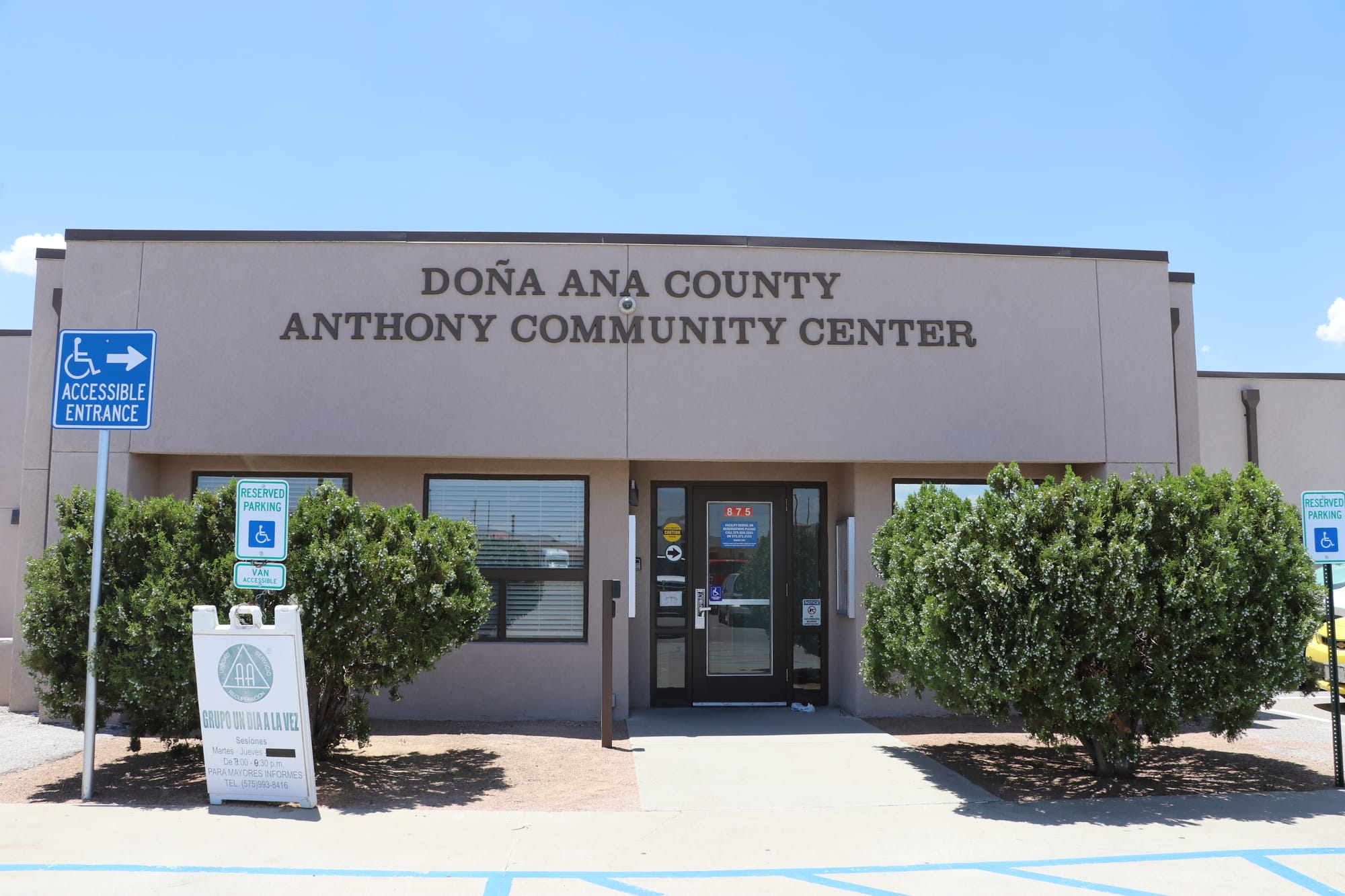
Doña Ana County community centers recorded more than 47,000 encounters last fiscal year as staff served vulnerable residents and sometimes bought drinking water themselves.

County officials say the centers recorded more than 47,000 encounters last fiscal year while providing services ranging from food assistance to relief from extreme heat
Damien Willis, Organ Mountain News
LAS CRUCES - Doña Ana County employees are sometimes buying drinking water out of their own pockets for people visiting county community centers, even as use of the facilities reaches some of the highest levels in their 25-year history.
Jamie Michael, director of the county Health and Human Services Department, told commissioners Aug. 25 that community centers with full HHS operations recorded more than 47,000 encounters during the most recent fiscal year, along with nearly 7,000 activities.
Michael said the centers had finally returned to pre-pandemic levels during the previous fiscal year, then surpassed them.
“If we look back across our 25 years, that last year was one of the highest numbers of encounters that we’ve seen in our history,” Michael said.
The county counts an encounter each time someone enters a center to access services. Michael cautioned that the figures are not exact because the department does not require visitors to sign in or provide demographic information.
“If someone doesn’t want to give us their age, we say welcome, come in,” Michael said. “If you don’t want to sign in, that’s not going to be a barrier.”
She said the purpose of the centers is not data collection, but providing people with a safe place to go.
Doña Ana County provides full Health and Human Services programming at community centers in Butterfield, Doña Ana, Organ, Radium Springs, Vado, Rincon and La Mesa, as well as the Delores Wright Community Resource Center in Chaparral.
Other county centers provide more limited services, including senior meals and monthly food distributions.
 Damien Willis
A refuge from extreme heat
That role increasingly includes giving residents somewhere to escape dangerous temperatures.
Stephen Lopez, one of the county’s three acting county managers, said the Office of Emergency Management formally activates cooling centers when the heat index reaches 110 degrees.
The threshold is based on heat index rather than air temperature alone, meaning humidity can push conditions into the danger range even when the thermometer reads lower.
But county community centers remain open and available to residents even when the formal cooling-center threshold has not been reached.
Michael said some residents already use them that way.
“Regardless of whether they’ve been activated as an official cooling or heating center, we do have a handful of people that show up there,” she said.
Michael said those visitors sometimes do not have adequate cooling or heating at home and tend to include people particularly vulnerable to temperature extremes, including older residents.
Commissioner Susana Chaparro said some county residents cannot afford air conditioning and urged the county to more aggressively publicize the centers as places where people can seek relief.
“We need to be able to take care of our vulnerable members of the community, especially the younger kids and our older folks,” Chaparro said.

Staff buying water themselves
When Chaparro asked what the centers need during the summer, Michael pointed to something basic: drinking water.
“It would be really nice to have water bottle filling stations at the community centers,” Michael said.
She then told commissioners that employees have sometimes paid for water themselves.
“I know our staff out of their pockets are buying water for people, and that’s not OK for our staff to be doing that,” Michael said.
The county tries to keep bottled water available, she said, but permanent bottle-filling stations would give visitors and employees a more reliable source.
Chaparro supported the idea.
The discussion came during the department’s annual report on the community resource centers, which provide health, social-service and community programming across the county.
Michael said centers with dedicated HHS employees also rely on volunteers, community organizations and contracted partners to extend services beyond what a single full-time employee could provide.
The centers host food distributions, senior meals, health fairs, classes, youth activities, seasonal programs and other community events.
More health services could be added
Commissioner Christopher Schaljo-Hernandez also asked whether the county could expand mobile health services at the centers, particularly sexually transmitted infection and HIV testing in rural communities.
Michael said the county has offered flu vaccinations and, at times, pneumonia and COVID-19 vaccinations at the centers, but has not provided mobile STI or HIV testing there.
She said the New Mexico Department of Health has a mobile unit the county can request and acknowledged that both transportation and stigma can prevent people from seeking testing.
Michael said school-based health centers and county community centers could help reduce those barriers and said she would explore arrangements for expanded services.
Schaljo-Hernandez suggested moving the state mobile unit around the county, potentially coordinating visits with other community events such as cleanup days.
The discussion also turned to the county’s promotoras — certified community health workers who often serve as a trusted first point of contact for residents.
Michael recommended preserving that role as the county develops a broader master plan for its community centers.
Promotoras may help open and close facilities, she said, but that is not their primary value.
“It’s the certification as a promotora, as a community health worker, that I think is the great value that they bring to the community and to county government,” Michael said.
She recommended maintaining that job function even as other resources are added to the centers.
Damien Willis is founder and editor of Organ Mountain News. If you have a personal story to share or a lead we should follow up on, reach out at OrganMountainNews@gmail.com or connect with him on X at @damienwillis.
Keep Reading
County attorney: Scott Andrews’ exit was negotiated separation, not simple resignation — Doña Ana County’s attorney says Andrews reached a negotiated separation with commissioners and that his six-month salary payment was contractually required.
Las Cruces launches weekly municipal Q&A series — Twelve free sessions will connect residents directly with city departments on topics ranging from zoning and street repairs to transit, utilities and traffic safety.
NMSU may cut tuition for El Paso-area students as UTEP turns up pressure — University officials are considering eliminating a 10% tuition premium for eligible Texas students within 135 miles as competition for students intensifies.