Lawsuit alleges Doña Ana County violated public records law, falsified documents
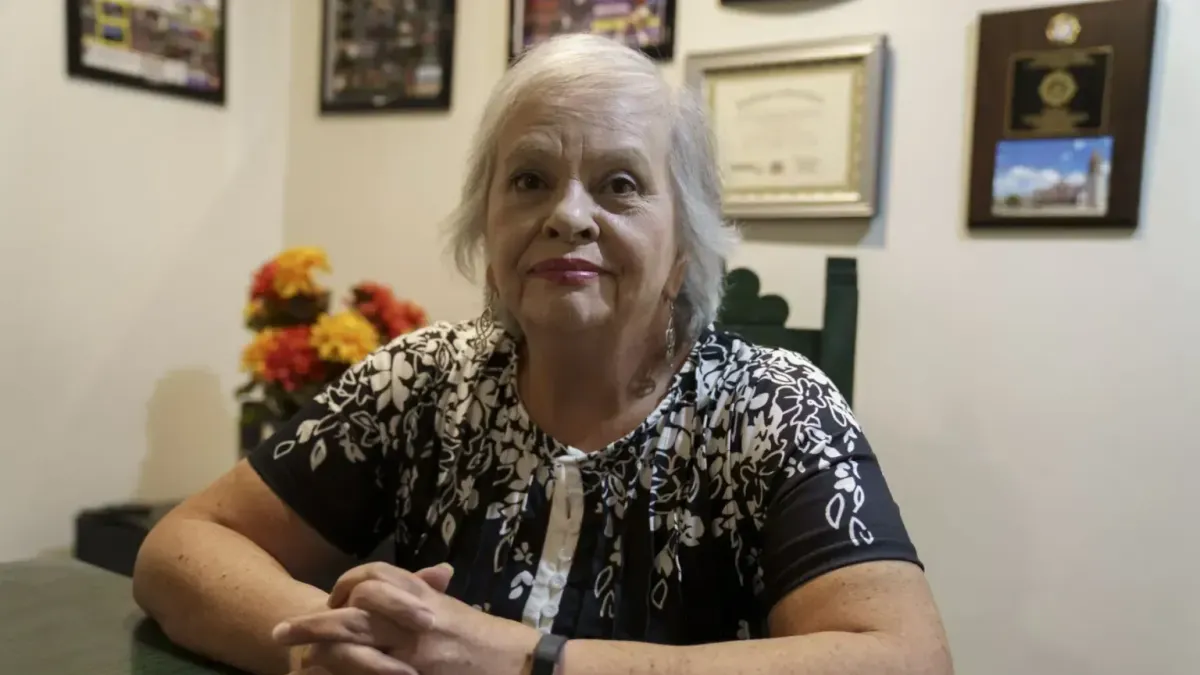
Yoli Diaz says a document produced after her records requests deleted language about cancer care for eligible indigent patients.
Ed Williams, Searchlight New Mexico
This article was originally published by Searchlight New Mexico.
A patient advocate in Las Cruces is suing Doña Ana County over an alleged “pattern and practice” of violating New Mexico’s public records laws.
Yoli Diaz, who has spent five years advocating for low-income patients in Southern New Mexico, filed the suit in the state’s 3rd Judicial District Court last week. The suit focuses on documents related to the county’s agreement with Memorial Medical Center, a hospital that has come under intense scrutiny in recent years over allegations it refused to provide cancer treatment to uninsured patients.
Diaz has worked with hundreds of patients through her nonprofit, Cancer Aid Resources and Education Inc. Several of those patients say they were denied cancer care at Memorial. As recently as last week, she spoke at a Doña Ana County Commission meeting about a patient who was denied an appointment at Memorial’s cancer center because she lacked insurance.
The lawsuit raises new questions regarding Doña Ana County’s role in the ongoing controversy surrounding the region’s largest hospital, which has faced multiple investigations by state and local authorities over its financial and medical practices.
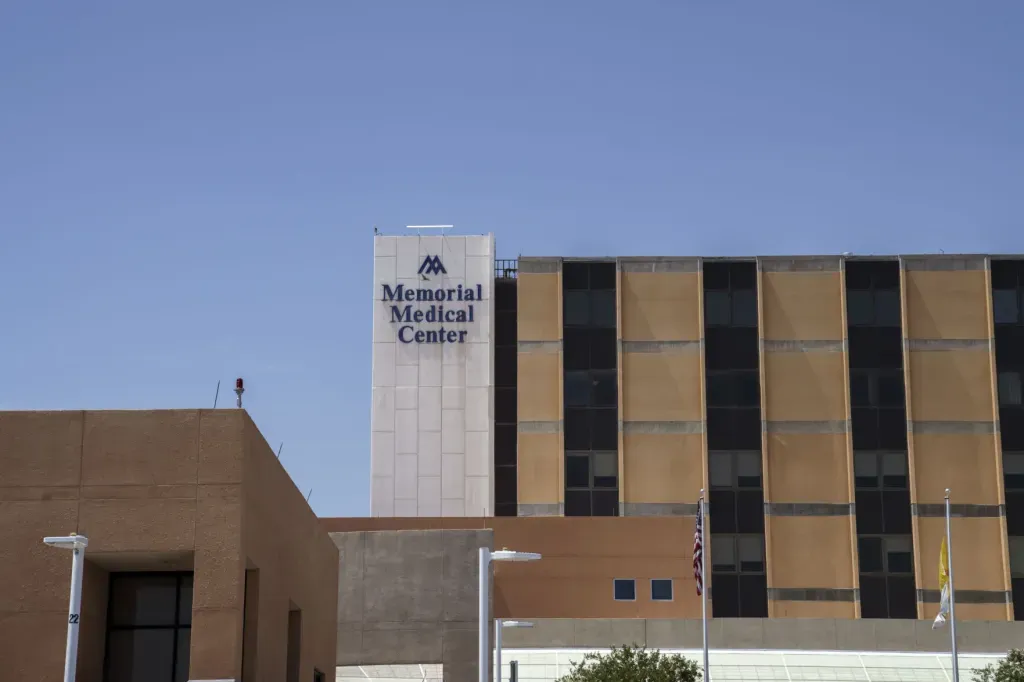
Memorial, a for-profit hospital operated by a private equity-owned firm called Life Point Health, leases its property from Doña Ana County and the city of Las Cruces. In a lease agreement signed in 2004, Memorial agreed to provide care to residents of the county, regardless of ability to pay. Eligible uninsured patients are covered by the county’s indigent health care fund.
According to documents shared with Searchlight, Memorial changed its policy in 2016 to exclude cancer care and specialty care for indigent patients — a change that would have required approval by Doña Ana County, according to the lawsuit.
“How did these things occur?” Diaz said in an interview with Searchlight. “Somebody made the decision to allow it. I want answers, and I think the public should also understand what’s going on.”
Between 2022 and 2025, Diaz submitted over a dozen public records requests for documentation of the county’s approval of the removal of cancer care from the lease agreement with Memorial, as well as other related documents. According to the lawsuit, the county repeatedly failed to comply with those requests in violation of the New Mexico Inspection of Public Records Act.
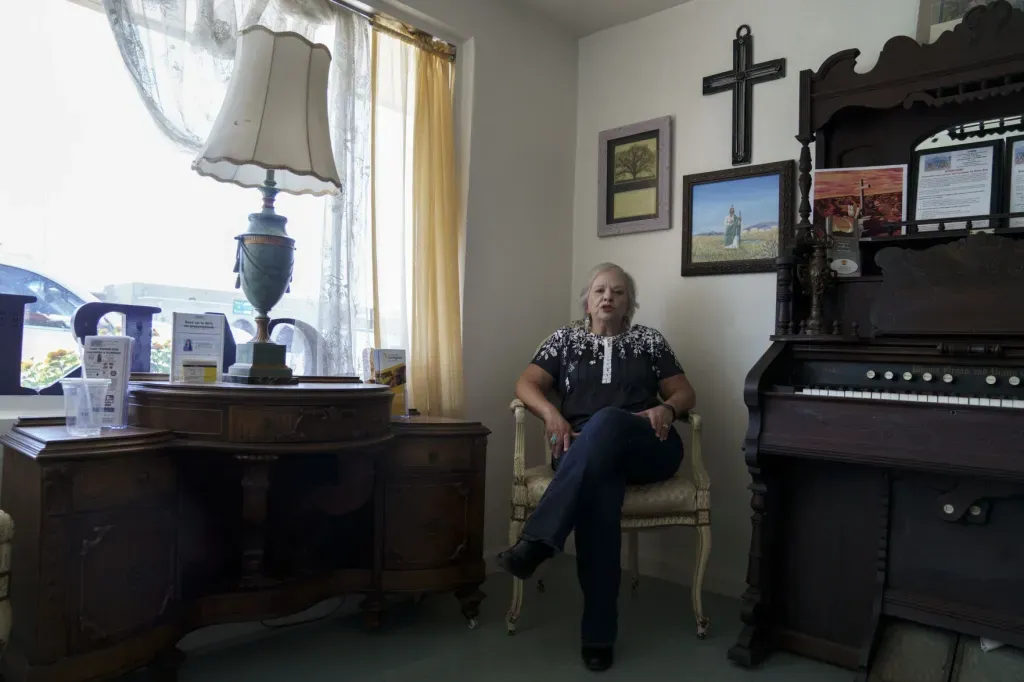
In several cases, the lawsuit says, the county withheld relevant public records entirely. In others it inappropriately claimed attorney-client privilege, completely redacting nearly 90 pages of public documents. One document, a copy of the hospital’s 2016 indigent care policy, was falsified and altered by an official at the hospital in order “to delete the statement that the hospital was no longer providing cancer care to eligible indigent patients,” the lawsuit alleges.
Records indicate the county passed the records request for its indigent care policy to staff at Memorial, who then altered the document to delete the statement that cancer care was no longer being provided, Daniel Yohalem, the attorney representing Diaz in the lawsuit, told Searchlight in an interview. (Yohalem is a former member of Searchlight’s board of directors.)
“They apparently did this to hide the fact that the decision to remove cancer care had been made,” Yohalem said. “For the county to give a document to my client that was clearly altered by Memorial is clearly a violation of IPRA.”
Officials at Doña Ana County did not respond to requests for comment, citing a policy prohibiting discussion of pending litigation.
Ongoing controversy
Diaz’s lawsuit is the latest in a series of investigations and legal actions around Memorial Medical Center’s practices stretching over a decade.
In 2015, the U.S. Department of Health and Human Services’ Office of Inspector General investigated allegations the hospital illegally paid kickbacks to a physician and billed for medically unnecessary services. That investigation led to a $1.1 million penalty against the hospital.
A 2024 investigation by NBC News reported over a dozen cancer patients had been turned away from Memorial, including a former nurse who had worked at the hospital before her cancer diagnosis and was refused treatment because the facility would not accept her insurance.
Shortly after the NBC investigation, New Mexico Attorney General Raúl Torrez launched an investigation of the hospital, citing reports Memorial had denied care or required patients to fork up full, up-front payments before receiving treatment.
“If proven, these actions may constitute violations of the Unfair Practices Act, the New Mexico Indigent Hospital and County Health Care Act, and the New Mexico Patients’ Debt Collection Protection Act,” Torrez said at the time. That investigation is ongoing.
And in March of this year, the city of Las Cruces and Doña Ana County filed a suit against Memorial Medical Center over alleged failures to provide required care for indigent and low-income patients and to make capital improvements at the hospital.
A representative from Memorial did not respond to a request for comment.
Doña Ana County — which, according to the lawsuit, would have been required to sign off on Memorial’s policy change ending cancer care coverage for indigent patients — has also come under scrutiny. On Tuesday, the New Mexico state auditor released a blistering, 355-page report detailing “systemic failures in governance, operational effectiveness, internal controls, and fiduciary responsibility” on the part of the county government, including failures to comply with public records laws.
Part of that audit outlined improper accounting practices in the county’s handling of its lease agreement with Memorial Medical Center. Specifically, the audit found the county was using revenue generated through its lease with the hospital in its general fund, rather than earmarking the money in a special healthcare-specific fund as required.
Undocumented at risk
Memorial Medical Center’s alleged refusal to provide cancer care to low-income residents has been an especially serious problem for the area’s undocumented community.
Las Cruces and Doña Ana County — home to one of New Mexico’s highest shares of immigrant residents — suffer from a shortage of doctors and medical specialists even more acute than the rest of the state.
A 2023 Legislative Finance Committee report found the county already contends with one of the worst deficits of primary care doctors. Medical specialists, particularly in pediatrics, are virtually nowhere to be found. And the problem is only expected to deepen: By 2030, New Mexico is expected to have the second-largest physician shortage in the country, with a projected shortfall of 2,118 doctors, a gap that will likely hit especially hard in the already strapped southern part of the state.

Memorial’s cancer care program is the only local option for undocumented residents needing treatment. If turned away from treatment in Las Cruces, undocumented residents often have to seek care in Albuquerque or Santa Fe — a trip that requires passing through a series of border checkpoints that lie on northbound routes from Las Cruces, and risking potential deportation.
“This affects all low-income patients, but immigrants have it the absolute worst,” Diaz said.
“Most people who live outside of checkpoints have no clue of this problem. Imagine being turned away from treatment where you live and having to decide between getting medical care and risking being deported. It’s a life-or-death situation. The county and Memorial Medical Center have a responsibility to this community to provide care, no matter who the person who needs help is.”
Diaz said her hope is that the lawsuit will not only force the county to comply with public records laws but also shed light on why the hospital was allowed to remove cancer care from its indigent care policy.
“We have asked repeatedly for answers as to who allowed the hospital to stop providing cancer care.” She said. “Now they’re going to have to cough up something.”
Ed Williams has been an investigative journalist for Searchlight New Mexico since 2018, where he has reported on systemic issues impacting New Mexico’s children and families, human trafficking, abuses of power, and more. As investigations editor, Ed oversees Searchlight’s deep-dive reporting and collaborations with local and national media partners.
Keep Reading
Former Rio Rancho mayor Hull secures GOP nomination for New Mexico governor — Gregg Hull advanced to face Democratic nominee Deb Haaland after winning a three-way Republican primary.
Lori Martinez wins Democratic House District 37 primary — Martinez defeated Tilli Villalobos in the open-seat primary and is set to face Republican Isabella Solis in November.
Lara wins Democratic primary for NM House District 34 — Ray Lara defeated Juan Fuentes in the southern Doña Ana County district, where no Republican candidate filed for November.