From phone pockets to TikTok: GISD revisits cellphone rules
GISD is revisiting student cellphone rules after officials described inconsistent classroom practices ranging from phone storage to TikTok and Snapchat use.

District officials say student cellphone practices vary widely by classroom as GISD moves to update its policy and add required digital-citizenship instruction
Damien Willis, Organ Mountain News
SUNLAND PARK - In one Gadsden Independent School District classroom, students’ phones might be tucked into storage pockets. In another, students might have them out watching TikTok or recording Snapchat videos.
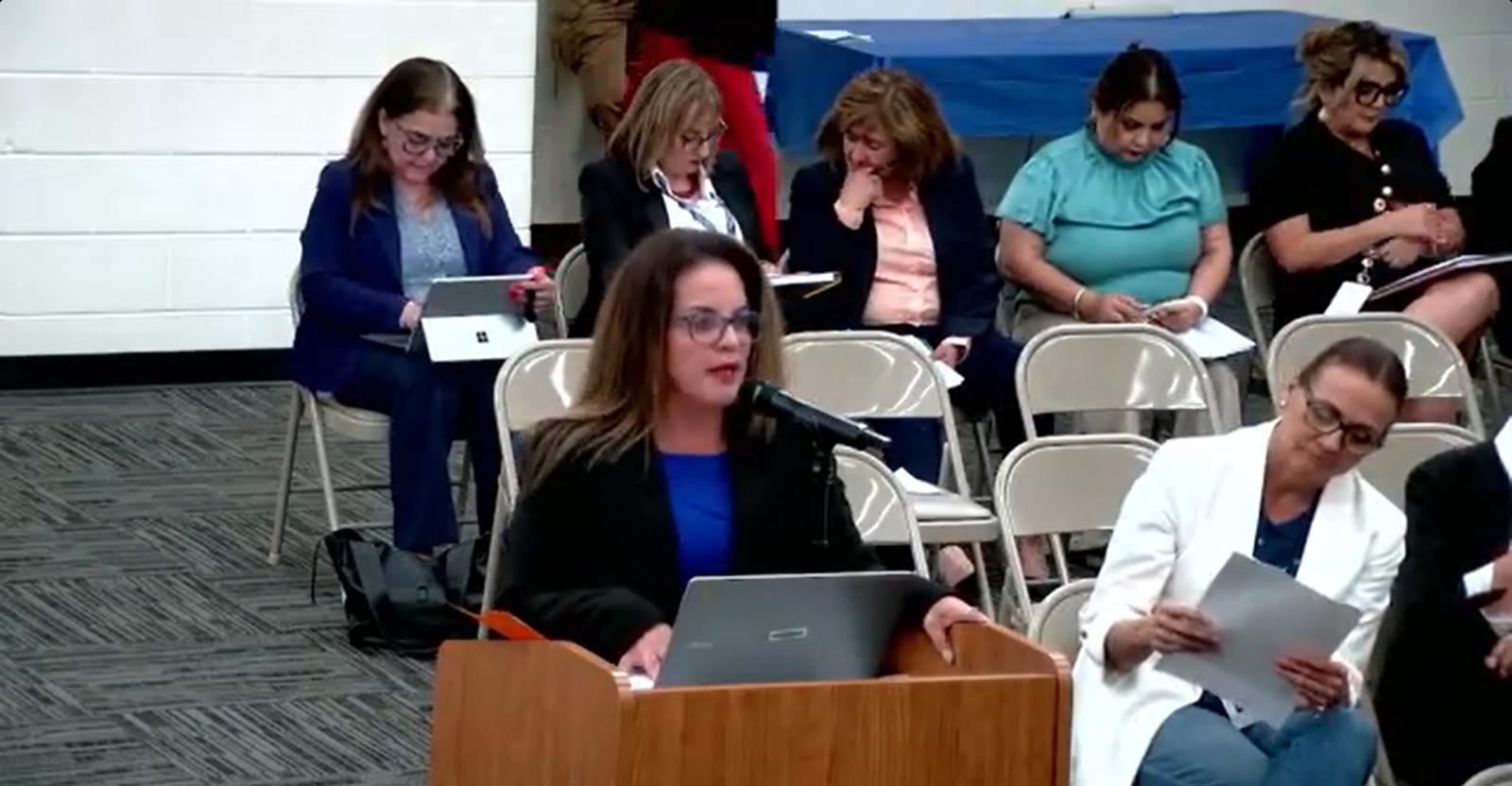
Chief Academic Officer Maria Hernandez told the GISD Board of Education on Thursday that the district is trying to eliminate that kind of inconsistency as it revisits its policy governing student cellphones and other wireless devices.
“You can walk into a classroom depending and the teacher is super strict,” Hernandez said. “The phones are in little things in pockets. And then you walk into the next class and students are in groups and their phones are out and they’re watching TikTok or they’re even recording themselves.”
“There’s no consistency across the district at this time,” she said.
The board reviewed an updated version of Policy JICJ, governing use of cellphones and electronic devices in schools. No action was taken Thursday. The policy is scheduled to return to the board for a vote Aug. 27.
Different classrooms, different rules
GISD’s current policy is dated enough to reference pagers, Hernandez told the board.
“It doesn’t really adapt to today,” she said.
Hernandez said the differences extend beyond whether students can have phones out. GISD’s secondary schools are also working on a districtwide discipline matrix after administrators found schools handling similar disciplinary incidents differently.
The cellphone proposal is intended to provide more consistent expectations while still allowing individual campuses some flexibility.
Board materials show GISD selected one of two model-policy alternatives in August 2025, but additional language is now being added to meet New Mexico Public Education Department requirements that were not included in last year’s policy advisory.
GISD previously selected what the documents call Alternative 1.
Support local journalism
Organ Mountain News provides independent reporting for southern New Mexico without a paywall. If you value this work, please consider supporting the newsroom with a one-time or monthly contribution.
Support Organ Mountain NewsWhat the policy would allow
Under that proposal, school principals, with approval from the superintendent and in compliance with board policy and administrative regulations, would establish rules governing student use of wireless communication devices during instructional hours.
Schools could also restrict device use during noninstructional periods, inside school buildings, on school property, in school vehicles and during school-sponsored activities.
The policy allows rules to differ among schools, locations, grade levels, programs and activities.
It also leaves GISD authority to completely prohibit student possession or use of wireless devices during portions of the school day or require devices to be stored in a designated area inaccessible to students.
Violations could result in disciplinary action and confiscation of a device. Under the proposed language, school officials could decide to hold a confiscated device until a conference is held with a student’s parent or guardian.
School officials would not be permitted to search a confiscated device without reasonable suspicion that a search would reveal evidence of a violation of school rules or the law.
The policy includes protections for students using devices for assistive technology, medical necessity, disability accommodations, individualized education programs or Section 504 plans. It also permits device use for health, safety, emergency or educational reasons.
Board members were also shown a more restrictive alternative that would begin with a prohibition on student wireless-device use during instructional hours and class time, subject to specified exceptions.
Hernandez recommended the first option — the approach GISD previously selected.
Digital citizenship added to the policy
The updated proposal would also require every GISD school to provide annual, developmentally appropriate digital-citizenship instruction to students from kindergarten through 12th grade.
At minimum, that instruction would address the effects of screen time on children and risks associated with social media.
The requirement is one of the additions identified in GISD’s board materials as necessary to bring the policy into compliance with updated state requirements.
The district would also be required to publish the adopted cellphone policy on its website.
The Board of Education is expected to consider formal adoption of the updated policy at its Aug. 27 meeting.
Damien Willis is founder and editor of Organ Mountain News. If you have a personal story to share or a lead we should follow up on, reach out at OrganMountainNews@gmail.com or connect with him on X at @damienwillis.
Keep Reading
Doña Ana County residents criticize local, state officials for advancing Project Jupiter — More than 300 residents pressed Las Cruces-area lawmakers on water, air quality, transparency and accountability during a legislative listening session at NMSU.
NMSU announces 2026 Domenici Public Policy Conference lineup — Heather Wilson and U.S. Sen. Ben Ray Luján headline a September conference lineup that also includes Jeff Flake, Paul Begala, Charlie Black and other political and policy figures.
New Mexico acquires nearly 11,000 acres for new Mimbres Valley wildlife area — The property borders the Gila National Forest, includes about 2 miles of the Mimbres River and protects habitat for native fish and other wildlife.