
Heinrich, Cassidy propose reading specialists for every public school
Sens. Martin Heinrich and Bill Cassidy propose federal grants for school reading specialists, with support from Las Cruces educator Nancy L. Orta.
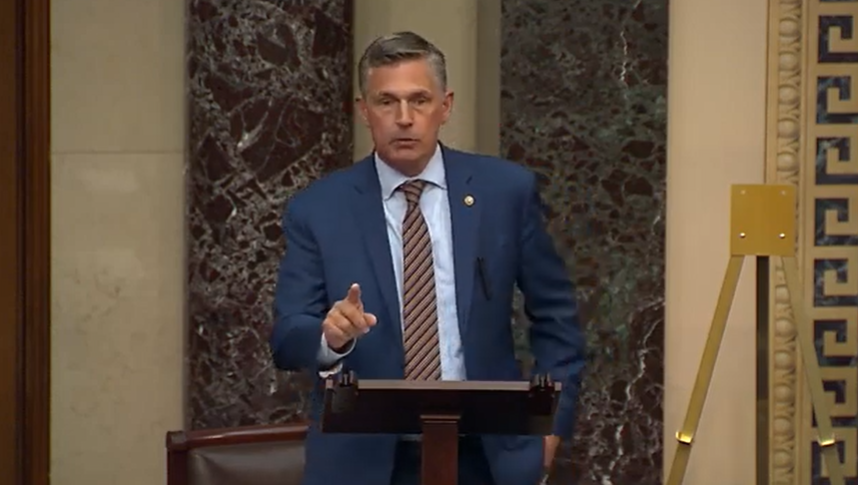
The bipartisan LIFT Act would provide competitive federal grants to expand literacy support, drawing an endorsement from Las Cruces educator and New Mexico Teacher of the Year Nancy L. Orta.
Damien Willis, Organ Mountain News
WASHINGTON - A bipartisan proposal from U.S. Sens. Martin Heinrich of New Mexico and Bill Cassidy of Louisiana would help public schools hire full-time reading specialists, with support from a Las Cruces educator recognized as New Mexico's 2026 Teacher of the Year.
The Literacy Improvement for Transformation Act, or LIFT Act, would establish a competitive federal grant program aimed at helping every K-12 public school employ at least one certified reading or literacy specialist.
Heinrich, a Democrat, and Cassidy, a Republican who chairs the Senate Health, Education, Labor and Pensions Committee, introduced the legislation Sept. 30. Heinrich's office announced the proposal Monday, Oct. 19.
Among its supporters is Nancy L. Orta, a K-12 intervention and data coach and content specialist at Las Cruces Public Schools.
“Providing every elementary and secondary school in New Mexico with a literacy specialist would build on the momentum created by our state's investment in the Science of Reading,” Orta said in a statement released by Heinrich's office.
 Organ Mountain News

She said literacy specialists can help teachers identify struggling readers, model effective language arts instruction and provide coaching to educators.
“New Mexico's children and their families are too important for us to stop investing in their futures,” Orta said.

Federal grants would target reading support
The legislation, designated Senate Bill 5659, would authorize five-year grants to eligible school districts, state education agency partnerships, certain nonprofit organizations, qualifying tribal schools and higher education partnerships.
Funding could support hiring, training and retaining reading specialists, including helping existing educators obtain literacy certifications or move from part-time to full-time specialist positions.
Schools receiving support would be expected to direct the funding toward improving reading proficiency, particularly among students struggling with literacy and students with disabilities, including dyslexia.
The bill would require specialists whose positions are supported by grant money to spend at least 80% of their working time directly with students and teachers on literacy improvement.
Applicants would have to demonstrate persistent shortages of reading specialists, document student needs and explain how they would sustain the positions after federal grant funding ends.
The legislation also establishes priorities for states with lower reading proficiency rates, followed by proposals emphasizing elementary education and high-need districts.
“Every child deserves the chance to succeed, and that starts with learning to read and write at grade level or above,” Heinrich said.
Cassidy emphasized the needs of students with dyslexia and other reading difficulties.
“This legislation helps schools put more trained reading specialists in classrooms so students with dyslexia and other struggling readers receive the instruction they need to succeed,” Cassidy said.

Proposal awaits congressional action
The bill has been referred to the Senate Health, Education, Labor and Pensions Committee. It has not been enacted, and the introduced text does not specify a dollar amount for the proposed grant program.
The measure follows an earlier version of the LIFT Act introduced by Heinrich in 2024.
Along with Orta, the latest proposal is endorsed by the National Center for Learning Disabilities, Teach Plus and The May Center.
Supporters say the additional specialists could help schools intervene earlier when children fall behind in reading while providing teachers with more specialized instructional support.
The proposal would not immediately place specialists in every school. Its implementation would depend on congressional approval, funding and successful grant applications.
The full text of Senate Bill 5659 is available through the U.S. Government Publishing Office.
Damien Willis is founder and editor of Organ Mountain News. If you have a personal story to share or a lead we should follow up on, reach out at OrganMountainNews@gmail.com or connect with him on X at @damienwillis.


