
Heinrich bill would revive health career program as New Mexico faces worker shortage
U.S. Sen. Martin Heinrich is pushing to revive a federal health career training program as New Mexico faces a shortage of at least 5,000 health care workers.
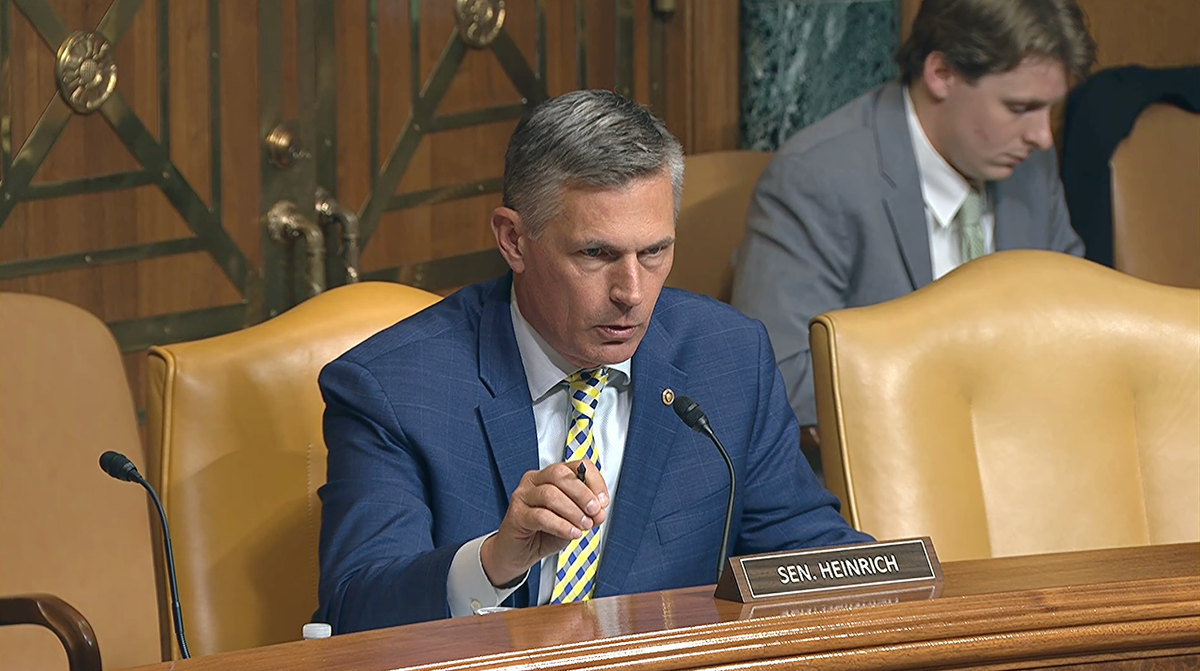
The Pathways to Health Careers Act would provide job training and support services as 32 of New Mexico’s 33 counties face shortages in primary, behavioral or dental care
Organ Mountain News report
WASHINGTON - U.S. Sen. Martin Heinrich is pushing to revive and expand a federal health career training program as New Mexico faces a shortage of thousands of health care workers.
Heinrich, D-N.M., and Sen. Ron Wyden, D-Ore., reintroduced the Pathways to Health Careers Act, which would restart the Health Profession Opportunity Grant program and provide job training, career coaching and support services for people pursuing health care careers.
According to Heinrich’s office, 32 of New Mexico’s 33 counties are designated as Health Professional Shortage Areas for primary care, behavioral health, dental health or some combination of the three.
The state needs at least 5,000 additional health care workers to address current shortages, Heinrich’s office said.
“The health care provider shortage in New Mexico isn’t theoretical. It’s an everyday reality,” Heinrich said. “New Mexicans are being forced to either endure months-long appointment wait times or, if they can, paying the high costs of traveling out of state or going to the ER to get the health care they need, when they need it.”
The Health Profession Opportunity Grant program was created under the Affordable Care Act in 2010 and expired in September 2021.
The program combined occupational training with services designed to address barriers that can prevent people from entering or completing health career programs. Those services included child care, transportation assistance, stipends, work supplies, career coaching and job placement.
Heinrich’s legislation would provide $435 million annually through 2031 to expand the program to every state.
New Mexico would be guaranteed at least two grant awards under the proposal. The bill also would reserve funding for Indian tribes, Tribal organizations and Tribal colleges and universities.
Training supported through the program could lead to careers including nursing, emergency medical services, health information technology and surgical technology.
The legislation also emphasizes apprenticeships, stackable credentials and continued training to help workers advance after entering the health care field.
“Our Pathways to Health Careers Act helps address the health care provider shortage by strengthening the pipeline to high-quality health care careers, to get more New Mexicans the care they need to live healthy lives,” Heinrich said.
The previous Health Profession Opportunity Grant program served more than 60,000 participants through 32 programs in 23 states, according to Heinrich’s office.
The University of New Mexico Health System has endorsed the legislation.
“The health care workforce shortage is one of the most significant challenges facing our nation’s health system,” UNM Health Sciences Executive Vice President and UNM Health System CEO Michael Richards said. “By supporting training alongside services like child care, transportation and career coaching, this legislation helps build a stronger workforce and expands access to care where it is needed most.”
The bill is also cosponsored by U.S. Sen. Ben Ray Luján, D-N.M., and five other senators. Companion legislation has been introduced in the U.S. House.
Keep Reading
Doña Ana County seeks 11 residents for Project Jupiter monitoring committee — Interest forms are due Aug. 31 for a citizen-led panel that can hold independent information forums and provide another avenue for community oversight.
New Mexico food banks describe significant increase in demand after federal food aid cuts — Roadrunner Food Bank reported a 79% year-over-year increase in demand as SNAP changes and rising grocery costs put more pressure on families.
LCPS seeks community input on new grades 6–12 school — Focus groups Tuesday and Wednesday will help shape the mission, identity and educational model of a new school planned for fall 2027.


