
LCPS rethinks school HVAC designs after costly problems at Centennial
LCPS plans a $600,000 boiler fix at Centennial High while district officials reconsider HVAC designs after recurring problems at Centennial and Mesa.
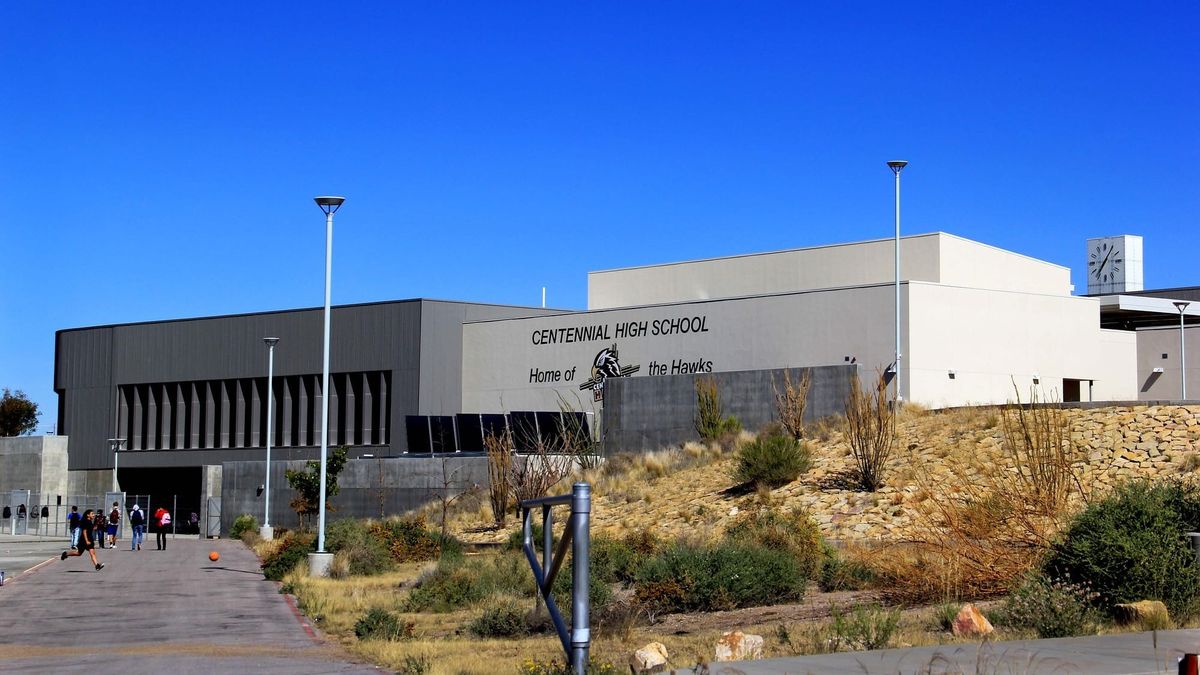
District plans $600K fix for leaking heating line as officials question systems used at newer schools
Damien Willis, Organ Mountain News
LAS CRUCES - Las Cruces Public Schools plans to abandon a leaking underground heating line at Centennial High School and install a dedicated boiler system for the school’s ninth-grade academy, a $600,000 fix that prompted district officials and board members to question broader design decisions at some newer schools.
Steven Rodriguez, LCPS chief of operations, told the Board of Education’s Finance Subcommittee on Thursday that the district has known for about a year that the line between Centennial’s main boiler system and ninth-grade academy was losing pressure.
The leak has caused problems heating the academy because the system is losing hot water, Rodriguez said. Rather than excavating through a large area of concrete and dirt near the front of the school in an effort to locate the leak, LCPS plans to cap and abandon the line and install a separate boiler system for the academy.
“So now the kids will be warm in the winter instead of being cold like we’ve been having those issues,” Rodriguez told the committee.
The district is reclassifying $600,000 within its Capital Improvements SB-9 State Match fund for the Centennial boiler project.
Rodriguez said part of the problem stems from the way the school’s underground lines were installed. The pipes were directly buried without accessible chases, making repairs difficult when leaks develop. A similar problem occurred several years ago on a line serving Centennial’s gym, he said.
Board member Teresa Tenorio used the discussion to raise a broader question about Centennial’s heating and cooling systems.
“What were they thinking?” Tenorio asked of the developers, designers and architects involved in the school.
Rodriguez said district officials ask many of the same questions.
He said LCPS needs to become more assertive during the design process and focus more closely on whether buildings and mechanical systems can be affordably maintained over decades.
“We need to build a building that we can maintain for 50 years and not cost us a lot of money,” Rodriguez said.
He added that the district cannot simply allow architects to design what he called the “Taj Mahal” without considering the life-cycle costs of operating and maintaining those systems.
Support local journalism
Organ Mountain News provides independent reporting for southern New Mexico without a paywall. If you value this work, please consider supporting the newsroom with a one-time or monthly contribution.
Support Organ Mountain NewsRodriguez said some of LCPS’ biggest HVAC struggles have occurred at newer schools, particularly Centennial and Mesa Middle School.
He pointed to Mesa Middle School’s geothermal heating and cooling system as another example of a design that has proved difficult in southern New Mexico conditions.
“Mayfield has a chiller, Mesa has geothermal heating and cooling, which doesn’t work when you’re trying to cool something with 115-degree groundwater,” Rodriguez said.
At Centennial, Rodriguez said the district has also changed how it operates the school’s ice-storage cooling system. Previously, the system could exhaust its stored ice before peak electricity rates, leaving LCPS to rely on more expensive mechanical cooling at the wrong time of day. Staff have since adjusted operations to use mechanical cooling earlier and reserve ice for peak-rate periods, he said.
The district is also changing how it tests HVAC systems before students return to school. Rodriguez said running cooling equipment in an empty building does not reproduce the heat generated by roughly 1,000 or more students and employees. LCPS now plans to bring hot outside air into buildings during summer testing to put systems under greater load and identify problems before classrooms are occupied.
Those lessons are already influencing plans for other campuses.
Rodriguez said LCPS is moving away from a centralized system for the new East Picacho school and instead plans to use individual packaged units. Under that approach, a mechanical failure would affect one classroom rather than a larger portion of the school.
He also said the district will need to apply what it has learned as it moves toward a major project at Mayfield High School.
“We need to be more strategic in the selections of these things,” Rodriguez said, “and what are going to be more efficient and help support our students and staff to be cool, but also life cycle costs of those.”
Damien Willis is founder and editor of Organ Mountain News. If you have a personal story to share or a lead we should follow up on, reach out at OrganMountainNews@gmail.com or connect with him on X at @damienwillis.
Keep Reading
Doña Ana County seeks 11 residents for Project Jupiter monitoring committee — Interest forms are due Aug. 31 for a citizen-led panel that can hold independent information forums and provide another avenue for community oversight.
New Mexico food banks describe significant increase in demand after federal food aid cuts — Roadrunner Food Bank reported a 79% year-over-year increase in demand as SNAP changes and rising grocery costs put more pressure on families.
LCPS seeks community input on new grades 6–12 school — Focus groups Tuesday and Wednesday will help shape the mission, identity and educational model of a new school planned for fall 2027.


