Lone candidate for New Mexico governor attends climate-focused town hall
Only one 2026-gubernatorial candidate — Ken Miyagishima — showed up in person at a climate-focused town hall Thursday, while other Democrats sent surrogates and no Republicans appeared. The absence comes despite an online flyer listing 10 candidates.
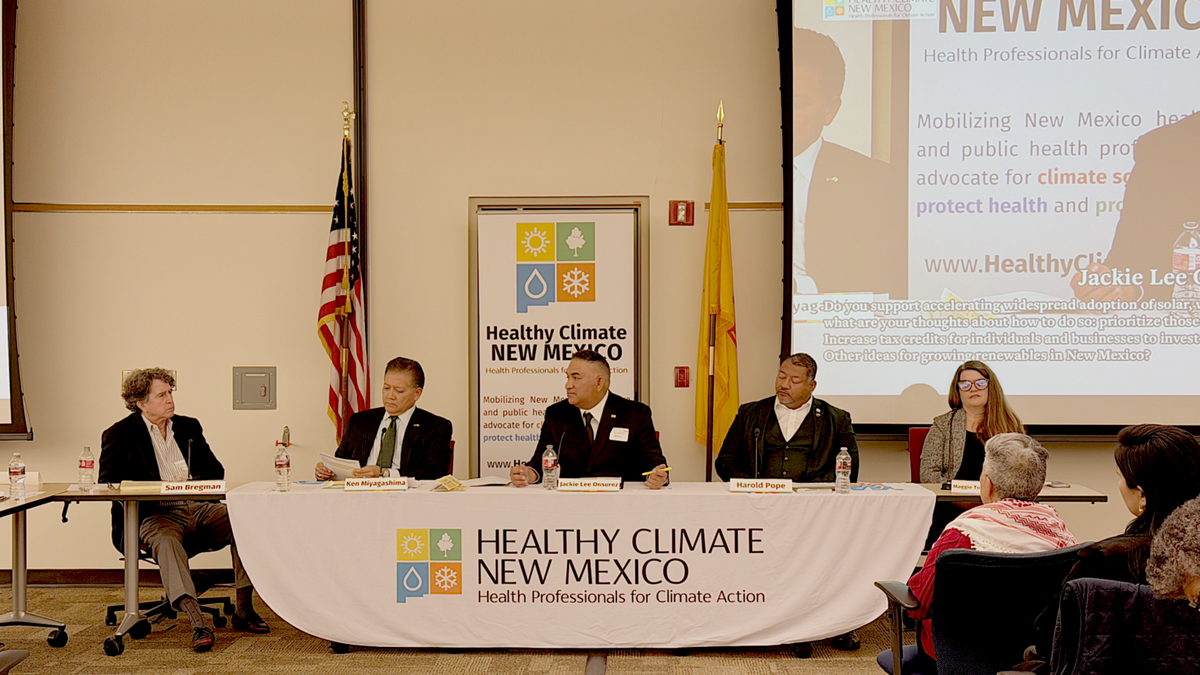
Representatives for six Democratic candidates attended event, but no Republicans
Joshua Bowling, Source New Mexico
This article was originally published by Source New Mexico.
When a nonpartisan organization announced it would host a town hall meeting where candidates for the highest offices in New Mexico could discuss their plans to address climate change, it posted an online flyer with 10 candidates’ headshots.
By the time more than 100 people filed into an Albuquerque community college building on Thursday night to hear the candidates, only one gubernatorial hopeful stood before them.
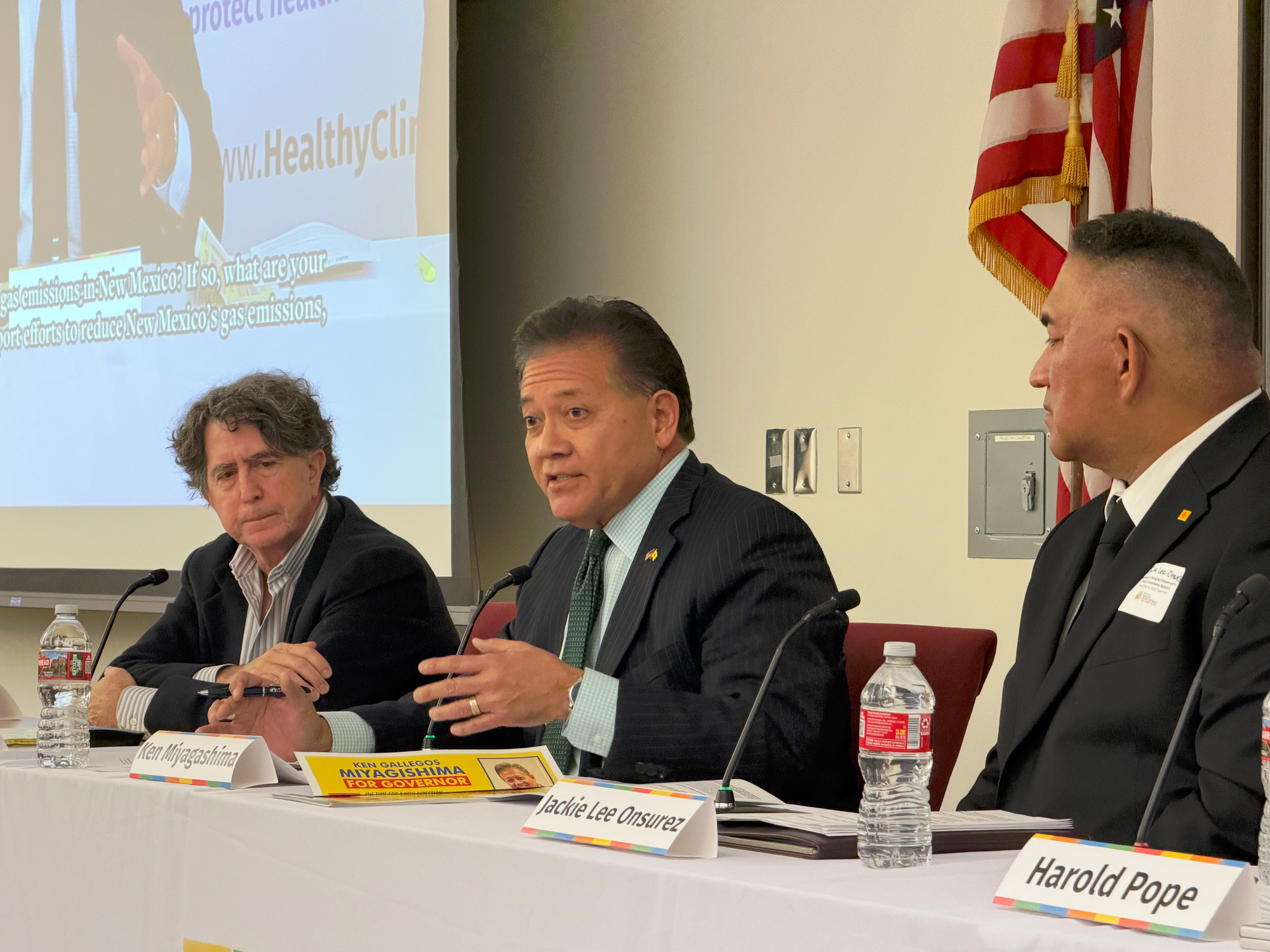
Former Las Cruces Mayor Ken Miyagishima, who is seeking the Democratic nomination for governor, used his time behind the microphone to speak about his experience leading clean-energy initiatives in the state’s second-largest city. His fellow Democrats running for the position — former U.S. Interior Secretary Deb Haaland and Bernalillo County District Attorney Sam Bregman — sent surrogates to answer questions on their behalf.
No Republican candidates participated in the event. Rio Rancho Mayor Gregg Hull and freshman state Sen. Steve Lanier (R-Aztec) are both in the race for governor and prominent cannabis CEO Duke Rodriguez has flirted with candidacy. Republican lieutenant governor candidate Manny Lardizabal also did not attend. Event organizers said they invited “all known” candidates for both races.
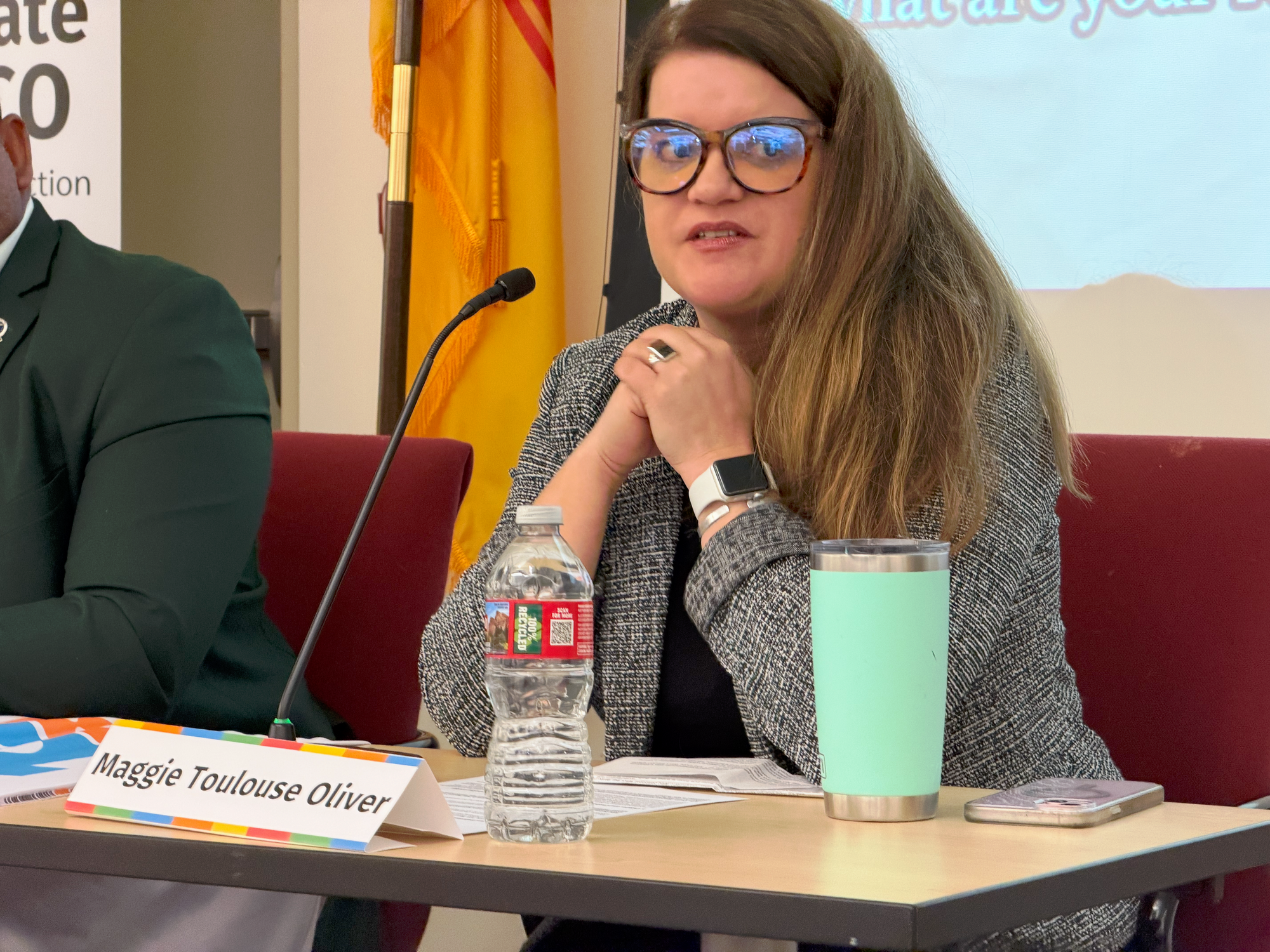
Three candidates for lieutenant governor — Loving Village Mayor Pro Tem Jackie Lee Onsuarez, state Sen. Harold Pope (D-Albuquerque) and New Mexico Secretary of State Maggie Toulouse Oliver — also attended in-person.
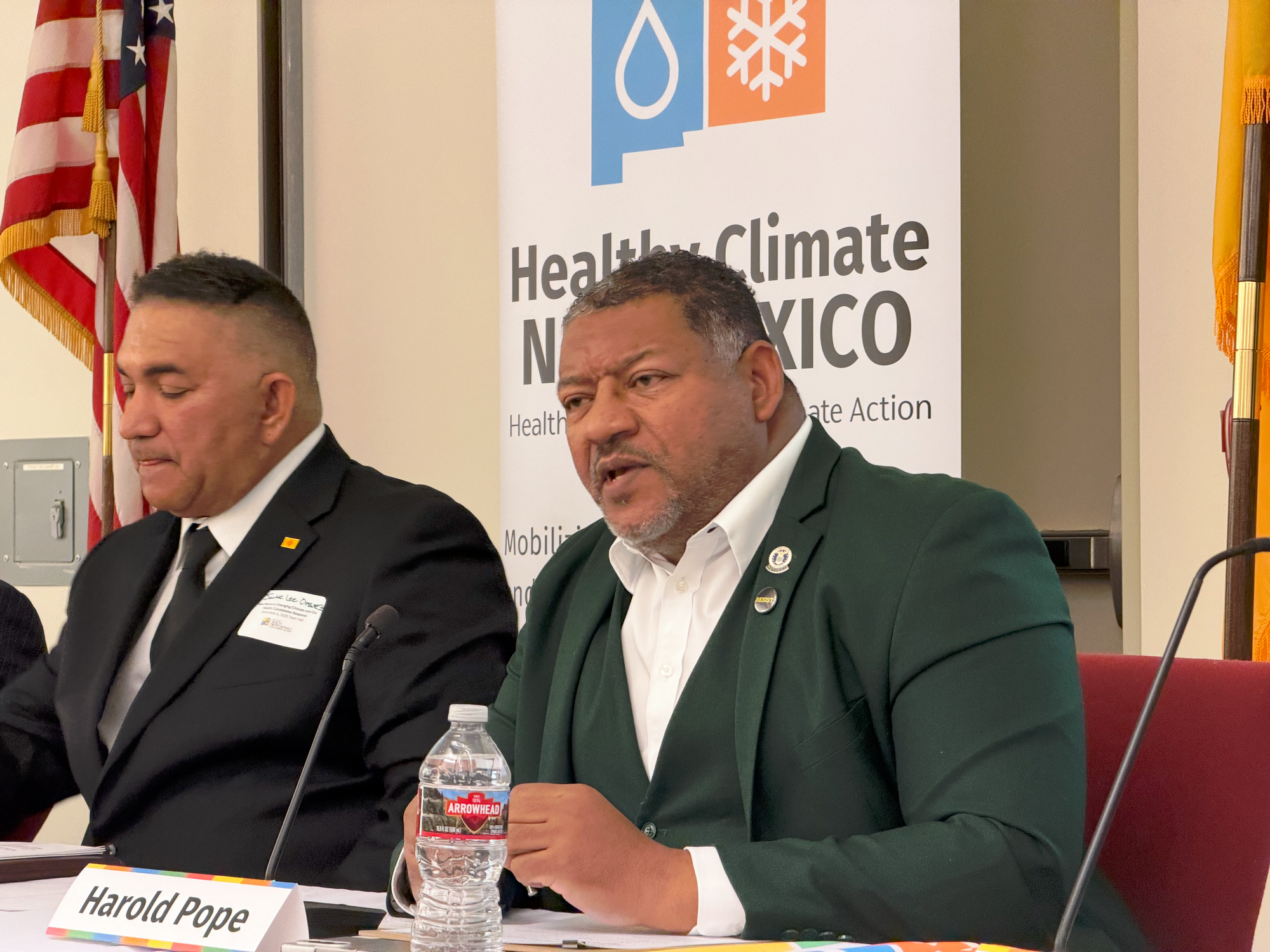
Members of the exclusively Democrat panel disagreed on little and were not allowed to issue rebuttals during the event, which was sponsored by the nonpartisan group Healthy Climate New Mexico. All spoke broadly of reducing greenhouse gas emissions, embracing renewable energy sources and finding ways for the state to fund responses to extreme weather-related disasters.
Candidates had 90 seconds each to answer questions. An air horn signaling the end of each candidate’s allotted time often sounded before they discussed the details of their policy proposals.
The primary election for governor and lieutenant governor is June 2, 2026.
Greenhouse gas emissions
Throughout the night, candidates overwhelmingly agreed on the issues facing New Mexico. Everyone who spoke said their campaigns prioritize reducing greenhouse gas emissions across the state.
Schnurer, representing Bregman’s campaign for governor, said the state needs more regulatory oversight and enforcement of polluting developments. Miyagishima touted Las Cruces as being among the first cities in the state to install solar panels on municipal buildings and purchase electric buses.
Onsuarez, though, said the problem may lie in the Capitol building.
He praised the state’s Energy Transition Act that requires utilities to run on completely renewable energy by 2045, but said “we need to move faster.” He said implementing longer legislative sessions and term limits are important steps in doing so, echoing a November proposal from the Bregman campaign.
“We need to extend our legislative sessions — we need longer time so that environmental issues can truly be debated,” Onsuarez said.
Renewable energy
Similarly, candidates agreed the state should increasingly embrace renewable energy resources such as solar, wind and geothermal energy.
“We have the land, we have the wind, we have the sun,” Toulouse Oliver said.
Conservation Voters New Mexico CEO Demis Foster appeared virtually on behalf of Haaland’s campaign and said that Haaland believes New Mexico ought to be “the renewable energy capital of the country.”
“She’s going to recruit more clean energy projects to our state that hire New Mexicans into good-paying union jobs, give them the training they need and lower energy costs,” she said.
Discussions over renewable energy often do not focus on the logistics of powering homes, cars and businesses with wind, solar and geothermal sources. Modernizing the state’s energy grids and transmission capacity will be vital steps in implementing more renewable energy sources, Bregman’s campaign representative Schnurer said.
Bringing jobs to oil and gas towns
Most every candidate said that New Mexico’s elected leaders need to make in-roads to communities where oil and gas jobs are disappearing as the state transitions to cleaner energy sources. No one should have to choose between their health and a paycheck, they said.
“I think this is the story of New Mexico,” Pope said. “It’s been uranium mining, coal mining…this isn’t an option. We have to look out for oil and gas workers and those communities. We need to set up an oil and gas transition fund that would help the impacted communities with job training, apprenticeship programs and economic diversification.”
Foster said that while leading the U.S. Department of the Interior, Haaland worked to issue $775 million to 21 states to clean up orphaned oil wells and help workers transition to other careers.
Water and extreme heat
Moderators asked candidates how they would handle the ongoing drought affecting New Mexico’s water. Gov. Michelle Lujan Grisham has made addressing the state’s water woes a priority and has proposed introducing treated brackish water and treated “produced water” — wastewater from oil and gas production — into the state’s strategic water supply.
Pope said he would “push back” on that, if elected. “That’s really toxic waste,” he said, calling the proposal an act of “greenwashing.”
As much as New Mexico feels the effects of drought, it also increasingly feels the effects of extreme heat. Candidates expressed interest in crafting state law similar to a recent Albuquerque ordinance, which requires landlords to furnish rental units with air-conditioning units.
Money for climate-related disasters
Moderators asked candidates how they would respond to other extreme climate disasters, alluding to the Hermit’s Peak-Calf Canyon Fire and the fire and flooding in Ruidoso.
Across the board, candidates expressed interest in creating a state-managed “extreme weather resilience fund” that could take the financial burden off of rural and tribal communities during these episodes.
State lawmakers passed and Lujan Grisham signed last April Senate Bill 48, the Community Benefit Fund, which contains $210 million for communities to use for a series of projects to mitigate climate change impacts.
“We’d (also) need to have a fund for remediation,” Pope said. “If we had something like that with what we’re dealing with with the fires up north and in Ruidoso, we could’ve done a lot to prepare but now we’re having to fund a lot of that remediation.”
Joshua Bowling is a senior reporter for Source New Mexico. He's reported in New Mexico, where he broke stories of lavish spending at Western New Mexico University and more, since 2022.
Project Jupiter donates $50K to Casa de Peregrinos during Sunland Park pop-up pantry — A $50,000 donation helped fund a pop-up food distribution as demand for assistance continues to rise across Doña Ana County.
$2.3M US 70 roadway rehabilitation project to begin Monday — Motorists can expect lane closures between Organ and White Sands Missile Range during a short-term paving project.
Registration now open for Las Cruces winter break camp — Families can sign up children for low-cost camp options during the upcoming school break.