Measles: Southern New Mexicans recall the pains of the pre-vaccine era
Residents of Alamogordo and Las Cruces share firsthand memories of measles before vaccines, as new cases in detention centers renew concerns about vaccination gaps.
Past generations embraced life-saving vaccines, historian says
Elva K. Österreich, Southern New Mexico Journalism Collaborative
Editor’s note: This is the second in a series of articles examining measles in Southern New Mexico.
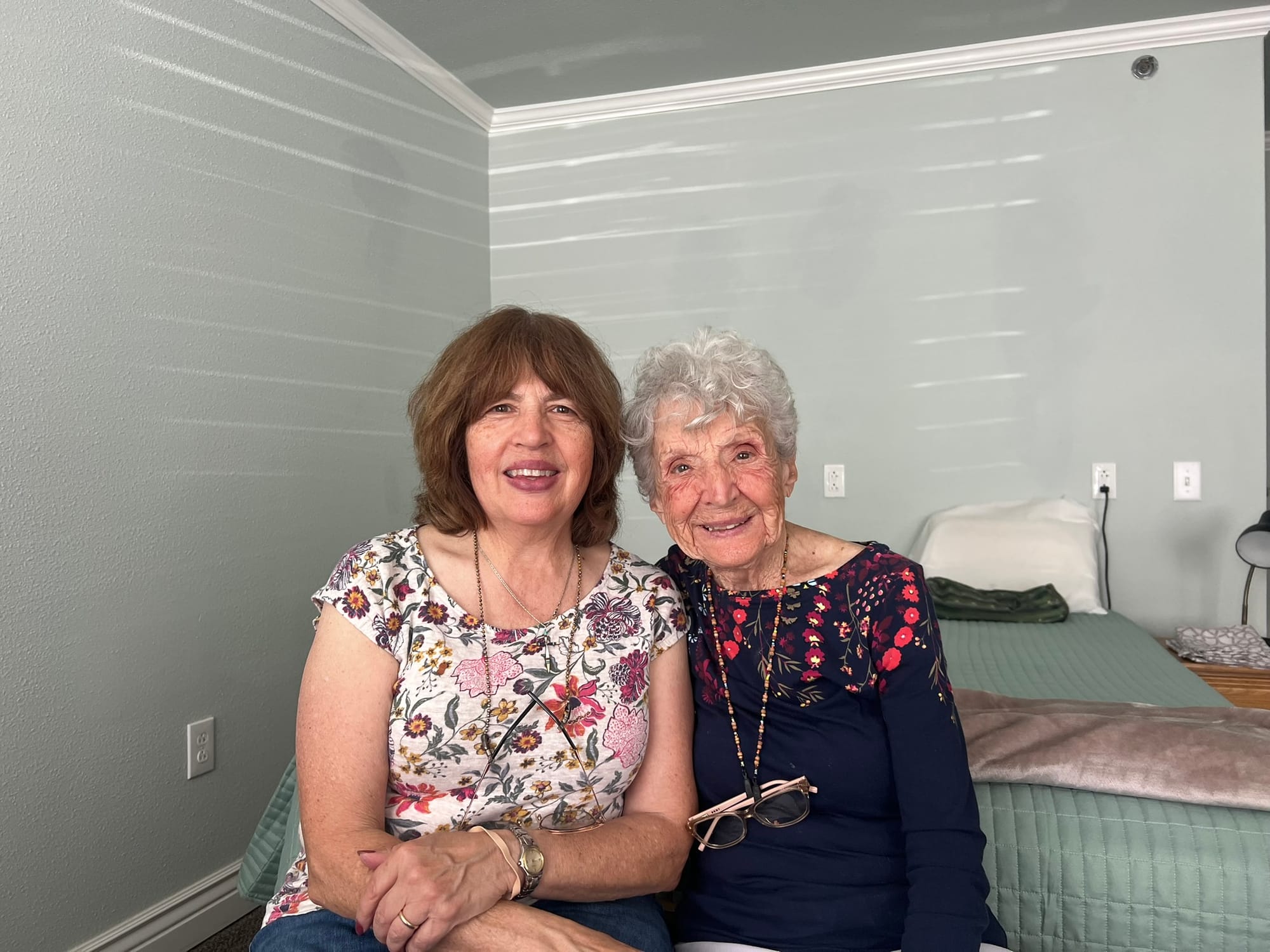
ALAMOGORDO - Arlene Elenora Maclean, born 1932, remembers just how commonplace measles used to be. She was one of 14 children growing up in a home in New England.
“We just passed all that stuff to one another,” said Maclean, now in her 90s.
She remembers her daughter Karen LeCompte, 69, of La Luz, having measles as a child.
“She had it, but I don't remember her having it too bad,” Maclean said.
Measles is one of the most contagious diseases and spreads rapidly through unvaccinated communities. And, until the early 1960s, everyone was unvaccinated. The life-saving inoculation hadn’t been developed yet.
LeCompte, herself a physician, guesses she was about 5 or 6 when she caught measles and other illnesses.
“I had everything within those years, measles, mumps and rubella,” she said.
Indeed, public health officials say people born before 1957 don’t need a measles vaccine because they were almost certainly exposed to the virus due to its near-universal spread. That means this group – all of the Silent Generation and part of the Baby Boomers – developed natural immunity that lasts a lifetime. This group comprises people who are about 69 or 70 years old, or older, now.
LeCompte remembers sitting on the couch, feeling sick, having a rash and being nauseated. She and her brother were ill at the same time. They couldn’t go outside to play. They watched a little black-and-white television to pass the time.
“The whole family would have been quarantined,” she said, “Because it’s so infectious, it was not unusual to quarantine a whole household — treat everybody in the family at the same time.”
Childhood mortality shrank in the U.S.
LeCompte noted one out of five children around 1900 died young. Infectious diseases like measles, mumps, rubella (German measles), polio and others were a significant contributor. Now, 126 years later, the contrast is sharp.
“You hardly see a child die these days,” she said.
Measles can be deadly, and the unvaccinated are the most vulnerable. But complications can be serious even for those who catch it and recover. Children who get measles can get encephalitis and seizures, which could affect them for the rest of their lives. It also could impair their immune response to other infections. LeCompte, a neurologist, said she has a patient who had encephalitis as a child and suffered from seizures when she was younger.
After work in prior years by researchers, the U.S. government licensed the first-ever measles vaccines in 1963, according to the Centers for Disease Control and Prevention. There were two versions. Additional versions were released in 1965 and 1968, as scientists sought to optimize protection while reducing side effects.
In 1971, a vaccine that immunized against measles, mumps and rubella – the MMR vaccine used today – became available for the first time. After a widespread public health campaign, measles was considered eliminated in the U.S. in 2000. However, declining vaccination rates among children, combined with a rise of vaccine hesitancy, have opened the door for a resurgence of the virus in recent years. Experts say the U.S. could be on the verge of losing its standing as a measles-free nation.
Reach the New Mexico Department of Health Helpline at 1-833-796-8773 or text NMDOH (66364) to:
• Ask questions about measles, vaccines or other medical questions in English or Spanish.
• Get guidance on measles exposures.
• Access vaccination records.
• Report cases.
(Source: New Mexico Department of Health)
Vaccine innovations once celebrated
Johanne Harrigan, a history graduate associate with the University of Arizona Department of History, is studying the history of epidemics in the United States. She spoke with seniors to gather firsthand accounts about polio, another highly contagious virus that can cause paralysis and death. People recalled how they used to worry about their children contracting this serious disease. When a vaccine debuted 1955, there was a strong sense of relief and a feeling that they didn’t have to be afraid of epidemics.
“People could look back on it with a certain amount of satisfaction and realize it wasn't something that they had to worry about anymore,” she said.
In the era before vaccines, family disease parties were a common practice. Harrigan said if someone caught smallpox or chickenpox, families would gather everyone so they’d catch the illness at the same time.
“The prevailing theory was that it's better to get chickenpox when you were younger because developing chickenpox in late adolescence or early adulthood usually would result in a more severe case,” she said.
According to vaxopedia.org, there were measles parties as well, but at least some of them were for German measles (also known as rubella), not measles (also known as rubeola), which is the subject of recent nationwide outbreaks.
In recent days, the first case of measles for the year in New Mexico was identified in a federal inmate at a detention center in Lordsburg in the state’s southwestern Bootheel. By Friday, Feb. 27, another inmate in Lordsburg, two in Deming and one in Las Cruces had tested positive for measles, as well, bringing the tally to five cases this year. Separately, an outbreak erupted in a large-scale, federal immigrant detention facility in El Paso.
Instances of such parties in modern times have drawn intense criticism from public health experts and are highly discouraged. In 2019, low vaccination rates and measles parties were key contributors in a 2018-19 measles outbreak in New York City.
Before the first measles vaccine was licensed, three to four million people contracted measles every year in the United States, Harrigan said. And about 500 people died. A person infected with measles has the potential of spreading it to 12 to 18 other people in an unvaccinated group, she said.
Harrigan said serious measles risks include permanent hearing loss and encephalitis, which can cause brain damage. Before the measles vaccine debuted, she said, about 1,000 people every year were disabled by encephalitis.
Unlike some viruses that bounce back and forth between human and animal populations, measles affects only humans, Harrigan said. Because of that, it is theoretically possible to eradicate it – if enough people were vaccinated.
But measles is still prevalent in many other nations. And its foothold in the U.S. seems to be growing, not shrinking, because of lagging vaccination rates.
“It’s kind of a combination of travel with disease coming into a community and then if there aren't enough people vaccinated, it's going to circulate, and it's highly, highly contagious,” Harrigan said.
Las Crucen recounts measles ordeal
Las Cruces resident Jackye Meinecke distinctly remembers catching measles in the first grade in the late 1950s. She was about 5 or 6 at the time.
“When I got the measles, I was the first child, the oldest child, so of course I was the first one exposed to everything,” she said. “We all got it, but something went awry with me. I don't know why but I ended up with the swelling of my brain, encephalitis.”
Her family lived in a tiny town in the panhandle of Texas, between Lubbock and Amarillo. They were an hour’s drive from the nearest hospital. And a doctor told her parents to take her there as soon as possible.
“That's when my parents threw me in the back of the car and drove as fast as they could in the middle of the night,” she said. “I remember being in the car, in the dark. And I remember being so sick. I don't remember arriving at the hospital.”
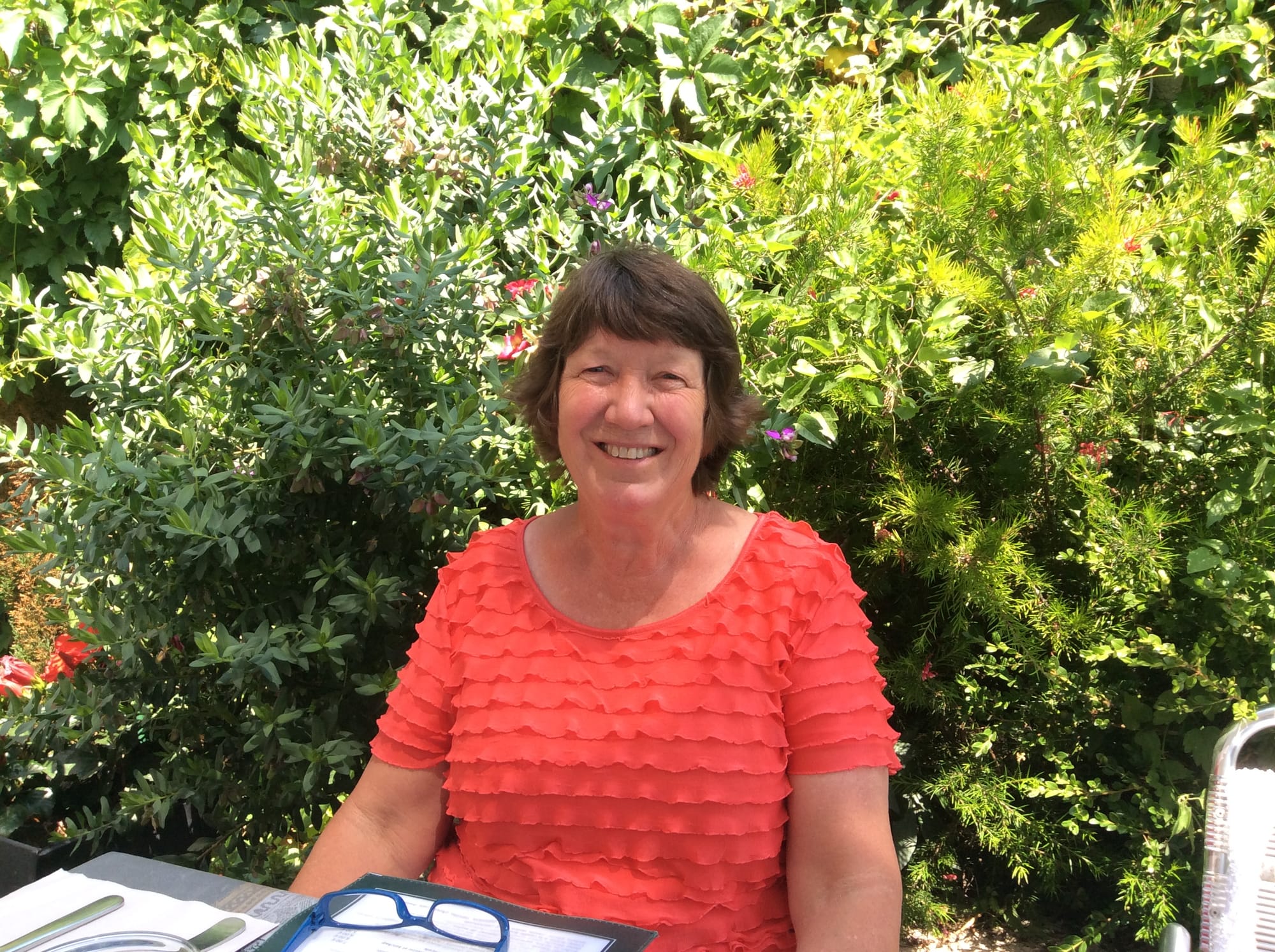
Meinecke, who’s nearly 73, remembers having a fierce headache, and, because of that, headaches still scare her. “When I get a headache I think I'm dying,” she said.
She spent about a week in the hospital, including over the Thanksgiving holiday. Several adult family members visited, giving her small gifts like books and a toy piano. And medical staff drew her blood numerous times during her convalescence, so much so she developed PTSD triggered by needles. She has fainted at times over the years while having her blood drawn.
“I got to go back to school eventually, but it was first grade in a little community, and the kids have formed their friendships and I was an outsider the rest of my life in my town,” Meinecke said. “I couldn't go out to recess (as a result of recovery precautions), so they would all go out to recess, I would be in the classroom.”
- Severe complications such as pneumonia (infection of the lungs) and encephalitis (swelling of the brain), which may require hospitalization and can be fatal.
- Hospitalization: About 1 in 5 unvaccinated people in the U.S. who get measles is hospitalized.
- Pneumonia: As many as 1 out of every 20 children with measles develops pneumonia, the most common cause of measles-related death in young children.
- Encephalitis: About 1 out of every 1,000 children who get measles develops encephalitis, which can lead to convulsions and leave a child deaf or with intellectual disability.
- Death: Nearly 1 to 3 out of every 1,000 children infected with measles die from respiratory and neurologic complications.
- Complications during pregnancy: Measles infection during pregnancy may result in premature birth or low birth weight.
- Subacute sclerosing panencephalitis (SSPE): A very rare but fatal disease of the central nervous system that develops 7 to 10 years after a measles infection.
Doctor: Vaccines protect the entire community
LeCompte, the doctor from Alamogordo, said people refusing vaccines don’t realize there are broader consequences to the decision. It doesn’t only expose the person to measles who doesn’t get vaccinated, but it also means there's a higher risk for spreading the virus to more vulnerable community members. For instance, cancer patients and others with compromised immunity may have been vaccinated, but their bodies might be unable to launch a proper defense against measles.
“Vaccines work because when a lot of people get vaccinated, they protect the few people who can’t have vaccines or their immune systems are not going to work well enough for a vaccine to help them,” she said. “And I think that people can be pretty selfish about it.”
Essentially the people who are not vaccinating are causing problems for the older people because as people age, their immune system is less likely to build up antibodies, she said.
But she also said she can understand why some people worry about getting vaccinated.
Side effects from the measles vaccine are typically mild and may include a light rash, a low-grade fever or pain around the injection spot. There could be some risks to severely immune-compromised patients; they should consult with their doctor before getting vaccinated.
But, when weighed against the potentially harmful effects of measles, including lifelong complications or death, the possible side effects of the vaccine pale in comparison, public health officials say.
Some people objecting to getting their children vaccinated against measles incorrectly believe the shot causes autism. A majority of studies have found no causal link between measles and autism, according to a New York Times analysis. A segment of studies, most carried out by a pair of researchers whose work has been deemed scientifically and sometimes ethically flawed, claim there is a link. While autism diagnoses have increased over time, it’s believed that’s largely a result of more routine screenings of children, as well as broadened diagnostic criteria.
Meinecke, the Las Cruces resident who recounted her childhood ordeal with measles, said she thinks “anyone who doesn’t get their child a measles vaccination today is not thoughtful.”
“There are no guarantees,” she said. “But if the solution has been around for a long time and the problems are few, you are on the good side.”
Elva K. Österreich is a freelance journalist working with the Southern Southern New Mexico Journalism Collaborative. SNMJC Editor Diana Alba Soular contributed to this article. Reach us at SouthNMnews@gmail.com. Visit SouthNMnews.org or SurNMnoticias.org.
Homicide under investigation after overnight shooting in Doña Ana County — Deputies say a 37-year-old man died and a woman was airlifted with serious injuries.
Southern New Mexico’s brush with measles and the warnings that linger — A year after a 100-case outbreak, new cases raise concerns about vaccination gaps.
Film festival to honor Mesilla mayor with hometown hero award — The annual event will recognize local leadership with a community award.