
New Mexico has a plan to fix its failure to educate disadvantaged kids. Not everyone thinks it’s enough.
New Mexico’s updated plan to overhaul education for disadvantaged children includes raises for educators and new supports for special-education, but advocates say it still falls short on transparency, funding detail and meaningful safeguards.
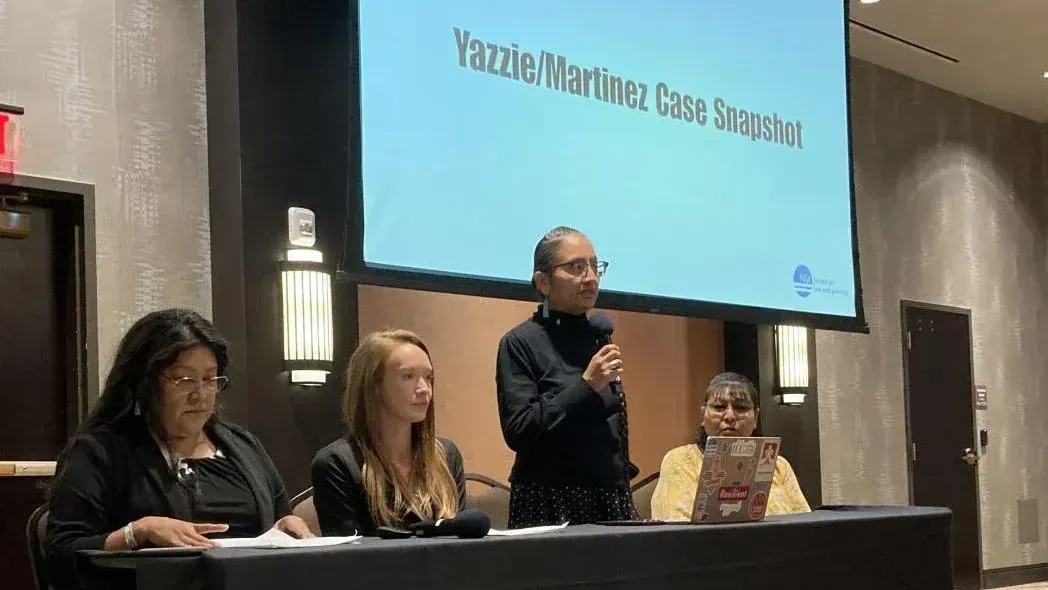
Newly finalized New Mexico Public Education Department plan promises new funding and accountability for vulnerable students — but critics say it still lacks key cost, oversight and community-input provisions.
Esteban Candelaria and André Salkin, Searchlight New Mexico
This article was originally published by Searchlight New Mexico.
After seven years of draft plans to respond to a landmark education lawsuit failing to come to fruition, the New Mexico Public Education Department finally has a comprehensive blueprint to build an adequate system for the state’s most disadvantaged students.
Earlier this month, the agency filed in court an updated, finalized draft of the one it produced in October, more than doubling the document’s length and fleshing out several areas, from proposing more compensation for educators to more transparency and accountability measures.
“Is this plan all-encompassing? I think it’s difficult for any plan to be,” said Mariana Padilla, Public Education Department Cabinet secretary, told lawmakers during a Legislative Finance Committee meeting on Friday. “But I can tell you it is full of very meaningful, thoughtful, comprehensive input that we have received. It’s based on research, it’s based on best practices and it’s really focused on addressing our Martinez/Yazziecq students.”
But plaintiffs in the suit and other advocates say the state’s final plan lacks sufficient cost estimates, community feedback, specific action steps and outcomes detailing how New Mexico will make progress, as well as a strong structure for accountability.
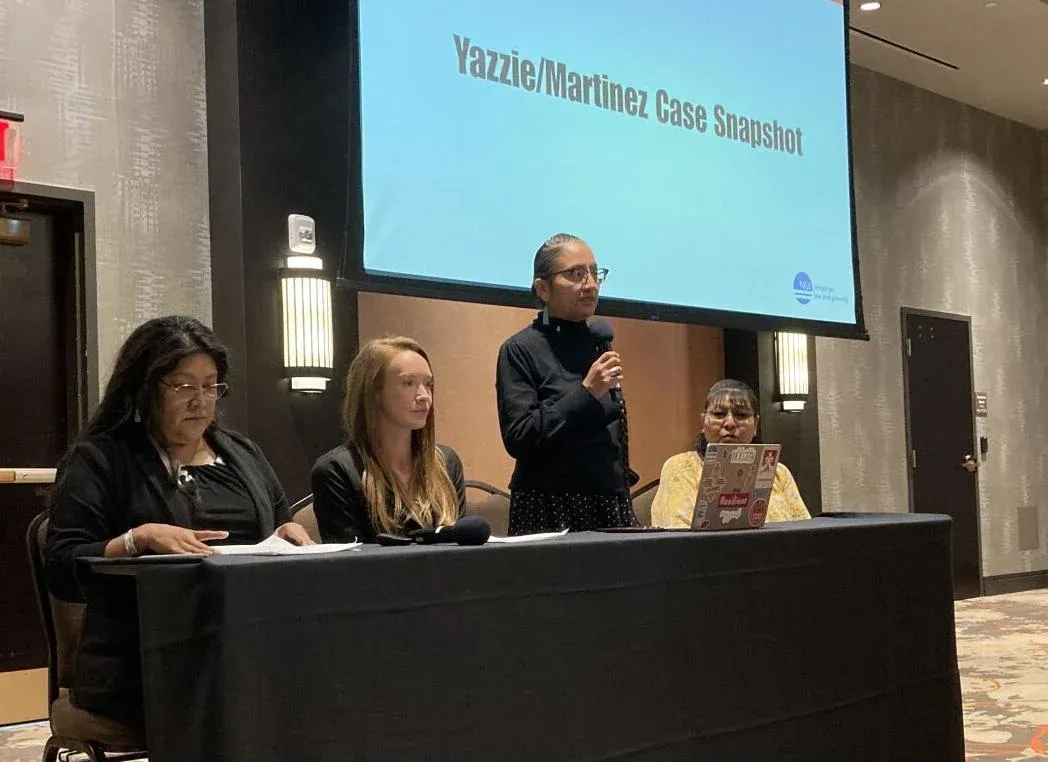
“We are deeply, deeply disappointed with this document,” Alisa Diehl, attorney in Yazzie/Martinez lawsuit, said during a community feedback session at Santa Ana Star Casino Hotel on Friday. “… The state has been given ample opportunity to do what it needs to do.”
Plaintiffs have until Dec. 1 to file their objections to the plan, Diehl said in an interview, adding the judge in the case said he would consider imposing sanctions on the state.
The action plan comes after years of delays by the department in producing a comprehensive strategy responding to a 2018 ruling by a judge finding New Mexico was not providing a sufficient education system to four student groups: those who are Native American, have disabilities, are English learners or come from economically disadvantaged families.
Plaintiffs in the suit filed a motion calling for a judge to find the state had not complied with the ruling and to force the public education department to produce an action plan in September 2024. In April, the judge ruled in favor with the plaintiffs, and gave the agency until Nov. 3 to finalize a plan.
The final draft includes plans to bolster educator pay, clearer funding and accountability measures, and expanded supports for special education children. Those include efforts to limit restraint and seclusion practices of students during outbursts, the public education department said in summarizing the changes.
“The plan has changed dramatically,” since the department’s Oct. 1 draft plan, Padilla said. “If you have seen the draft plan, but you have not seen the updated plan, you really haven’t seen the plan.”
Widespread concerns
Education advocates at the community meeting argued the plan still fell short on a wide array of measures.
In many cases, they said the steps the public education department proposed failed to carry with them the granular details and estimated price tags needed of such a comprehensive plan. Discussion of funding in the final plan often centers on dollars that have already been appropriated, with few or no estimates for how much initiatives are expected to cost.
Loretta Trujillo, executive director of statewide coalition Transform Education New Mexico, argued the final plan contains up to $500 million in unfunded obligations.
- An updated action plan responding to the Yazzie/Martinez lawsuit includes added funding and accountability measures, supports for special education and compensation for educators, according to the New Mexico Public Education Department.
- Advocates say the plan fails to adequately fund the mandates it imposes and does not provide enough support for Native language learners and other students.
- Lawmakers on Friday raised concerns about the agency’s funding requests and said the plan does not offer enough accountability.
Advocates also leveled criticisms on specific components of the final plan. Those included concerns that the state’s strategy for bolstering its program to educate and graduate bilingual students failed to incorporate Native heritage languages at all levels of schooling, that the plan did not provide accountability for failing to support Native students with disabilities, and that it would not adequately provide students with the internet access they needed long term.
“If this had been … the draft plan, I think I would have been more enthusiastic about it, about [the] potential for building out those pieces,” said disability rights attorney Laurel Nesbitt. “But this is nowhere near where it needs to be in a final plan.”
Lawmakers also had concerns.
State Rep. Derrick Lente, a Sandia Pueblo Democrat, lauded PED’s community engagement and remarked on the “pivotal” moment before lawmakers before saying the updated plan falls “woefully short of expectations.”
He cited an Oct. 23 resolution from the All Pueblo Council of Governors that Lente said rebuked the draft plan as “inadequate” and “demanded a rewrite” from the department.
“Seven years after the initial court ruling and after over a billion dollars pumped into half measures and false solutions,” he said. “Why wouldn’t we want to bring everybody together to one table and give this our best shot?”
Lente, too, called into question the value of the department’s accountability measure, an online tool new to the updated plan — one the department claims will cross-reference funding, program implementation and outcomes for the lawsuit’s student groups.
“I doubt that the parents will find this sufficient,” he said.
Budgetary worries
Lawmakers were also apprehensive at appropriating more funds to an agency that holds the lion’s share of the state’s budget while still failing its most disadvantaged students.
Rep. Meredith Dixon, an Albuquerque Democrat, said though she “fully support[s]” some of the proposed changes, she was “very concerned about how this is going to be funded long-term.”
She cited a mix of budgetary concerns: federal tax policy changes, a rollout of universal child care expected to be costly — and noted that education officials couldn’t point to a single ineffective program “that we can save money on.”
Her concerns came amid what officials said would be at least $260 million in requested recurring funding for the department, including a roughly $180 million increase for educator pay and benefits — a new part of the updated plan to bolster teacher recruitment efforts — and one Padilla said would appear in the governor’s budget request, which she noted will be released in a couple weeks.
While work has already begun for the first year of the department’s plan, which includes developing linguistically and culturally relevant assessment materials. Padilla said officials are relying on lawmakers’ funding support for the rest of the plan.
“We really need the public school support requests that the department submitted on Sept. 1 supported,” she said. “We are counting on that request in order to really implement year two of the plan.”
Doña Ana County ice skating rink now open for winter season — The new indoor rink is officially open for winter and will operate through Feb. 19.
Las Cruces motel standoff ends with arrest of man wanted in Arizona — Police arrested a man sought in Arizona after responding to a report of sexual assault.
Las Cruces police share tips to stop porch pirates this holiday season — Officers outlined ways residents can keep packages safe as deliveries increase.
