New Mexico student privacy proposal would allow some AI training, exclude existing contracts
New Mexico's proposed student data privacy rule would allow some AI training and would not retroactively regulate existing vendor contracts, PED says.
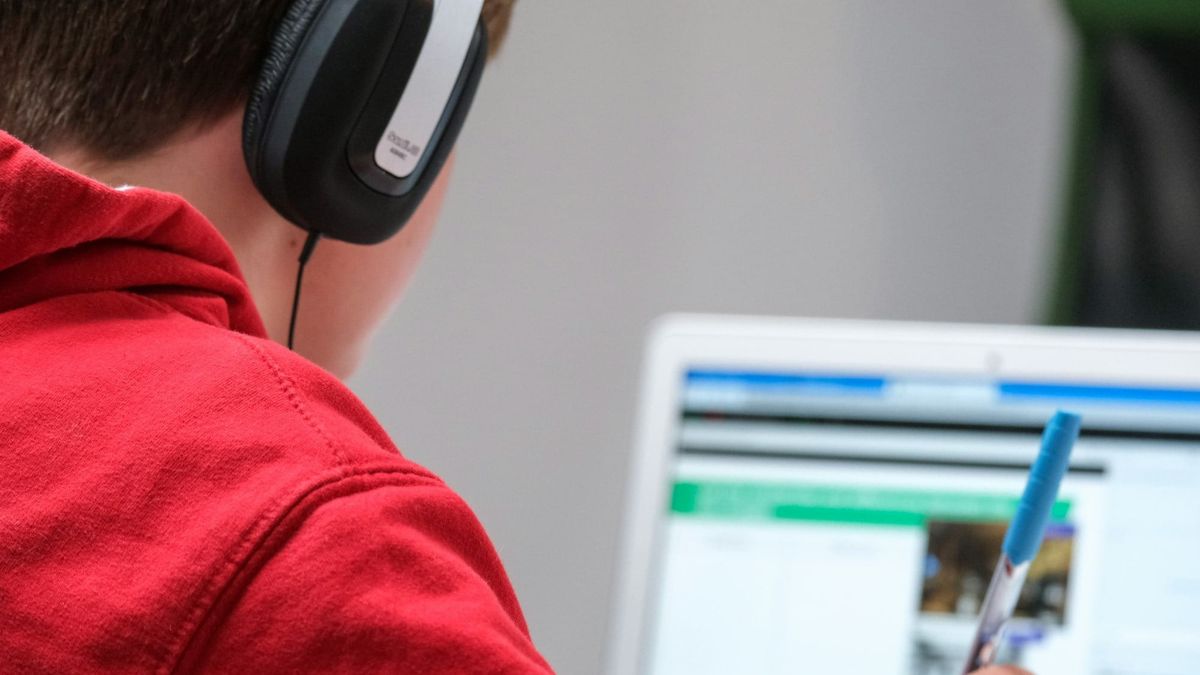
PED says Amira recordings are not biometric voiceprints, while proposed safeguards would leave some vendor data uses subject to contractual approval
Damien Willis, Organ Mountain News
LAS CRUCES - New Mexico's proposed student data privacy rule would allow education technology vendors to use student information for certain artificial intelligence development activities with contractual authorization, while leaving existing vendor agreements outside the rule's new requirements, according to the state Public Education Department.
The department also says voice recordings collected through the Amira reading assessment used in Las Cruces Public Schools do not qualify as biometric voiceprints under the proposal. The distinction comes after months of questions from parents, school officials and state lawmakers about how children's recorded speech is collected, retained and used.
In written responses provided Monday to Organ Mountain News, PED explained several provisions of its proposed rule, 6.11.3 NMAC, which would establish statewide requirements for protecting student information and governing contracts with private education technology companies.
The proposal remains open for public comment through Nov. 20, with hearings scheduled Nov. 19 and 20. If adopted as proposed, the rule would take effect April 1, 2027.

What the rule would allow AI vendors to do
One of the most consequential provisions concerns whether companies could use information collected from students to develop or improve artificial intelligence products.
PED said the proposal would not impose a blanket prohibition on those activities when they support the educational service a company has been contracted to provide.
"The proposed rule does not categorically prohibit using student data to train, develop, or improve AI tools that support the contracted educational service," the department said.
Such activity would require authorization in the contract with PED, a school district or a charter school and would have to comply with the rule's other restrictions.
The department added that a vendor could not justify using student information simply by characterizing the activity as improving its service.
The distinction is significant because the proposed rule would restrict commercial exploitation of student information while allowing certain uses connected to providing educational services.
That does not establish that Amira currently uses New Mexico students' recordings to train its artificial intelligence systems.
In September, Organ Mountain News reported that Amira Learning disputed concerns raised by 35 New Mexico lawmakers about how its software handles student information and whether its underlying AI models change over time.
The company said its assessment model remains fixed throughout each school year and is updated only when a new annual version is released. It also disputed suggestions that the assessment retrains itself on student information in real time.
The company's statements did not establish whether information collected from New Mexico students was used in developing or validating subsequent annual versions.
PED's response addresses what the proposed privacy rule would permit under authorized contracts, not whether any particular vendor has engaged in those activities.
Why Amira recordings are not considered biometric voiceprints
The proposed rule defines biometric information to include fingerprints, facial geometry, voiceprints and other biologically unique identifiers used to identify specific students.
But it draws a distinction between recording a child's speech for an educational assessment and processing that recording into a biometric identifier.
A voiceprint, under the proposal, is a recording or information derived from one that has been processed into a unique vocal signature capable of identifying a student by their voice.
PED said Amira does not perform that type of biometric identification.
"Amira does not process voice recordings into a digitally encoded representation of a person's unique vocal characteristics for biometric identification, or what would be considered voiceprints," the department said.
The recordings are instead collected as part of a reading assessment that analyzes students' spoken responses to evaluate reading skills.
That distinction does not mean the recordings are necessarily anonymous or incapable of being linked to individual children. A recording associated with a student's name, account or assessment results may still constitute protected student information, even when the student's voice is not used as a biometric identifier.
PED emphasized that recordings falling outside the biometric definition would remain subject to other applicable student-data protections under the proposal.
The department compared ordinary speech recordings with recordings used in classroom activities and Advanced Placement examinations, where students may speak, read or sing as part of an assessment.
LCPS already changed its recording practices
The statewide proposal follows questions raised by Las Cruces parents about how Amira handled recordings of young children reading aloud.
In August, the district announced that it had disabled retention of student voice recordings for the 2026-27 school year and requested deletion of recordings previously collected from LCPS students.
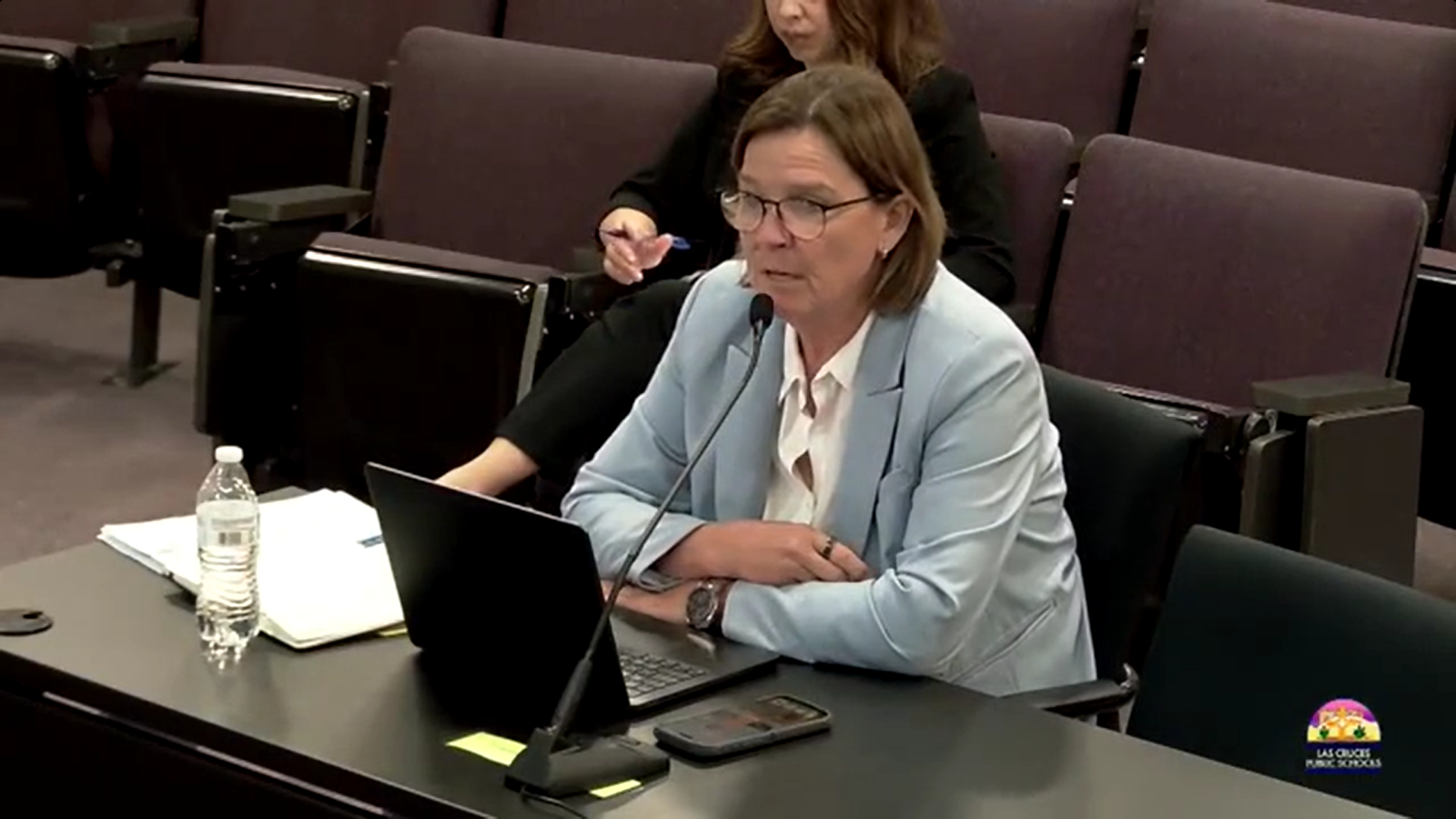
Deputy Superintendent Wendi Miller-Tomlinson subsequently told the Board of Education that the district had received written confirmation from Amira that previously stored recordings had been deleted.
With recording retention disabled, the system can listen to and score a student's reading, but the recording is deleted after the assessment is completed, district officials said.
LCPS also made a paper-based assessment available to parents who did not want their children tested through the digital system.
Amira is used to assess oral reading fluency among kindergarten through second-grade students. The software analyzes children reading aloud and provides information intended to help educators identify reading difficulties and monitor progress.
The district's actions addressed concerns about retaining recordings after assessments, rather than eliminating the use of recorded speech during the assessment itself.
Those local changes also illustrate a distinction in the proposed statewide rule: Information can qualify for student-data privacy protections without meeting the narrower definition of biometric information.

Why parental consent would not always be required
PED's proposed rule would require schools to provide parents with written notice before collecting biometric information, including an explanation of what would be collected, how it would be used, how long it would be retained and how it would be destroyed.
However, affirmative parental consent would be required only when another applicable law requires it.
Asked why the department did not propose universal opt-in consent for biometric collection, PED said the approach was intended to protect students' access to instructional tools while establishing privacy requirements.
The department said some schools may lack the resources to provide alternative instructional services when students do not participate in digital programs.
It also said a universal opt-in requirement could prevent students from participating simply because a parent did not return a signed consent form.
The decision comes after 35 New Mexico lawmakers urged PED in August to strengthen parental consent and oversight surrounding Amira.
Their concerns included the collection of student voice recordings, the handling of sensitive information and the use of artificial intelligence in early reading assessments.
PED's proposed approach would establish notification requirements for biometric collection without creating a universal parental veto over every such activity.
Existing vendor contracts would not be covered retroactively
Another limitation concerns student information collected under contracts already in place.
PED confirmed that the proposed rule would not retroactively regulate vendor contracts signed before its effective date.
That means the new contractual requirements would not automatically apply to earlier agreements simply because the rule takes effect.
The department said existing protections, including the federal Family Educational Rights and Privacy Act, would continue to apply to student information governed by those agreements.
The distinction is relevant to families whose children have already participated in digital assessments or other education technology programs.
At LCPS, the district obtained confirmation that previously stored Amira recordings had been deleted through its own efforts before the proposed statewide rule would take effect.
The proposal would establish additional requirements for vendor contracts going forward, but it would not itself reopen or rewrite agreements signed before the effective date.
PED cites concerns from parents and school districts
PED said the proposed rule was developed in response to concerns about private companies' handling of student information when schools use outside vendors to provide educational services.
The department said its initial framework drew from Illinois' Biometric Information Privacy Act and California's Student Online Personal Information Protection Act.
It also said New Mexico currently lacks comparable legislation or administrative rules addressing those protections.
Asked whether the Amira controversy specifically prompted the proposal, PED did not identify Amira as the catalyst or name provisions drafted in response to the company's practices.
Instead, the department said concerns raised by parents, school districts and charter schools were central to developing the proposal.
PED said work began months ago but did not provide a specific starting date or identify the organizations or individuals consulted before publication.
The department said it will consider public comments and make appropriate revisions before adopting a final rule.

How families can comment
The proposed rule is available through PED's rulemaking notification page. The full draft of 6.11.3 NMAC is also available online.
Written comments may be emailed to Rule.Feedback@ped.nm.gov. PED asks commenters to identify the rule they are addressing.
The public comment period closes at 5 p.m. Nov. 20.
A virtual public hearing is scheduled from 9 a.m. to noon Nov. 19. An in-person hearing is scheduled from 9 a.m. to noon Nov. 20 at the Willie Ortiz Auditorium, 2600 Cerrillos Road in Santa Fe.
The rule's final language could change following public comments and hearings. Until it is adopted, the proposed requirements are not in effect.
Damien Willis is founder and editor of Organ Mountain News. If you have a personal story to share or a lead we should follow up on, reach out at OrganMountainNews@gmail.com or connect with him on X at @damienwillis.