Opinion: How many ‘shouldas’ should it take on Project Jupiter?
Lisa Silva argues Project Jupiter’s potential noise, emissions, heat-island effects and water demands should weigh heavily in New Mexico’s air-permit review.
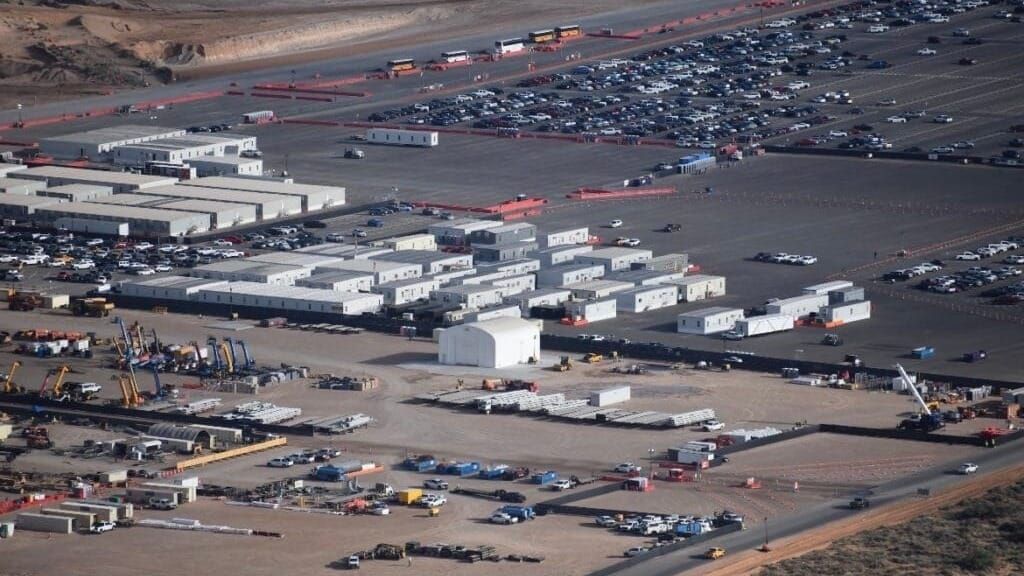
Lisa Silva argues the proposed data center’s noise, emissions, heat and water demands should weigh heavily in New Mexico’s review of the project
Opinion
Editor’s note: The views expressed in this commentary are those of the author and do not necessarily reflect the views of Organ Mountain News.
Lisa Silva, environmental educator
How many shoulda’s should it take?
Consider some of the facts surrounding Project Jupiter:
- A proposed $165 billion data center and fuel-cell project in Santa Teresa
- Four AI hyperscale data center facilities
- 2,275 solid oxide fuel cells
- Projected water use of 20,000 gallons per day
- Operated by Oracle with OpenAI
The noise pollution from data center generators running 24/7 will affect the local population of about 21,000 people, who are predominantly Latino and working class and already face water insecurity and air-quality issues.
Those living near existing data centers have reported 24/7 noise levels approaching 100 decibels. According to the Hearing Health Foundation, sounds at or below 70 dB are considered safe for our hearing.
Additionally, the Environmental and Energy Study Institute says both low and high frequencies generate 24/7 noise and vibration, often described as a near-imperceptible hum. This infrasound, which can be “felt” rather than heard, has been associated by people living near data centers with symptoms including headaches, insomnia, nausea and anxiety. Complaints often emphasize the nonstop persistence rather than the volume as the predominant issue.
This by itself shoulda been cause enough for Doña Ana County to deny Oracle’s permit.
The proposed solid oxide fuel-cell power plant will emit 8.8 million tons of carbon dioxide every year. That’s significantly more than Albuquerque, Santa Fe and Las Cruces combined. On top of that, the developers acknowledge that carbon monoxide and volatile organic compounds — other toxic pollutants — are likely to exceed minor-source limits.
 Joshua Bowling
These impacts shoulda been considered when the Air Quality Bureau determined the air-permit application was “complete.”
It is estimated that land-surface temperature could increase by an average of 3.6 degrees Fahrenheit and by as much as 16.38 degrees after an AI data center begins operating, creating a data heat island effect. Further study indicates the impact of AI hyperscalers’ data heat islands in Spain, Mexico and Brazil can extend up to a 6.2-mile radius around these data centers.
The data heat island effect is therefore expected to have a significant influence on communities and regional welfare in the future.
Do you think job promises outweigh the potential for higher temperatures within a 6.2-mile radius around the data center, in an area where temperatures have already reached 110 degrees in June and 109 degrees in July and August?
This shoulda been a huge consideration for elected officials who approved this project and for the Air Quality Bureau, which is currently considering an air permit for Project Jupiter.
One more issue is the elephant — or, in our case, Elephant Butte — in the room.
For reference, Elephant Butte Reservoir is currently at the equivalent of a five-alarm fire: 1.4% capacity.
The proposed “closed-loop” system of pipes used to cool the internal computer servers would require a one-time, 10 million-gallon fill of very high-quality, pure water before it is continually recycled.
Developers say the campus’ ongoing consumption would be 7.3 million gallons of water per year and that they “support efficient resource use.”
Does this sound efficient to you?
And where, in our drought-ridden state, do they propose sourcing their water supply? Although Oracle says its cooling system will be closed-loop, one wonders why they are siting this new installation next to the Rio Grande.
Water alone may be the strongest shoulda factor of all.
It’s not too late for the Air Quality Bureau to consider these facts in its decision-making process.
Just how many shoulda alarms will it take for regulators to deliver a decision that favors New Mexico residents’ quality of life instead of Project Jupiter’s projected revenue?
Otherwise, this will only further line billionaires’ pockets while leaving unhealthy property owners with albatrosses around their necks.
Lisa Silva is an environmental educator who lives in Corrales, NM.
Community Voices
Want to share your perspective? Organ Mountain News welcomes community voices on the issues that matter in Las Cruces and Doña Ana County. Send commentary submissions to OrganMountainNews@gmail.com.
Keep Reading
GISD wants to hear from families. Here’s how their feedback could shape what comes next — Families and community members have until Aug. 23 to weigh in as Superintendent Nubia Tarazona begins a broader 100-day listening and engagement plan.
LCPS seeks community input on new grades 6–12 school — Focus groups Tuesday and Wednesday will help shape the mission, identity and educational model of a new school planned for fall 2027.
Republican Truth Commission members question removal of Haaland reference from interim report — Two commission members say a reference to Deb Haaland disappeared before release of an interim report on Jeffrey Epstein’s New Mexico connections.