
Sunland Park approves 1,202-acre Santa Teresa rezoning over planning commission objections
Sunland Park approved rezoning for a 1,202-acre Santa Teresa development despite planning commission objections over density, traffic, infrastructure and public engagement.
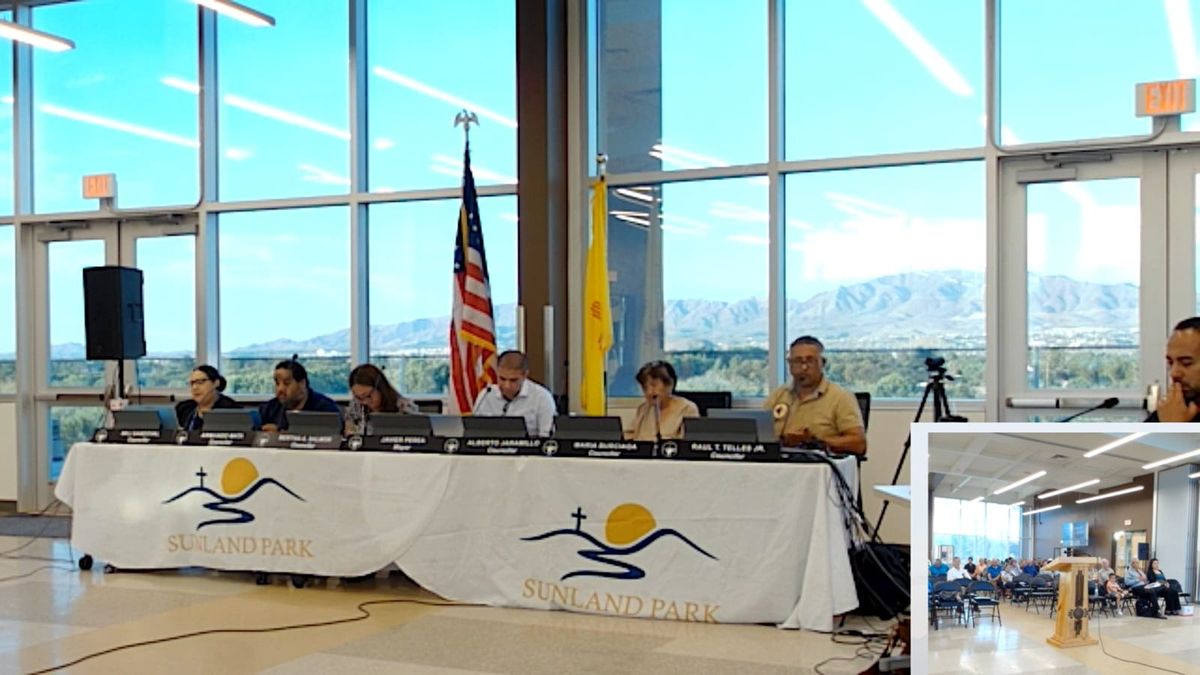
Council voted 4-2 to advance the Santa Teresa Estates project six days after all four planning commissioners present opposed the rezoning
Damien Willis, Organ Mountain News
SUNLAND PARK - Sunland Park City Council approved the rezoning of more than 1,200 acres in Santa Teresa on Tuesday, six days after all four members of the city's Planning and Zoning Commission present for a hearing voted against the proposal.
Council voted 4-2 to approve the rezoning of approximately 1,202 acres for the proposed Santa Teresa Estates development. Councilors Raul Telles Jr. and Maria Burciaga voted against the change.
The vote followed months of debate over a project that could eventually bring thousands of homes, commercial development and new infrastructure to land that includes portions of the former Santa Teresa Country Club.
The city's Aug. 12 Planning and Zoning agenda identified the applicant as Bill Hagan and described the property as land annexed into Sunland Park and collectively referred to as the Collins Group. The request sought C-2 commercial and RCPUD, or residential community planned unit development, zoning.

Planning commission voted unanimously against rezoning
City Council had specifically asked the planning commission to reconsider the rezoning and provide its recommendation in writing.
At the Aug. 12 meeting, Chairman Robert Ardovino and commissioners David Avalos, Nestor Martinez and Daniel Portillo were present.
All four voted no.
When city staff immediately asked commissioners to explain why the motion failed so their reasoning could be forwarded to council, the response was blunt.
"There's too many reasons," one commissioner said.
"There's no way I'm going to try to do that now," another added before the commission agreed to submit its concerns in writing.
Those concerns, read into the record during Tuesday's council meeting, included the absence of a comprehensive master plan, questions about density and lot-size compatibility, insufficient recreational and open space, traffic and infrastructure impacts, inadequate community engagement and questions about whether the proposal was consistent with city regulations and Sunland Park's comprehensive plan.
The recommendation became a point of contention among councilors before Tuesday's vote.
Telles argued that council should give weight to the work of the planning commission, comparing its role to relying on people with greater subject-matter knowledge.
"Just because I dabble with mechanics doesn't make me a mechanic," Telles said.
Councilor Alberto Jaramillo pushed back on that characterization, emphasizing that the commission is an advisory panel and City Council retains authority over zoning decisions.
"They are not experts," Jaramillo said.
Councilors Jaramillo, Armando Mata, Mili Sandoval and Bertha Salmon voted for the rezoning. Telles and Burciaga voted against it.
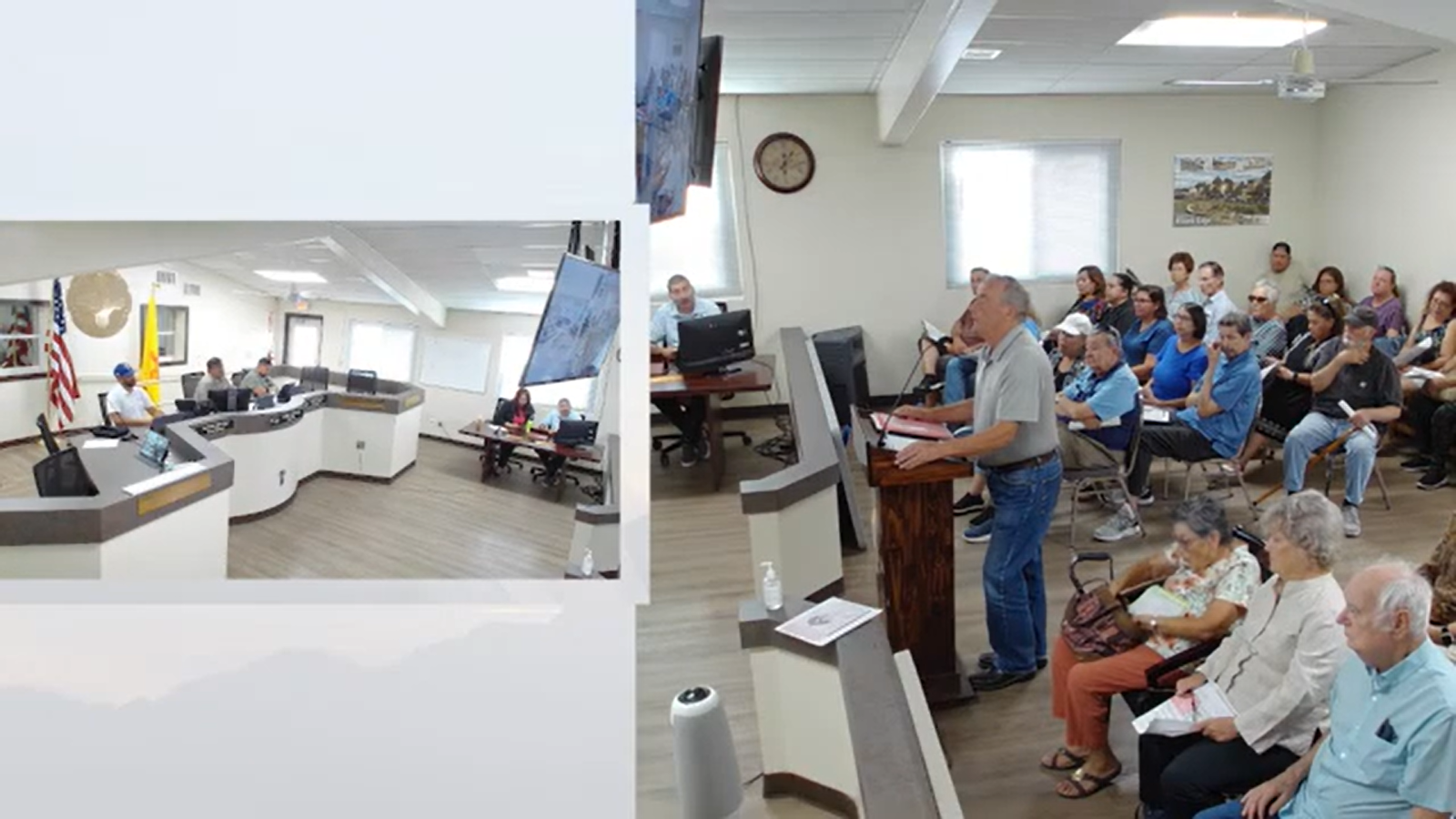
Proposal could bring thousands of homes
The scope of what could eventually be built on the property also drew scrutiny during the Aug. 12 planning commission hearing.
During a discussion about water availability, commissioners questioned Hagan about approximately 2,000 acre-feet of water rights controlled by the Collins Group and "roughly 8,000 houses."
Hagan said developers would be responsible for bringing the necessary water rights to the utility or purchasing them as individual subdivisions move forward.
He stressed during the planning hearing that approval of the RCPUD zoning would not amount to final approval of a detailed development plan. He described it as an overlay that would allow individual plats to return to the city for additional review, including questions involving density, open space and other development requirements.
Residents repeatedly argued that those questions should be resolved before such a large rezoning moves forward.
Concerns raised during the Aug. 12 hearing and again before City Council included traffic on McNutt Road, water and wastewater capacity, lot sizes, compatibility with existing Santa Teresa neighborhoods, preservation of open space and the future of the former golf course.
Support local journalism
Organ Mountain News provides independent reporting for southern New Mexico without a paywall. If you value this work, please consider supporting the newsroom with a one-time or monthly contribution.
Support Organ Mountain NewsResidents raise concerns over public notices
Public notification also emerged as an issue at both meetings.
During the planning commission hearing, city staff said the city had expanded its notification radius from 200 feet to 300 feet after hearing concerns that some nearby residents had not been reached.
Later in that meeting, Santa Teresa resident Taylor King said a certified notice she received contained the wrong ZIP code and told commissioners she had heard from other residents who had not received notices.
The issue resurfaced Tuesday when residents again questioned whether notices had been properly addressed.
Telles checked one of the ZIP codes during the meeting and said a U.S. Postal Service search identified it as Chaparral rather than Santa Teresa. He asked city staff where the error occurred and why some residents who previously received notices apparently had not received recent ones.
No clear explanation was provided before council voted on the rezoning.
Development agreement approved 5-1
After approving the zoning change, council separately considered a development agreement for the property.
Hagan told council the project could include a mix of housing types and commercial development, with individual subdivisions returning through the city's approval process.
He also discussed possible public-improvement financing, including a tax increment development district, to help pay for infrastructure.
One major component discussed Tuesday was a new north-south roadway connecting McNutt Road and N.M. 136, potentially extending toward Airport Road. Hagan said another route through the area would improve access and reduce the public-safety risk created by dependence on McNutt Road.
He also said restoring the former Santa Teresa golf course was not economically realistic, estimating it would cost approximately $32 million to $35 million simply to restore grass to the property.
City Manager Mario Juarez-Infante told council the development agreement was still undergoing legal review and recommended that any approval be contingent on final legal comments that did not substantially alter the agreement.
Council approved the development agreement 5-1, with Telles casting the sole dissenting vote.
The rezoning and development agreement do not represent final approval of individual subdivisions across the 1,202-acre property. Additional development proposals are expected to return to the city as the project moves forward.
Damien Willis is founder and editor of Organ Mountain News. If you have a personal story to share or a lead we should follow up on, reach out at OrganMountainNews@gmail.com or connect with him on X at @damienwillis.
Keep Reading
Las Cruces councilors push for stronger oversight of Flock surveillance cameras — Councilors are pressing for stronger rules and more public disclosure around how Flock vehicle data is collected, searched and shared.
LCPS replaced 11,000 devices this summer. Now it’s figuring out what the old tech is worth — A districtwide technology refresh left LCPS with roughly 200 pages of aging equipment to sort through and dispose of.
Santa Fe Brewing clears city hurdle for Las Cruces taproom near NMSU — The new taproom is moving forward near NMSU, with Fusion Taco planning to run the kitchen.


