Review: Why AMC’s ‘Dark Winds’ stands apart
Jack Davis reviews AMC’s ‘Dark Winds’ and considers how its Navajo setting, Native cast and cultural perspective distinguish it from other police dramas.
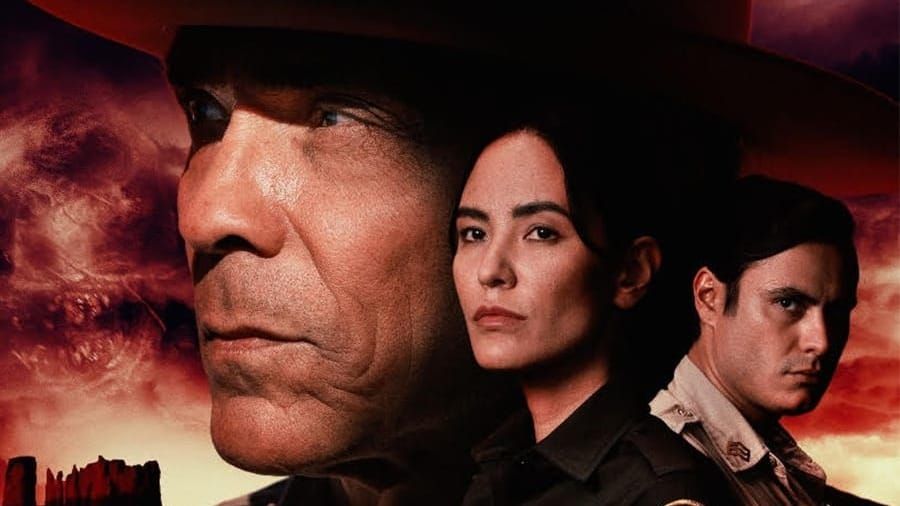
Contributing author Jack Davis examines the series’ Navajo setting, Native cast and emphasis on culture, community and healing
Jonathan E. "Jack" Davis
Contributing author, Organ Mountain News
The views expressed in this article are those of contributing author Jonathan E. “Jack” Davis and do not necessarily reflect those of Organ Mountain News or its staff.
The AMC series Dark Winds, which premiered in 2022, is, in some ways, a typical police drama in which characters die violent deaths at the hands of heinous villains. Such series are popular in the United States and the United Kingdom. So, what sets Dark Winds apart from all the others?
In many police procedurals, the police often seem to investigate a murder only if they believe a serial killer is responsible. Thus, the entire show becomes a cat-and-mouse game, as the villain deliberately leaves clues for the police, like a cat trying to bait a mouse. In the end, the villain is caught, he or she confesses, the victims can rest in peace and the officers retire to a bar or pub to celebrate.
In contrast, the tribal police in Dark Winds investigate crimes committed against Indigenous people — crimes that are too often left unsolved in real life because investigations involving reservation residents can be complicated by overlapping federal, state and tribal jurisdiction, the painful historical relationship between Native Americans and the U.S. government and conflicts among families themselves. Thus, many victims will never rest in peace, and the violence surrounding the police officers often drives them and their families apart. They live and work in the same communities where the victims live and die, much like old-fashioned city beat cops.
The series is filmed on and around the Navajo Nation, a land of great extremes — of great beauty, poverty and isolation — just north of historic Route 66, now Interstate 40, traveled by many tourists every year on their way to the Grand Canyon. Many of the actors are Diné or members of other tribes. The Diné language and culture, in particular, are often depicted with English subtitles, and Navajo healing ceremonies are prominently portrayed. According to the New Mexico Film Office, more than 900 people were employed by the series during its most recent production season.
Violence against women and children is not at the center of the stories, nor do the tribal officers spend a great deal of time in bars guzzling alcohol or smoking cigarettes, as occurs in many police dramas today. Instead, the characters’ goals, at the end of the day, are to repair the damage inflicted on their own lives, often through traditional Navajo ceremonies and practices.
Readers of contemporary American fiction will recognize the ghostly fingerprints of the late Tony Hillerman all over the scripts. Although he was not Native American, Hillerman had close associations with tribes in Oklahoma and, later, with northern New Mexico. In 2022, Graham Roland brought Joe Leaphorn and Jim Chee to the small screen in a big way. Previous films based on Hillerman’s books had little success.
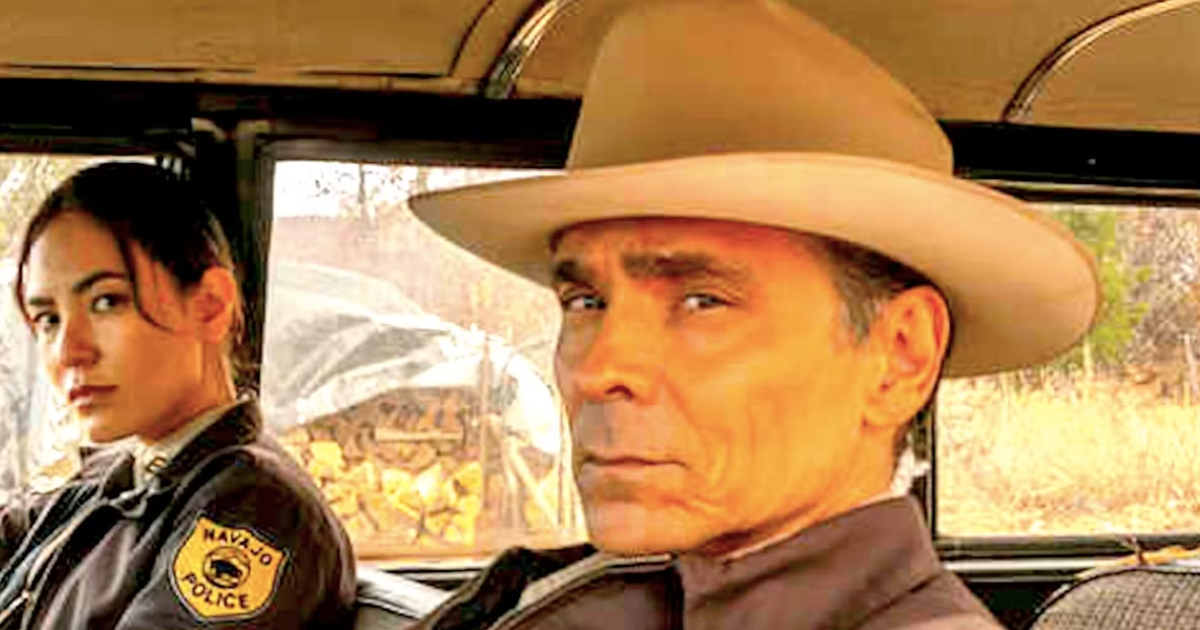
In fact, John Coveny and Hunt Baldwin’s Longmire was more successful in presenting Native American characters in a dramatic television series. More recently, Lily Gladstone, who is of Blackfeet and Nez Perce heritage, has brought a more dramatic, more authentic view of Native life to the big screen. Have Native American-themed series and films finally made the grade in Hollywood?
It is important to note that, in many Native American cultures, heroic figures come in male and female pairs and that Navajo culture is matrilineal; women have voices. Longmire veteran Zahn McClarnon, who is Hunkpapa Lakota and Irish, plays Joe Leaphorn. His female counterpart is Emma Leaphorn, a reservation nurse played by Farmington-born Deanna Allison, who is Navajo.
The second male-female pair features The Twilight Saga actor Kiowa Gordon, who is Hualapai and of European ancestry, as Jim Chee. Canadian actor Jessica Matten, who is of Métis, Saulteaux and Cree ancestry, plays Bernadette Manuelito. Matten is well known for her work in First Nations-themed television series, and her character is both Chee’s love interest and his rival on the tribal police force.
Among the series’ executive producers have been George R.R. Martin, Robert Redford and filmmaker Chris Eyre, who is Cheyenne and Arapaho. Martin and Redford have appeared in cameos, while Eyre has directed several episodes.
Is this series the perfect cable-and-streaming storm? It certainly is different. I have spent considerable time in Indian Country in the western United States, including working with reservation residents and attending community events. The faces and places look familiar and remind me of my youth.
Northern Arizona and New Mexico are places where visitors have greater access to learning about the rich diversity of Native American cultures than they do in many other parts of the United States. Now more than ever, we non-Indigenous U.S. citizens need to know about our Indigenous fellow citizens, who did not receive U.S. citizenship broadly until 1924. Did anyone celebrate that centennial in 2024?
I have two suggestions for the producers of a future season: Lily Gladstone and Robert Taylor of Longmire need to be worked into the series. Taylor does not have to play Walt Longmire. Dark Winds has already demonstrated that familiar actors can be cast effectively against type. Titus Welliver of Bosch played a villain, and Rainn Wilson has also appeared in the series.
About Jonathan E. “Jack” Davis
Jonathan E. “Jack” Davis is a contributing author to Organ Mountain News. A border native, Davis has studied pre-Columbian Indigenous literature at New Mexico State University and plans to continue his studies in the art of Mesoamerica. His family helped preserve Indigenous archaeological sites throughout Chihuahua, New Mexico and West Texas, and he has attended numerous public ceremonials across the western United States and Mexico.
The views expressed in this review are the author’s own and do not necessarily reflect those of Organ Mountain News or its staff.
Keep Reading
NM Environment Department schedules October hearing for Project Jupiter air quality permit — New Mexico regulators will hold an Oct. 19 hearing in Sunland Park on the data center’s controversial air quality permit application.
Las Cruces police warn renters about online housing scams — Police are urging prospective tenants to verify listings and landlords after a woman reported losing about $1,800.
As homelessness changes in Las Cruces, so does Community of Hope — Rising rents, more first-time homelessness and a growing focus on permanent housing are reshaping the city’s primary hub for homeless services.