Who’s running for Doña Ana County Sheriff on the Democratic ballot in the June 2026 primary election?
Voters in Doña Ana County’s Democratic sheriff primary can compare candidates’ responses on public safety, mental health response, transparency and cooperation with federal agencies.

Four Democratic candidates outline their priorities for staffing, accountability, immigration enforcement and rural policing ahead of the June primary.
Compiled by Jonny Coker, Southern New Mexico Journalism Collaborative
Editor’s Note: Candidates answered a list of questions emailed by the Southern New Mexico Journalism Collaborative. Their responses have been edited for length and clarity. Some candidates in this Q&A reference House Bill 9, passed by the Legislature, that restricts local authorities from enforcing federal immigration law by entering into contracts to detain immigrants. It also restricts local authorities from allowing local law enforcement to be deputized to enforce federal immigration law. But H.B. 9 does not hinder cooperation among federal and local authorities in other law enforcement matters. Democratic candidates Ricardo Segovia, Gabriela Lozano and Jon Day did not respond by SNMJC’s deadline.
A similar Q&A with the Republican primary candidates can be found here.
DOÑA ANA COUNTY - Residents are already going to the polls in early voting for the 2026 primary election in Doña Ana County, where Democratic voters will decide their party’s nominee for sheriff.
Election day is Tuesday, June 2.
The winner of the Democratic primary will advance to the general election later this year.
Below are responses from Democratic candidates for Doña Ana County sheriff who replied to the Southern New Mexico Journalism Collaborative’s questionnaire:
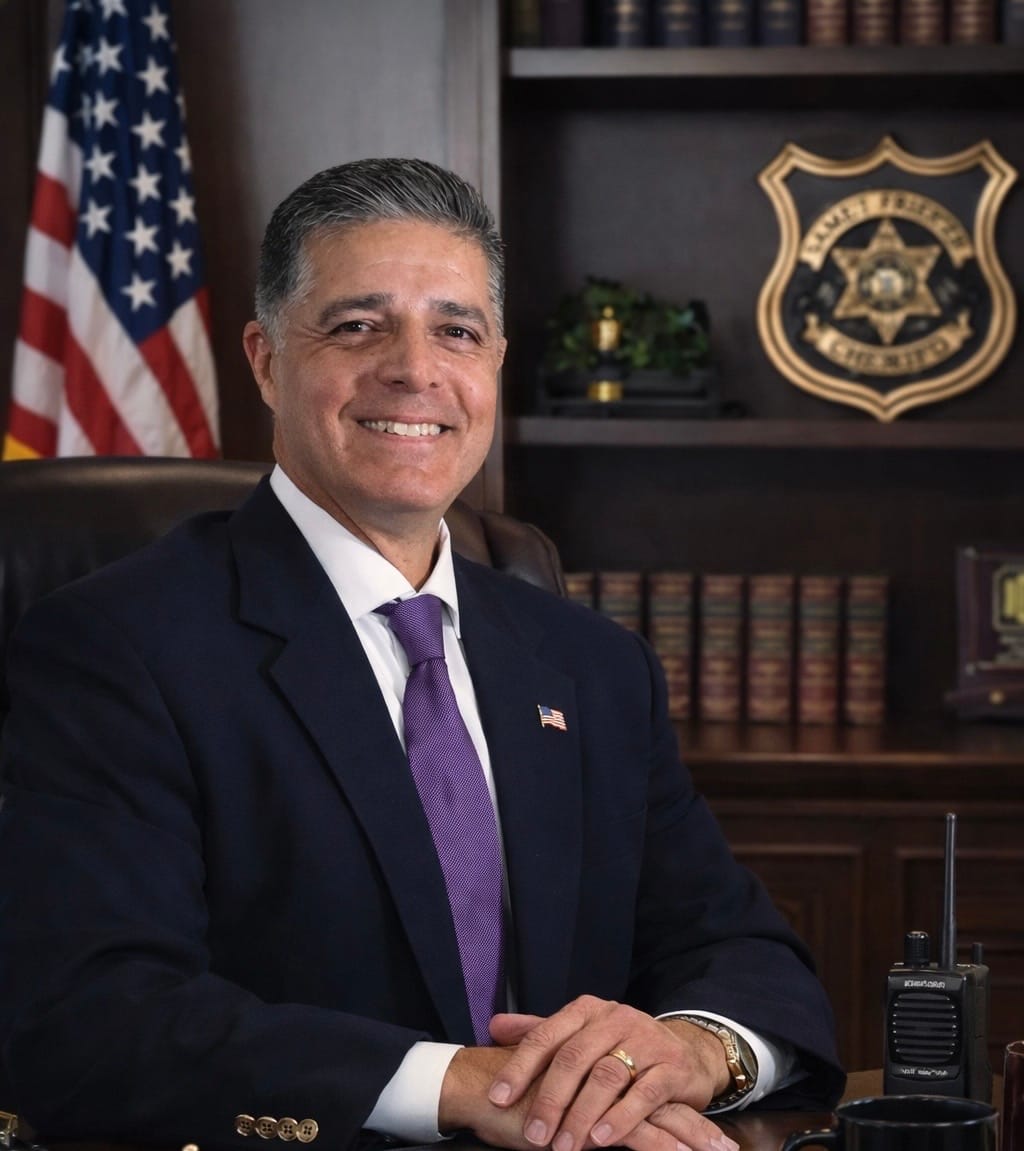
James Frietze
Age: 55
Place of residence: Las Cruces
Can you share a short bio of yourself?
I was born in Las Cruces and attended local schools. My family has been in the Mesilla Valley since the 1850's. I have been married for 29 years, and we have two sons. My father worked for El Paso Electric Company, and my mother worked as a teacher's aide for the Las Cruces Public Schools…. I graduated from NMSU with a bachelor's degree in criminal justice. I then applied and was accepted to the New Mexico State Police Academy. I served in the Uniform and Investigations Bureau, being stationed in Espanola, Las Cruces, Deming, and Alamogordo. I also served for nine years on the Tactical Team and five years on the Crisis Negotiations Team. … I served as the District Commander for the Alamogordo and Las Cruces Districts, respectively. I retired honorably from the state police after 25 years of service. I currently work for a company as a private investigator that contracts with State Risk Management, the New Mexico Association of Counties, and Municipal League to investigate their insurance claims. I also work for a sister company, where we conduct law enforcement application backgrounds and promotional assessments. I also serve as a commissioner on the Department of Public Safety Advisory Board, which I was appointed to by the governor in 2023.
What is your experience in law enforcement?
I have only served with the New Mexico State Police. I retired honorably after twenty-five years of service. I was assigned as a Patrolman in the Uniform Bureau in Espanola for five years. I was then transferred to the Las Cruces District, Uniform Bureau as a Patrolman. I also served as a detective in the Investigations Bureau, Southern District, based out of Las Cruces. I was then promoted to sergeant in the Uniform Bureau of the Deming District. I then returned to the Las Cruces Uniform Bureau as a sergeant. I was then promoted to lieutenant in the Las Cruces Uniform Bureau, where I served as assistant district commander. I was appointed by the state police chief as the District Commander of Alamogordo. I oversaw 9,249 square miles and 66,743 citizens as the commander. I was then transferred to the Las Cruces District as the commander, where I oversaw approximately 6,023 square miles and 242,798 citizens. During my time in State Police, I served for nine years as a member of the tactical team, an entry team member, a gas operator, a breacher, and a team leader. I then served as a crisis Negotiator for five years on the Southern Team. I also assisted with the New Mexico State Police Academy. ... I also served as a Headquarters Emergency Response Officer for Hazardous Material Incidents. …
Why are you running for Doña Ana County Sheriff?
Having served all over the State of New Mexico, I have witnessed where some Sheriff Departments have lacked in administrative knowledge. Many good deputies suffer as a result of this shortcoming. Having been exposed and gained experience in law enforcement administrative strategies. I am able to tailor a successful plan for commissioned staff and civilian staff of DASO. This included working with the county commissioners, management, legal division, and human resources. It also includes working with other justice partners, legislative partners, and civic organizations. The Doña Ana County Sheriff's Office deserves a leader who puts the best interests of its personnel first to better serve the community.
How would you work with the Doña Ana County Board of County Commissioners to best serve residents of the county?
Upon being the Sheriff-elect, I would meet with the County Commissioners one-on-one to find out what law enforcement needs of their constituents are in their districts. I would continue this relationship throughout my term as sheriff. I would be transparent about my plans, build a trustworthy network with the commissioners, and maintain this relationship throughout my term.
How would you approach the intersection of mental health crises and law enforcement response?
I am a mental health instructor contracted with the Health and Human Services Department of Doña Ana County. I would see that deputies receive proper training in responding to those in a mental health crisis. I would have deputies specifically trained to conduct follow-up contacts with citizens who need additional services. These deputies would call and/or meet with the individual to ensure that the individual is provided with additional resources. These initial contacts and follow-up contacts would be documented. Offering this service would strengthen the trust between deputies and the citizens they serve in these circumstances.
How will you ensure the sheriff's department adequately serves residents in rural areas?
I would re-establish the Chaparral substation and would like to create a substation in the Santa Teresa industrial area. I have spoken with the Otero County Sheriff about the possible use of their new substation in Otero as a temporary base of operations for the Doña Ana County deputies. I have spoken with respective legislators and personnel in these key areas. We all agree that we should cooperate on this endeavor. In addition, calls for service should not be ‘stacked.’ If needed, they could be dispatched to additional agencies for proper service.
How would you handle a situation where a deputy under your command was credibly accused of misconduct?
Accountability for wrongdoing by a deputy is paramount in building public trust and keeping morale high within the department. Upon conclusion of an internal investigation, if the accusations are upheld, the deputy will be held accountable through progressive discipline, including termination, if the event warrants such action. There needs to be respect for the deputy's bill of rights and union rights, as well. Consideration from county management is also included in the disciplinary decision-making. Lastly, this is a personnel matter and should be respected; as such, information will be limited to the public.
What is your position on cooperation with federal immigration enforcement agencies like ICE or Border Patrol?
Immigration is a federal responsibility and not that of local law enforcement. House Bill 9, which was passed in the February 2026 legislative session, prohibits local New Mexico law enforcement from participating/cooperating with federal immigration authorities. If DASO received a 911 call for service from either ICE or community members. DASO is required to respond; failure to do so would put the county in a position of civil litigation. A report would be generated and made available for later litigation, if necessary. I would not have DASO participate in immigration enforcement.
What is the biggest issue facing the sheriff's department today, and if elected, how would you address the issue?
Proper leadership and cooperation with local law enforcement agencies and government agencies. Establishing clear guidelines, policies, and goals for the deputies and civilian staff is essential; staff input is considered in their development. These can be amended as needed to better serve the staff. Fair treatment of staff is also paramount to creating a safe environment in which they can work and succeed.
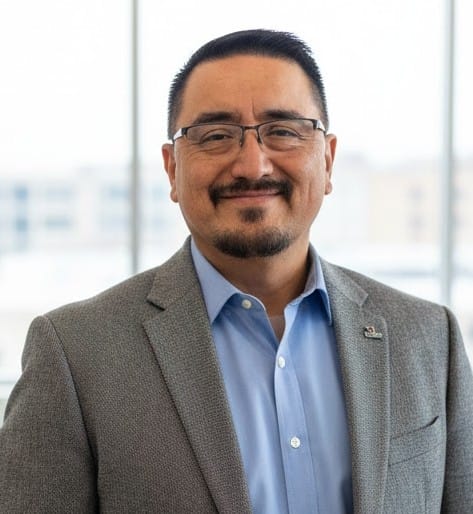
Rafael Reyes Jr.
Age: 51
Place of residence: Las Cruces
Can you share a short bio of yourself?
Currently serving as an Operations Director at Tigua Inc., where I manage several service contracts with the federal government. I was born in El Paso, and graduated from Austin High School in 1992, before enlisting in the U.S. Air Force. … Upon honorable discharge in 1999, I started a federal law enforcement career. … In 2006, I was eventually assigned to New Mexico, settling with my family in Las Cruces. I attended graduate school at New Mexico State University, completing a master’s degree in criminal justice in 2010. A year later, I was selected to attend the U.S. Army’s Command and General Staff College in Fort Leavenworth, Kansas, as an interagency student, where I earned a master’s degree in military arts and sciences. Upon graduation, I was reassigned to Washington, D.C., and later took several command assignments throughout the Southwest. I attended the Senior Management Institute for Police at Boston University and the FBI National Academy. In 2021, I was fortunate enough to return home, resettling once again in Las Cruces, where I retired after 25 years of service in the summer of 2024.
What is your experience in law enforcement?
I am a retired federal law enforcement executive with over two decades of distinguished service in the U.S. Border Patrol (1999-2024). I currently serve as the director of the Department of Homeland Security/Customs & Border Protection Operations for Tigua, Inc., where I lead strategic oversight and execution of multiple federal contracts supporting CBP. Prior to retiring from federal service, I served as the Patrol Agent in Charge of the Deming Border Patrol Station. … In 2022, I was appointed Acting Deputy Chief Patrol Agent for the Tucson Sector… From 2018 to 2021, I served as director of the Alliance to Combat Transnational Threats in El Paso. Earlier in my career, from 2014-2018, I held leadership roles as Patrol Agent in Charge in Clint, Texas, and Assistant Chief Patrol Agent in Del Rio, Texas. … From 2012-2014, I was assigned to the U.S. Border Patrol’s Headquarters in Washington, D.C., where I served as Assistant Chief in the Operations Division. … My operational foundation was built through earlier leadership assignments as a field operations supervisor in Santa Teresa, New Mexico (2009-2011) … From 1999-2006, I was a frontline Border Patrol agent at postings in South Texas and Arizona.
Why are you running for Doña Ana County Sheriff?
I am running because our community needs a sheriff who listens and because transparency and accountability are not optional. They are the foundation of public trust. I believe in the principles of 21st Century policing, of building trust and legitimacy, providing true community oversight of the agencies created to protect and serve them, in “real” community policing – not the buzz word that candidates like to use – but working with communities to solve their plaguing, non-law enforcement issues. My community needs an evolution in law enforcement, and I can bring that about.
How would you work with the Doña Ana County Board of County Commissioners to best serve the residents of the county?
I know effective law enforcement doesn’t happen in isolation. It requires strong relationships with the elected leaders who oversee county priorities, budgets, and long‑term planning. I have demonstrated experience working with legislators, working across party lines, negotiating with agencies, and building a consensus among diverse stakeholders. I will leverage that experience to bridge any gaps that exist between the department and the county’s elected representatives.
How would you approach the intersection of mental health crises and law enforcement response?
First, as a community we must accept that our experiment with outpatient treatment of mental health has failed. … For those that continue to pose a danger to themselves and others, options for mandatory detention and treatment must exist. I will champion legislation that brings this to fruition. As sheriff, I will ensure deputies receive recurring training to recognize the indicators of people in a mental health crisis. … I will implement clear procedures, expand the less‑than‑lethal tools available to deputies, and invest in stand‑off technologies, including the latest in remote monitoring and distance‑based control options. These tools give deputies time, space, and options, which are the core ingredients of real de‑escalation. My goal is to protect deputies, protect the public, and prevent unnecessary loss of life.
How will you ensure the sheriff's department adequately serves residents in rural areas?
There are several steps my department will take to increase service in our rural communities. First, enter into mutual-aid agreements with local agencies, cross designating these officers to respond to county calls for service. … Second, partner and train with federal agencies that have a large presence in our rural county to respond to critical incidents and mass casualty events. The last thing I would want is to meet these federal partners for the first time at the scene of a critical incident where seconds matter. Third, I would seek to establish a reserve force and champion for a rehired annuitant program to fill staffing shortages. Deploying these forces to the underserved portions of our county. Next, I would direct targeted recruitment in these communities and establish a “Resident Deputy” program that would incentivize deputies who take up residence there.
How would you handle a situation where a deputy under your command was credibly accused of misconduct?
I have held senior internal‑affairs responsibilities, investigating misconduct at the highest levels of my agency. I know what accountability looks like because I’ve enforced it. I would treat every accusation with the diligence of an investigation, ensuring the rights of the victim and the accused are protected. Recognizing that initial missteps could lead to continued harm toward the accuser and or accusations being unfounded. Immediately, in coordination with Doña Ana County personnel department, I would take steps to ensure that the accused is unable to continue the offense, prioritizing the protection of the victim and the public. I would initiate an internal affairs investigation into the accusation and, depending on the severity, notify the appropriate county officials … but within 24 hours of the event, I would inform the public of the accusation and the actions taken by the department to limit the harm.
What is your position on cooperation with federal immigration enforcement agencies like ICE or Border Patrol?
Immigration enforcement is the sole responsibility of the federal government. As sheriff, I will not interfere, nor impede their very important work. But New Mexico law (HB9) is very clear, local law enforcement does not enforce federal immigration law, and deputies in Doña Ana County are prohibited from questioning someone’s immigration status during routine duties. I support that. …
My priority as sheriff is public safety. … I spent decades working along the border, and I understand the difference between immigration issues and criminal threats. … However, cooperation with these federal agencies in mission spaces that support our community is essential, such as investigations into child pornography, human trafficking, drug smuggling, money laundering, and gangs. Supporting each other during critical incidents, to include mass casualty events, will save lives. Only entering into partnerships that are based on mutual respect for each other’s mission, authorities and limitations.
What is the biggest issue facing the sheriff's department today, and if elected, how would you address the issue?
It’s clear from the ‘hits and misses’ tour completed earlier this year by the current sheriff that our communities are demanding transparency – transparency in the department's operations, leadership and policies. Much can be blamed on the lack of communication and engagement with community stakeholders. To correct this, upon assuming the office, I will establish a community advisory council comprised of residents of Doña Ana County, giving residents a voice in the direction of the department. I will also establish a regular cadence of town halls, meetings with community leaders, publishing and distributing performance reports, and engagements with the board of county commissioners.
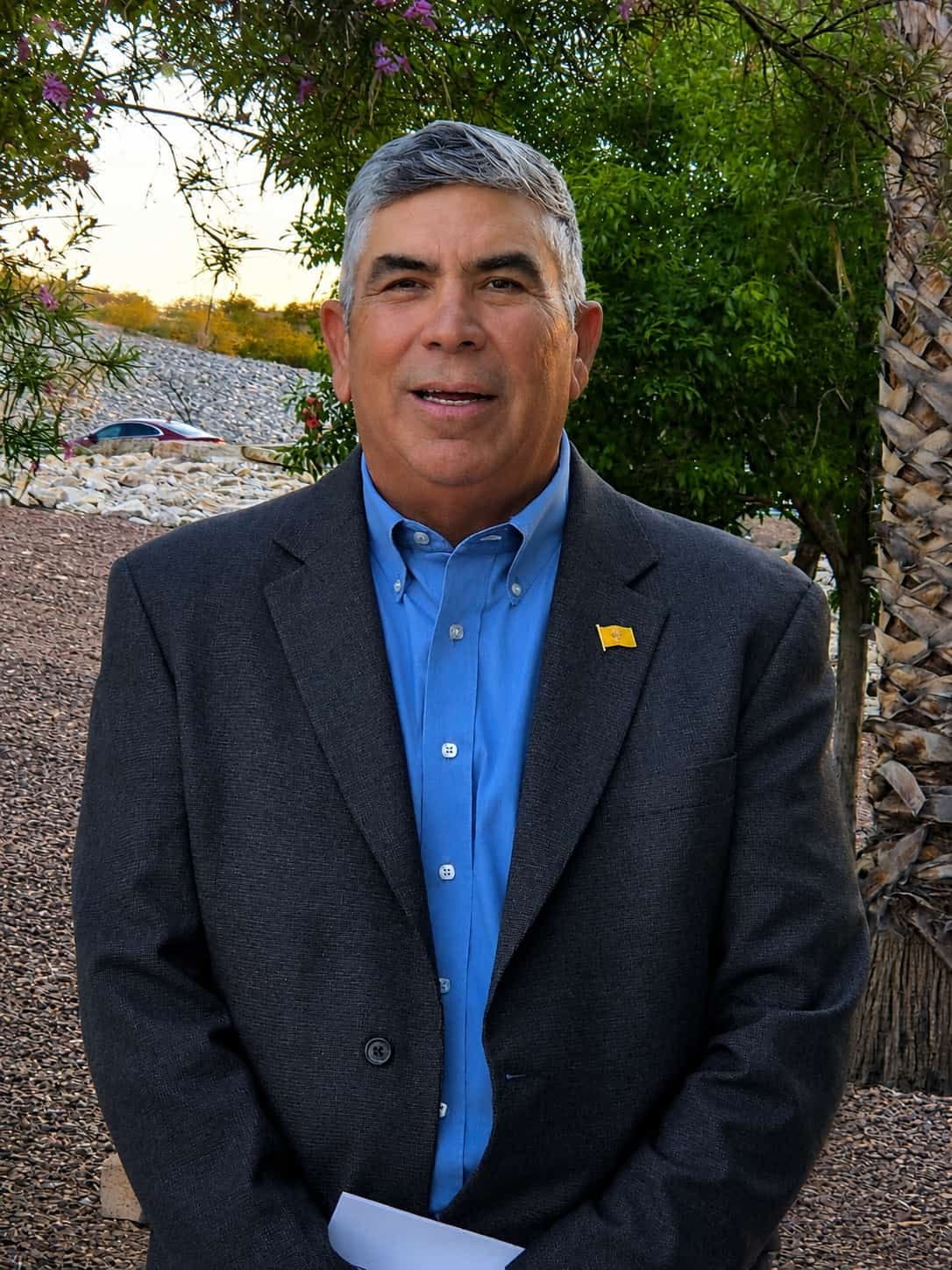
Eugene Alvarez
Age: 60
Place of residence: Las Cruces
Can you share a short bio of yourself?
Graduated Mayfield High School in 1984. Attended New Mexico State Police Academy and worked in Espanola and Santa Fe. I was assigned to the Governor's Security Detail for two years. Transferred to Las Cruces and retired as Mesilla Marshal in 2005. Started as an in-school suspension teacher at Santa Teresa Middle School, then as a substitute teacher at Santa Teresa High School. Finished my bachelor's in criminal justice administration and master's in secondary education with my teaching certification. Started as a school resource officer at Centennial High School, working 10 years in K-12, currently at Gadsden Middle School.
What is your experience in law enforcement?
New Mexico State Police, Governor's Security Detail (2 years), retired as Mesilla Marshal in 2005. Currently serving as a school resource officer with 10 years experience in grades K-12.
Why are you running for Doña Ana County Sheriff?
No response provided.
How would you work with the Doña Ana County Board of County Commissioners to best serve the residents of the county?
No response provided.
How would you approach the intersection of mental health crises and law enforcement response?
Create a mental health crisis response team.
How will you ensure the sheriff's department adequately serves residents in rural areas?
Focus on community engagement, working with nonprofits and community organizations to provide professional service with dignity and respect.
How would you handle a situation where a deputy under your command was credibly accused of misconduct?
Follow professional standards along with the county management department.
What is your position on cooperation with federal immigration enforcement agencies like ICE or Border Patrol?
Will not cooperate with ICE in enforcement of immigration laws. Will assist in emergency calls involving life endangerment.
What is the biggest issue facing the sheriff's department today, and if elected, how would you address the issue?
I strongly believe retention and recruitment of deputies is a priority. I believe flexibility in the schedule of deputies, more training, and bonus retention and seniority bonuses, which would not be a recurring debt to the budget, would help in retention of deputies."

Vanessa Ordoñez
Age: 42
Place of residence: Las Cruces
Can you share a short bio of yourself?
I am a proud first-generation American who is rooted right here in Doña Ana County. ... After graduating from Oñate High School, I joined the United States Navy and became a combat veteran at just 19 years old. ... After serving my country overseas, I returned home to Las Cruces. … I earned my master's degree in criminal justice administration and now have over two decades of law enforcement and military experience. … As former chief of police for the city of Anthony, I helped lead a department committed to results, transparency, and community trust, earning the safest city to live in New Mexico in 2025. … Most important to me, is being a mother to two amazing children and a wife to a retired law enforcement officer. We are a family of service.
What is your experience in law enforcement?
I bring a well-rounded and diverse background of over two decades of combined military and law enforcement experience. … I worked my way up through the ranks in the United States Navy law enforcement profession to a senior enlisted leader. … In 2010, I became a New Mexico certified peace officer. … I served with the Doña Ana County Sheriff’s Office as a patrol deputy, field training officer, crisis negotiator, and general police instructor. … More recently, I served as chief of police for the city of Anthony. … I am also a certified Mental Health and Domestic Violence Instructor, peer-to-peer support trainer, internal affairs certified, crisis negotiator, and I have maintained my New Mexico law enforcement certification. … In addition, I currently serve on several boards, including the Criminal Justice Judicial Council Committee as Victim Advocacy Chair, the Doña Ana Juvenile Justice Continuum Board, and I previously served as Chair of the Mesilla Valley Regional Dispatch Authority and on the New Mexico Chiefs of Police Association Executive Committee. … I also continue to serve our country as a United States Navy Reservist with an expeditionary warfare qualification. …
Why are you running for Doña Ana County Sheriff?
I am running for sheriff because I have dedicated my life to service, leadership, and protecting this community, and I believe Doña Ana County deserves experienced, accountable, and forward-thinking leadership. … I believe it is important to recognize and build upon the positive work already being done within the Sheriff’s Office. … I intend to continue building on those strengths, reinforce what is working well, and expand on those successes through consistent leadership and clear direction. … I am also running because I believe law enforcement must stay connected to the community it serves. I am not doing this for a title; I am doing it because I am prepared to lead, serve, and deliver results for Doña Ana County.
How would you work with the Doña Ana County Board of County Commissioners to best serve the residents of the county?
One of my priorities would be to strengthen collaborative initiatives with the county commission and key stakeholders so that we are aligned on priorities, funding, and long-term public safety strategies. That includes regular communication, shared problem-solving, and ensuring that resources are directed toward the areas of greatest need. Roles also need to be clearly defined. When leadership is aligned, outcomes improve. At the same time, it is critical to maintain a clear separation of powers and responsibilities. The commission’s role is to provide funding, policy direction, and oversight, while the Sheriff’s Office is responsible for law enforcement operations, execution, and maintaining public safety. … Internally, I would also focus on strengthening partnerships with community stakeholders, service providers, and other law enforcement agencies. Many of the issues we see such as addiction and mental health crises, cannot be solved by enforcement alone. They require a coordinated response that includes prevention, intervention, and enforcement working together.
How would you approach the intersection of mental health crises and law enforcement response?
As sheriff, I view the intersection of mental health crises and law enforcement as one of the most important public safety challenges we face. … Law enforcement still plays a critical role, but primarily as a stabilizing force focused on safety, de-escalation, and connecting people to the appropriate level of care. … I believe it can be helpful to strengthen coordination with the 988 crisis hot line and local behavioral health providers. … I would also encourage a mobile crisis response, where qualified clinicians respond. … We also need to ensure dispatch protocols are aligned so we are not defaulting to law enforcement response when a behavioral health response is more appropriate. Training is also essential. Deputies must be equipped with strong crisis intervention skills. … I also believe in follow-through. … Partnerships with behavioral health providers, hospitals, shelters, and courts are essential to break the cycle. …
How will you ensure the sheriff's department adequately serves residents in rural areas?
To me, serving rural communities comes down to coverage, response times, partnerships, and using resources the right way. … I would focus on making sure patrol coverage is based on real data, such as call volume, geography, and actual need, not just population numbers. … Response time is always a challenge in rural areas because of distance, so we have to be strategic. That means smart patrol positioning and making sure deputies are supported so they can operate effectively across large areas.
Partnerships are also critical. I would work closely with volunteer fire departments, EMS, and neighboring agencies to ensure we are coordinated during emergencies in remote areas. I would also strengthen cross-commission collaboration and maintain strong mutual-aid agreements with surrounding agencies so we can share resources quickly when needed. I also think technology plays a big role, improved interoperability, better use of data, and stronger situational awareness so we can deploy resources more effectively. …
How would you handle a situation where a deputy under your command was credibly accused of misconduct?
If a deputy under my command were credibly accused of misconduct, my first responsibility would be to ensure the safety of the public and the integrity of the investigation … At the same time, I believe strongly in due process. An allegation is not a conclusion, so I would ensure the investigation is thorough, impartial, and conducted through internal affairs or an independent investigative process when appropriate. … I would also ensure compliance with all reporting and accountability requirements. … Transparency is also critical. … Tools such as body-worn camera footage review are essential in establishing facts, and timely public communication helps maintain trust in the process. …
What is your position on cooperation with federal immigration enforcement agencies like ICE or Border Patrol?
I’m a first-generation American, and I’ve seen firsthand the struggles my mother faced before she became a U.S. citizen. I understand how fear and uncertainty can keep people from speaking up. … Involvement with federal immigration enforcement like ICE should be limited and strictly guided by law, not expanded into routine local policing. When local agencies become involved in immigration enforcement, it can create fear in communities, making victims and witnesses less likely to report crime or cooperate with investigations. … The Immigrant Safety Act (H.B. 9) also gives clear direction, and as sheriff, my job would be to implement it in a way that keeps our community safe. …
What is the biggest issue facing the sheriff's department today, and if elected, how would you address the issue?
One of the first things I would look at is whether the Sheriff’s Office is fully aligned internally in making sure every person is in the right role, properly supported, and set up to succeed. A key priority would be strengthening and investing in civilian staff. They are the backbone of the department, and they are handling critical support functions that allow deputies to focus on field operations. When civilian staff are understaffed or under-supported, it can impact the entire system of operations. … My goal as sheriff would be to build a department that is properly staffed, properly supported, and structurally aligned to meet today’s realities so deputies can focus on the situations where they are truly needed most.
Jonny Coker is a freelance journalist working with the Southern New Mexico Journalism Collaborative, a partnership of newsrooms covering important topics. Reach SNMJC at SouthNMnews@gmail.com. Visit SouthNMnews.org or SurNMnoticias.org for more information.
Keep Reading
Organ Mountain News launches southern New Mexico listening initiative — We have launched a new community listening survey focused on the issues, concerns and experiences shaping life across southern New Mexico, with five $50 Amazon gift cards available for participants.
Three inmates accused of beating, tasing officer at Doña Ana County Detention Center — Federal prosecutors allege three inmates beat a correction officer unconscious and used his own Taser on him during a 22-second assault at the Doña Ana County Detention Center.
Meet the Republican candidates for Doña Ana County sheriff — The Southern New Mexico Journalism Collaborative asked Republican candidates for Doña Ana County sheriff about public safety priorities, staffing, transparency and the future direction of the department ahead of the June primary election.