Heinrich demands answers on data centers proposed for federal public lands
Sen. Martin Heinrich demands BLM disclose data center proposals on public lands, their environmental reviews and legal authority by Nov. 20.
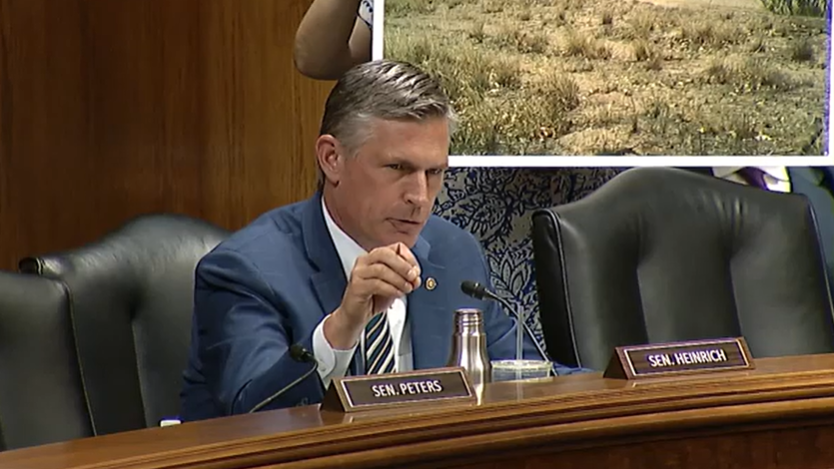
The New Mexico senator is seeking details from BLM Director Steve Pearce about at least 15 reported development proposals covering more than 17,000 acres across six Western states.
Organ Mountain News report
WASHINGTON - U.S. Sen. Martin Heinrich is demanding that the Bureau of Land Management disclose details about proposals to develop artificial intelligence data centers on federal public lands, raising questions about environmental oversight, public participation and the Trump administration's efforts to accelerate construction.
In a letter dated Friday, Nov. 6, Heinrich, D-N.M., gave BLM Director Steve Pearce until Nov. 20 to provide information about the legal authorities supporting data center development, the projects under consideration and the public lands identified as potential development sites.
Heinrich, the ranking Democrat on the Senate Energy and Natural Resources Committee, cited reports that BLM is considering at least 15 proposals involving data centers or related infrastructure across more than 17,000 acres in six Western states.
"I am extremely concerned with the Trump administration's actions to develop data centers on public lands," Heinrich wrote.
In a separate social media statement Friday, the senator expressed his opposition more directly: "No data centers on public lands. Period."

Nevada project raises environmental review questions
Heinrich pointed to the Townsite Data Center in Boulder City, Nevada, as an example of the administration's approach.
BLM approved the 88-acre project in June by amending an existing federal right-of-way authorization originally issued for a solar energy and battery storage development.
The agency's decision allowed the site to be used for a data center without conducting a new environmental review under the National Environmental Policy Act, commonly known as NEPA.
That approach was challenged by Boulder City and environmental groups.
On Sept. 1, the Interior Department's Board of Land Appeals paused the project after finding that the challengers had presented a persuasive argument that BLM violated federal environmental review requirements.
The board questioned BLM's determination that the proposed data center was substantially the same as the previously approved solar project.
The stay halted development while the administrative appeal proceeded. It was not a final determination of the project's legality.
Heinrich argued that the case illustrates the importance of examining how data center proposals are reviewed before federal land is committed to new uses.
Administration seeks accelerated development
The Nevada approval followed a July 2025 executive order from President Donald Trump aimed at accelerating federal permitting for data center infrastructure.
The order identified data centers and their supporting energy infrastructure as priorities for federal permitting, including projects involving federal land.
In September 2026, Trump issued another executive order providing additional authorities to Interior Secretary Doug Burgum concerning energy production and related development.
Heinrich's letter also cites reporting that BLM has instructed state directors to identify federal lands suitable for data centers, with Interior Department leadership treating the effort as a priority.
Federal public lands are managed under a multiple-use framework that requires BLM to consider competing uses, including recreation, conservation, grazing and energy development.
"When BLM makes decisions about public land, it should always consider the best interest of the public and the communities that will be directly impacted by its decision," Heinrich wrote.
The senator argues that accelerating data center approvals should not come at the expense of environmental review or public involvement.

Heinrich seeks project details by Nov. 20
Heinrich's letter requests three categories of information from BLM.
First, he wants a complete account of the federal authorities being used to support data center development, including the legal reasoning and precedents underlying those decisions.
Second, he is seeking a comprehensive inventory of projects under consideration.
For each proposal, Heinrich wants BLM to identify the developer, location, acreage and intended use of federal property, including whether the land would accommodate buildings, electrical transmission lines, roads or other supporting infrastructure.
He also wants to know whether each proposal will receive environmental review, whether existing right-of-way approvals will require new reviews and whether members of the public will have an opportunity to comment.
Finally, Heinrich is requesting a complete list of federal public lands BLM has identified as eligible for data center development.
The senator's request follows growing scrutiny of the infrastructure demands associated with artificial intelligence facilities, including electricity consumption, transmission capacity and the allocation of costs.
As Organ Mountain News recently reported, research from the Federal Reserve Bank of Dallas estimated that data center demand increased wholesale electricity prices in the Arizona-New Mexico electricity market by 8.6% during 2024-25.
Heinrich has separately proposed federal legislation intended to prevent residential and other existing electricity customers from bearing certain infrastructure costs associated with large data center developments.
His latest inquiry addresses a different question: whether federally owned land should be made available for the facilities and, if so, under what legal and environmental safeguards.
The federal proposals discussed in Heinrich's letter are distinct from Project Jupiter, the privately developed data center project proposed for Santa Teresa in Doña Ana County.
The Nov. 6 letter does not identify individual projects in New Mexico or establish that any particular New Mexico federal lands have been selected for development.
Heinrich has requested BLM's response by Nov. 20. The agency's answers could clarify how many projects are under consideration, where they would be located and what opportunities affected communities would have to participate before decisions are made.
The senator's full letter to Pearce is available through the Senate Energy and Natural Resources Committee.