Heinrich presses federal officials as Rio Grande water pressures grow across New Mexico
Sen. Martin Heinrich pressed federal officials over Rio Grande water management, El Vado Dam delays and New Mexico water infrastructure during a Senate hearing this week.
Senator warns worsening shortages and delays at El Vado Dam are making the river system harder to manage for downstream communities and agriculture
Damien Willis, Organ Mountain News
WASHINGTON - Martin Heinrich pressed federal water officials this week over mounting pressure on the Rio Grande system, warning that worsening shortages and delays restoring a key upstream reservoir are creating growing risks for communities and agriculture across New Mexico.
During a U.S. Senate Appropriations subcommittee hearing on President Donald Trump’s proposed FY27 budget for the U.S. Army Corps of Engineers and Bureau of Reclamation, Heinrich questioned federal officials about Rio Grande water allocation decisions, the future of El Vado Dam and long-term planning for the river basin.
“It’s getting harder and harder to manage the Rio Grande, in the current situation, given that there’s not enough water to go around,” Heinrich said during the hearing.
One of the central issues discussed was El Vado Dam, a major upstream storage facility in northern New Mexico that has remained effectively offline because of structural and seepage concerns.
Although located hundreds of miles north of Las Cruces, El Vado plays a major role in storing and regulating water that ultimately moves through the Rio Grande system into southern New Mexico.
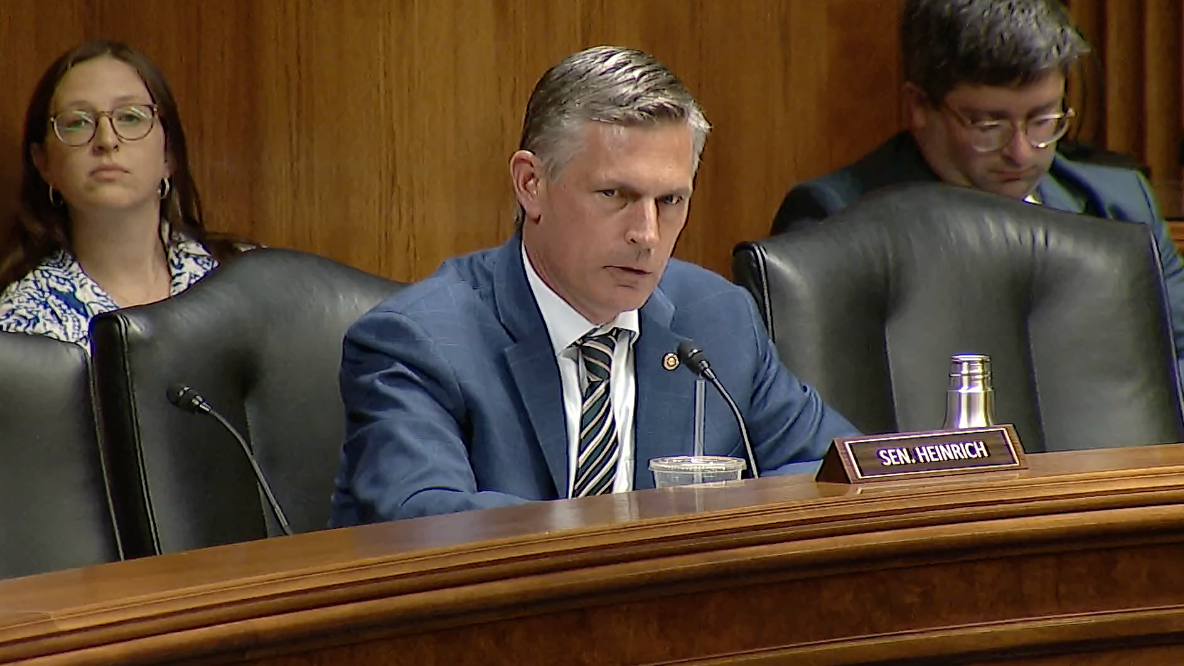
U.S. Sen. Martin Heinrich questions federal officials during an Energy and Water Development Appropriations Subcommittee hearing on May 20, 2026, focusing on Rio Grande water management, El Vado Dam restoration and water infrastructure issues affecting New Mexico. (U.S. Senator Martin Heinrich YouTube channel)
Heinrich told federal officials that the dam’s ongoing problems are worsening pressure on an already strained river system.
“One of the reasons why we’re in such a tough spot right now in the Rio Grande is because one of our most significant storage facilities, El Vado Dam, is basically offline right now,” Heinrich said.
The Rio Grande supports irrigation and agriculture throughout southern New Mexico, including chile, pecan and onion production, while also supplying water to communities across the region.
Assistant Secretary for Water and Science Andrea Travnicek told Heinrich that federal officials are continuing field studies and drilling work related to seepage concerns at the dam site, with major assessment work expected to continue through the summer.
“The goal is that the field work will be going on this summer,” Travnicek said. “But hopefully we can figure out what that preferred alternative is, and then get that back up and running.”
The hearing also exposed tensions between federal agencies over long-term Rio Grande planning.
Heinrich pushed the Army Corps of Engineers to participate in a congressionally directed effort involving the National Academies of Sciences to identify long-term water resource solutions for the Rio Grande Basin.
Army Corps officials responded that they were uncertain whether the agency had sufficient authority or funding to participate in the collaboration.
Heinrich pushed back, arguing that Congress had already provided multiple legal authorizations for the work.
“I think we have plenty of authorization,” Heinrich said. “I think what we’re asking for here is basically just technical assistance.”
The senator also questioned officials about the Army Corps’ reduced role in the Rio Grande Endangered Species Collaborative Program and delays involving WaterSMART grants intended to improve watershed resilience and reduce stress on western river systems.
Federal officials said they would follow up with Heinrich’s office regarding project timelines, participation questions and the status of Army Corps projects in New Mexico.
Damien Willis is founder and editor of Organ Mountain News. If you have a personal story to share or a lead we should follow up on, reach out at OrganMountainNews@gmail.com or connect with him on X at @damienwillis.
Keep Reading
Registration opens May 30 for Las Cruces summer swim lessons — Las Cruces will offer three swim lesson sessions in June and July at East Mesa Pool and Laabs Pool.
NMSU, DACC create pathways to four-year degrees in agriculture and beyond — A new DACC-to-ACES Aggie Pathway connects four associate degree programs to 15 agriculture-related bachelor’s degree programs at NMSU.
Las Cruces restores full funding for LCPS community schools program — City councilors voted to keep the city’s annual contribution at $150,000 instead of reducing it to $90,000.