
LCPS grading proposal faces board pushback over homework deadlines, teacher autonomy
LCPS board members challenged proposed grading changes Oct. 20, prompting revisions and clarification of the district's existing 40% minimum grading rule.
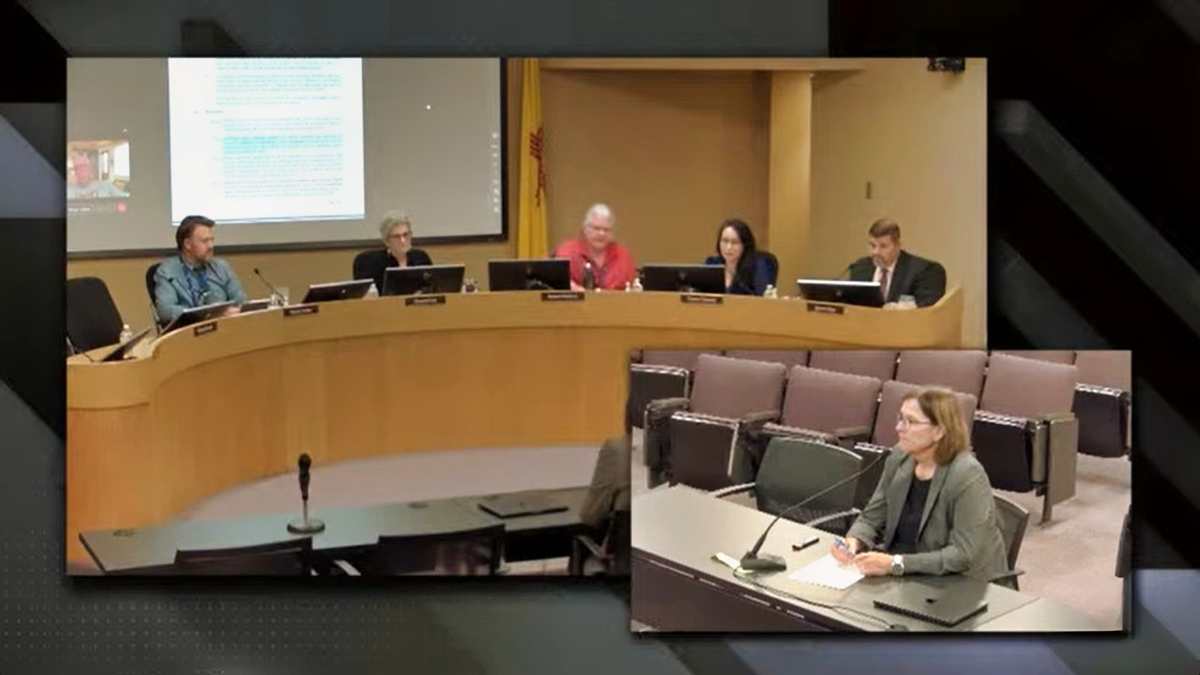
Board members challenged proposed restrictions on grading late work, while officials clarified that an existing 40% minimum grading rule remains in effect
Damien Willis, Organ Mountain News
LAS CRUCES - A proposal to prohibit Las Cruces Public Schools teachers from lowering academic grades for late assignments encountered resistance from several school board members Oct. 20, prompting district officials to reconsider the language before the policy returns for a second reading.
The debate exposed disagreements over teacher autonomy, student accountability and how grades should reflect academic achievement. It also revealed confusion among board members about a separate grading rule establishing a minimum score of 40% for completed assignments, even when students have not demonstrated mastery.
The discussion came during the first reading of proposed revisions to Policy IKAB, Grading and Reporting, which was last revised in 2018. The proposed addition would establish that academic grades measure mastery of content standards and must not be lowered or inflated because of disciplinary issues, attendance or work habits, including turning in homework late.
Board members challenge proposed restrictions
Board member Ed Frank objected to putting explicit restrictions on late homework into board policy, arguing that teachers and their supervisors should retain discretion over how assignments are handled. Although he acknowledged that missed homework should not disproportionately reduce a student's grade when academic proficiency has been demonstrated, he said the proposed wording went too far.
"I think it's a huge mistake for the school board to set a policy about homework or late assignments," Frank said. "I think that should be left to the individual teacher to be worked out with her supervisor."
Vice President Robert Wofford raised similar concerns, describing classroom writing workshops in which students exchanged drafts and provided feedback. When a student failed to submit an assignment on time, he said, classmates lost an opportunity to participate in the exercise. Wofford argued that the proposed wording did not adequately recognize such situations or the professional judgment teachers exercise when assessing student progress.
Board Secretary Patrick Nolan also questioned the need for the proposed restriction, calling it "a solution looking for a problem." Nolan said he understood the importance of measuring academic mastery but worried that the language could undermine deadlines and teacher discretion.
Board member Teresa Tenorio expressed concerns about the importance of deadlines in motivating students and teaching responsibility. She suggested that decisions about missed assignments should allow for communication between individual teachers and students rather than imposing rigid districtwide requirements.

Board president acknowledges need for changes
Board President Pamela Cort said she had worked with Deputy Superintendent Wendi Miller-Tomlinson to develop the proposed addition. Cort explained that her concerns included students whose academic understanding might not be accurately reflected in grades because of language barriers. A student learning English, for example, might understand the subject matter but receive a lower grade because of difficulty expressing that knowledge in English.
Cort maintained that academic grades should measure what students know rather than unrelated behaviors, but she acknowledged that the proposed wording needed refinement after hearing objections.
"My words were probably not the best," Cort said, adding that including late homework as an example may have been a mistake.
"Even though it is my name on this policy with Dr. Miller-Tomlinson, I would welcome any help in rewording and reworking," Cort said. "And I certainly am not trying to take away teachers' autonomy. I was a teacher for a long time; that wasn't my point."
Cort added that she was surprised by some of the public comments but that the feedback prompted her to reconsider how the language could be improved.
District defends grading for academic mastery
Miller-Tomlinson said she would work with Cort to incorporate changes before the next reading. She argued that grades should reflect demonstrated learning, while late assignments and other behavioral concerns should prompt interventions rather than automatically lower academic scores.
"Penalties for late work, penalties for not completing an assignment — those are penalties for behavior, not mastery," Miller-Tomlinson said. "If I can do two-digit multiplication just fine, but I left my paper at home and now I don't get a grade, that zero in the grade book shows that I don't have that skill. It's an inaccurate reflection of mastery."
Miller-Tomlinson acknowledged the need to preserve teachers' professional judgment while establishing more consistent grading practices across classrooms. She said the district received approximately 11 emails about the proposal before the meeting, characterizing much of the feedback as concern that LCPS was lowering expectations or rewarding students who failed to complete their work.
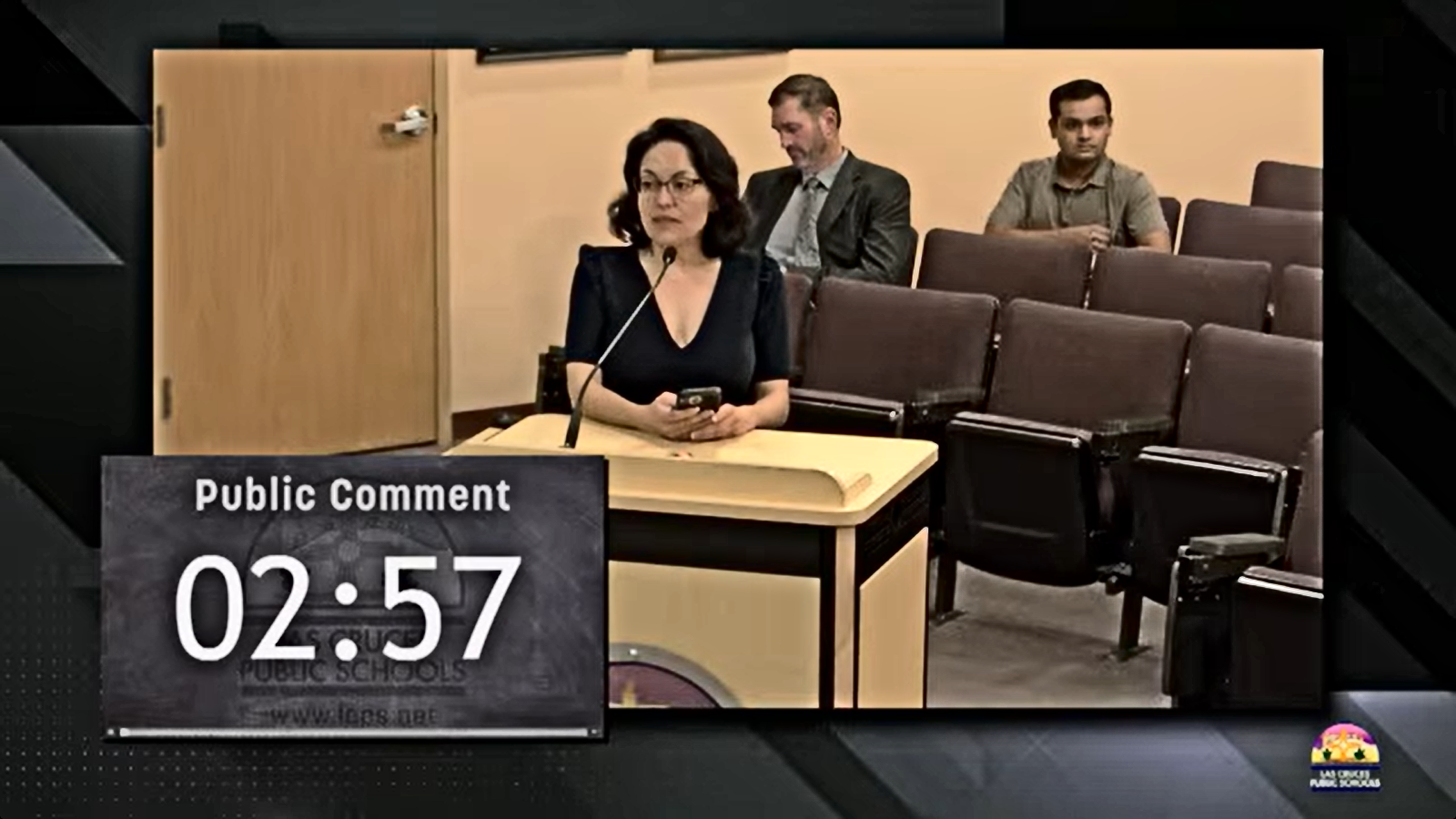
Sarah Mata, a special education teacher at Organ Mountain High School and an LCPS parent, addressed the board during public comment in her personal capacity. Mata questioned how the district would reinforce responsibility, deadlines and other skills students need beyond the classroom if those expectations were separated from academic grades. She also asked how families would learn when students struggled with those responsibilities and what additional work teachers might be expected to perform.
Existing 40% grading rule sparks confusion
The discussion also brought attention to a separate provision in the district's existing grading regulations. At approximately 2:55 into the meeting, Tenorio asked whether LCPS had eliminated a former minimum grading requirement that prevented students from receiving scores below 40%.
Miller-Tomlinson initially confirmed that the requirement had been eliminated. However, Superintendent Ignacio Ruiz later clarified that the provision remains in Regulation IKAB-R.
Under the regulation, teachers may assign a zero to work that has not been submitted or does not provide evidence of learning. Students who complete an assignment but do not demonstrate mastery, however, cannot receive a score below 40%.
That distinction appears in the district's Jan. 20, 2025, revision of the regulation. A comparison with the August 2022 version shows that the earlier regulation did not contain the 40% minimum or the separate "No Evidence" grading category. The 2025 revision also changed the district's description of an F from a score of 50-59 to a score below 59.
The minimum does not guarantee a passing grade. Instead, it limits how low teachers may score completed assignments that fall short of demonstrating mastery. Cort questioned whether awarding 40% accurately reflects student knowledge, and Miller-Tomlinson reiterated that the minimum does not apply when students provide no evidence of learning.
Existing regulations still establish deadlines
LCPS regulations already require middle and high school students to complete missed work within specified timeframes. Students generally receive one day to make up assignments for each day missed because of an absence, whether excused or unexcused. Certain long-term projects and term papers must meet their original deadlines even when students are absent, unless administrators grant exceptions for extenuating circumstances.
The current regulation also states that grades should reflect academic standards and skills rather than participation, effort or attendance, a provision appearing in both the 2022 and 2025 versions. The proposed policy amendment would more explicitly address work habits, particularly late homework, at the school board policy level.
How those restrictions would operate alongside existing assignment deadlines was among the concerns raised during the meeting.

Revised proposal expected in November
The Oct. 20 discussion was a first reading, and the board took no vote on the proposed changes. Cort and Miller-Tomlinson indicated they would reconsider the language based on board members' comments before presenting a revised version.
The policy is expected to return for a second reading in November, with questions remaining about how the district will distinguish academic mastery from work habits, how much discretion teachers will retain over late assignments and whether the revised policy will establish clearer expectations for students and families.
Meanwhile, the existing grading regulation, including the 40% minimum for completed assignments, remains in effect.
Damien Willis is founder and editor of Organ Mountain News. If you have a personal story to share or a lead we should follow up on, reach out at OrganMountainNews@gmail.com or connect with him on X at @damienwillis.


