Non-heroin opioids rose to 44% of New Mexico young-adult treatment admissions
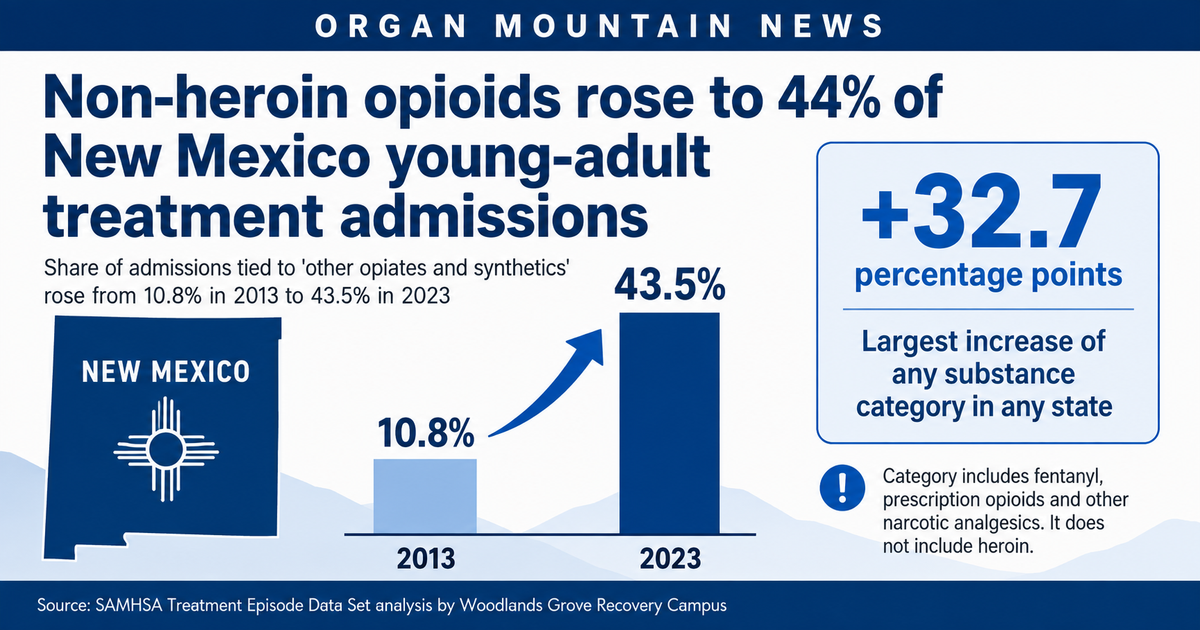
Non-heroin opioids accounted for nearly 44% of New Mexico treatment admissions among young adults in 2023, up from about 11% a decade earlier.
A new analysis of federal treatment data found New Mexico had the nation’s largest increase in the share of admissions attributed to a broad category that includes fentanyl, prescription opioids and other narcotic analgesics
Damien Willis, Organ Mountain News
LAS CRUCES - Non-heroin opioids accounted for nearly 44% of substance-use treatment admissions among young adults in New Mexico in 2023, up from about 11% a decade earlier, according to a new analysis of federal treatment data.
The increase was the largest shift involving any substance category in any state included in the analysis.
Woodlands Grove Recovery Campus analyzed admissions data from the federal Substance Abuse and Mental Health Services Administration’s Treatment Episode Data Set, comparing primary substances reported among adults ages 18 to 24 in 2013 and 2023.
In New Mexico, the share attributed to “other opiates and synthetics” rose from 10.8% in 2013 to 43.5% in 2023 — an increase of 32.7 percentage points.
The federal category includes fentanyl and fentanyl analogs, prescription opioids, tramadol and other narcotic analgesics. It does not include heroin.
The data does not allow researchers to determine how much of New Mexico’s increase was specifically attributable to fentanyl.

Share rose as overall admissions fell
The increase also does not mean the number of young New Mexicans entering treatment for non-heroin opioids quadrupled.
The analysis measures each substance as a share of treatment admissions, and the overall number of recorded admissions among 18- to 24-year-olds declined sharply during the decade studied.
Nationally, treatment admissions in that age group fell from 314,681 in 2013 to 124,540 in 2023 — a decline of 60.4%.
Woodlands Grove said it used percentages rather than raw admission counts because of that shrinking treatment population.
The federal data also tracks admissions rather than unique individuals. A person admitted for treatment more than once may appear more than once in the dataset.
Heroin declined as other opioids gained ground
Nationally, heroin moved in the opposite direction.
Heroin accounted for 24.9% of young-adult treatment admissions in 2013 but just 5.6% in 2023, according to the analysis.
During the same period, the broader “other opiates and synthetics” category rose nationally from 11.2% to 17.2% of admissions.
Methamphetamine increased from 7.3% to 12.2%, while alcohol rose from 22.4% to 26.7%.
The substances gaining the most ground varied widely by state. Other opiates and synthetics were the fastest-rising category in 16 states and jurisdictions, while methamphetamine led in 16 and alcohol led in 10.
New Mexico’s 32.7-point increase in non-heroin opioids was the largest single increase among the states and jurisdictions with sufficient data for comparison.
Support local journalism
Organ Mountain News provides independent reporting for southern New Mexico without a paywall. If you value this work, please consider supporting the newsroom with a one-time or monthly contribution.
Support Organ Mountain NewsWhat the data can — and cannot — show
The analysis does not measure how common opioid use is among all young adults in New Mexico, nor does it measure unmet need for treatment.
It shows how the mix of substances associated with treatment admissions changed among the smaller population that entered treatment.
Woodlands Grove described New Mexico’s numbers as part of a broader post-heroin shift in the substance-use landscape, but cautioned that the federal data cannot isolate fentanyl as its own primary substance.
The analysis included 49 states and jurisdictions with sufficient data for comparison. Delaware, South Carolina and West Virginia were excluded because usable 2023 comparison data was unavailable, while jurisdictions with fewer than 100 young-adult admissions in 2023 were omitted from the rankings.
Damien Willis is founder and editor of Organ Mountain News. If you have a personal story to share or a lead we should follow up on, reach out at OrganMountainNews@gmail.com or connect with him on X at @damienwillis.
Keep Reading
LCPS pays $11.3M for annual insurance coverage, up 14% from last year — District officials say rising property, liability and workers’ compensation costs are driving the increase.
Sunland Park voters to decide $8.25M bond package in November — Three ballot questions would fund recreation, public safety, roads and water and wastewater projects.
State Supreme Court asked to table Project Jupiter air quality permit process — New Energy Economy is asking justices to halt the proceeding before a Sept. 14 hearing, alleging due-process violations.