Oracle's renewable energy plan raises questions over Project Jupiter emissions, local benefits
Oracle's renewable energy plan may not directly power Project Jupiter, raising questions about local benefits and 8.8 million tons of potential annual emissions.

County commissioners questioned plans to develop 2 gigawatts of carbon-free electricity that could be generated elsewhere in New Mexico without directly powering the Santa Teresa data center.
Damien Willis, Organ Mountain News
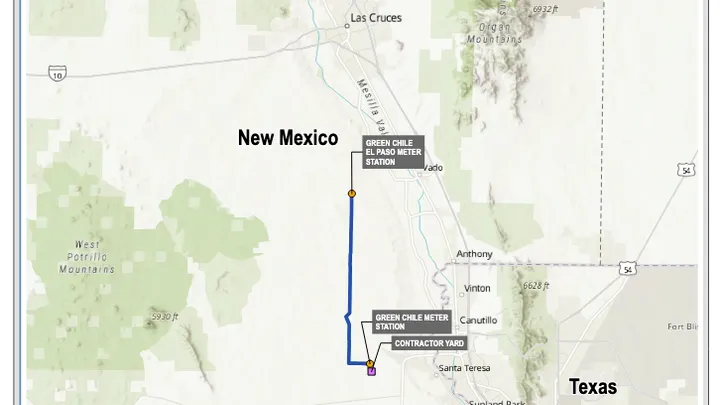
LAS CRUCES - Oracle's plan to develop 2 gigawatts of carbon-free electricity in New Mexico does not currently require that energy to directly power Project Jupiter, company executives acknowledged Tuesday, raising questions from Doña Ana County commissioners about whether the investments would reduce emissions from the massive data center development near Santa Teresa.
The exchange during the Oct. 13 County Commission meeting exposed a distinction between Oracle's commitment to match the project's electricity consumption with carbon-free generation by 2031 and replacing the natural gas that will power its on-site fuel cells. According to a July draft permit analysis by the New Mexico Environment Department, the proposed Project Jupiter microgrid could produce approximately 8.8 million tons of greenhouse gas emissions annually at maximum operation.
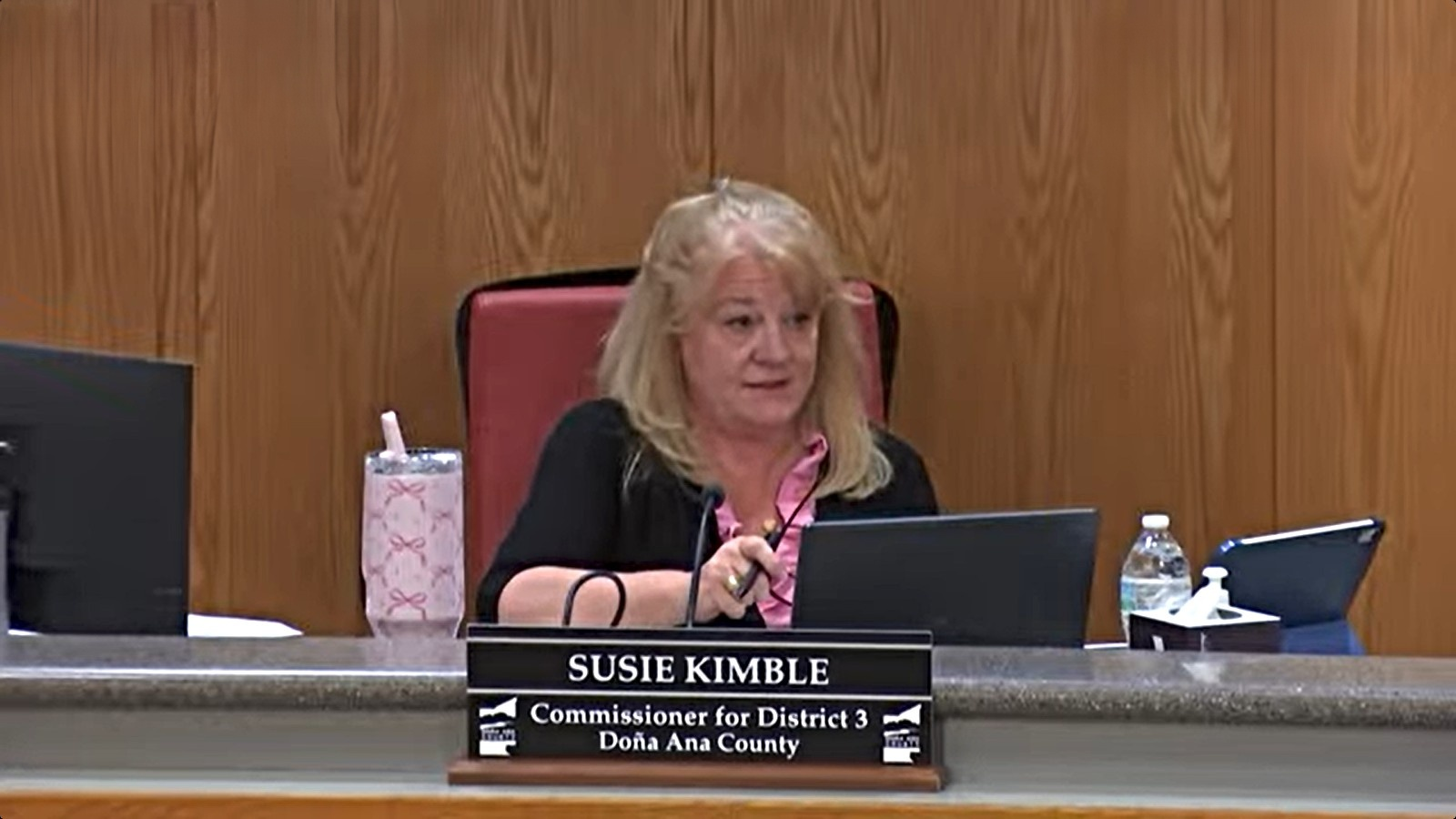
Commissioner Susie Kimble questioned whether renewable energy projects elsewhere in New Mexico would meaningfully address those emissions or deliver the economic benefits promised to Doña Ana County. Oracle Executive Vice President Magesh Thiagarajan said the company would prioritize projects in the county but acknowledged that directly supplying Project Jupiter with renewable electricity is not its current plan.

Renewable energy investments could extend beyond Doña Ana County
Oracle announced in September that it was soliciting proposals for 2 gigawatts of carbon-free electricity generation in New Mexico, part of its goal of matching 100% of Project Jupiter's electricity consumption with carbon-free energy by 2031. The initiative could include solar, wind, geothermal and other qualifying energy technologies. During Tuesday's presentation, Oracle representatives said the company had received approximately 40 responses and expected to select projects by early 2027.
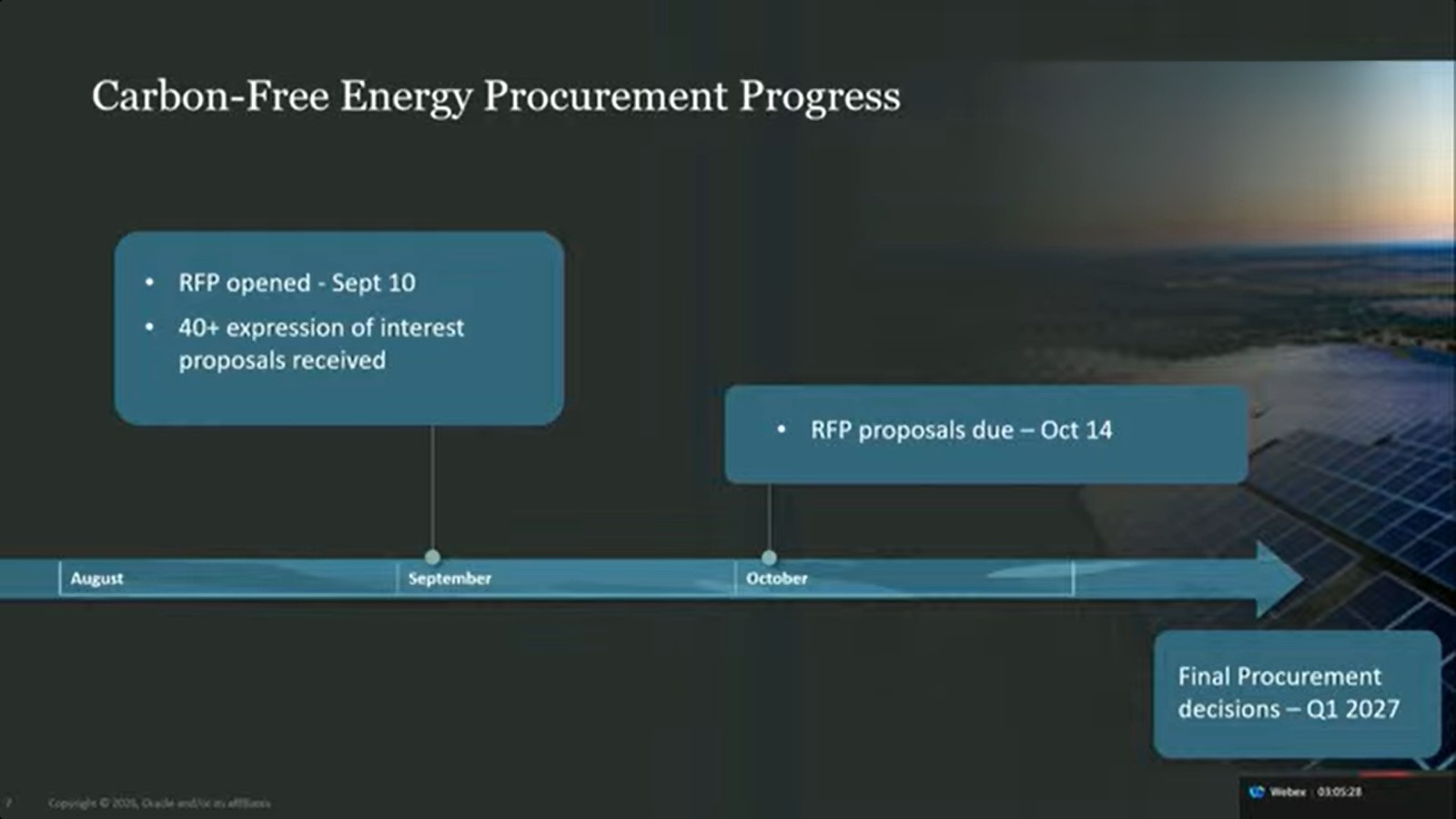
But Kimble questioned why the solicitation permitted developers to propose facilities anywhere in New Mexico rather than requiring investments in Doña Ana County, where economic development has been a central justification for the massive data center project.
"We don't want it to be in Farmington, we don't want it to be in Albuquerque," Kimble said. "We want it to be here and that's not what it says in the RFP."
Thiagarajan said Oracle wanted flexibility to meet its 2031 deadline if local projects faced delays involving land acquisition, easements or other obstacles. While he said the company would prioritize Doña Ana County and involve commissioners before final selections, he stopped short of promising that all projects would be developed locally.
"The short answer is I made a commitment to you first that I will do everything in my power to make sure those projects are selected here," Thiagarajan said.
Kimble then pressed him on whether the renewable facilities would actually supply electricity to Project Jupiter.
"So we currently have not taken that goal to actually put that back to our site, but it is very possible," Thiagarajan responded.
"Well, why wouldn't you do that?" Kimble asked.
Thiagarajan explained that Oracle envisioned supporting renewable electricity generation that could serve other businesses in New Mexico, rather than necessarily replacing the power produced by Project Jupiter's natural gas microgrid. The company could redirect that electricity to its own data center if circumstances warranted, he said, but that was not its present approach.
"I can actually change that course and select that as well," he said. "But right now, that's not plan of record."
The distinction is consequential because Project Jupiter is designed to generate most of its electricity using an on-site microgrid powered by natural gas. Producing an equivalent amount of renewable electricity elsewhere may contribute additional carbon-free generation to New Mexico's electricity supply, but it does not, by itself, eliminate carbon dioxide released by the microgrid serving the data center.

State documents estimate 8.8 million tons of annual emissions
The greenhouse gas figure raised by Kimble is supported by New Mexico Environment Department permitting records. Yucca Growth Infrastructure LLC, the company seeking approval for Project Jupiter's power system, submitted an air quality permit application in April estimating maximum annual greenhouse gas emissions of 10,144,115 tons of carbon dioxide equivalent.
The department's July 29 draft statement of basis reduced that figure to 8,820,970 tons annually after rejecting a 15% safety factor included in the applicant's calculations. The original estimate assumed the proposed facility would operate at full capacity for 8,760 hours per year, equivalent to continuous operation. The revised figure represents estimated potential emissions under the assumptions used in the draft regulatory review, not measured emissions from an operating facility or an independently verified final permit limit.
The proposed microgrid would use Bloom Energy solid oxide fuel cells to convert natural gas into electricity through an electrochemical process rather than conventional combustion. Although the process produces fewer traditional combustion-related air pollutants, it still releases carbon dioxide. NMED's draft statement of basis describes the fuel cells' exhaust as approximately 95% carbon dioxide once dried and identifies approximately 2.46 gigawatts of proposed electrical generation capacity.
Kimble argued that Oracle's renewable-energy strategy, as described Tuesday, did not adequately address the emissions that would be produced at the Santa Teresa site.
"The reality is it doesn't really lower those emissions for Oracle to build new solar or other renewable generation," Kimble said. "It doesn't directly eliminate Jupiter emissions."
She continued: "So it doesn't address the problems of those almost 9 million tons of CO2 pouring out each year into the atmosphere. So we need that addressed."
Thiagarajan responded that Oracle remained committed to its 2031 carbon-free energy matching goal and intended to meet applicable state requirements. He said the company was also exploring geothermal energy and had commissioned research into carbon capture technology, although neither initiative was presented as an approved replacement for the natural gas microgrid.
Commissioners seek stronger local commitments
Kimble was not alone in questioning how Oracle's renewable-energy investments would benefit southern New Mexico. Commissioner Christopher Schaljo-Hernandez urged the company to locate the proposed generation projects in the region, pointing to the need for additional electrical infrastructure to support development around Santa Teresa.
Commission Chairman Manuel Sanchez also questioned whether statewide renewable investments would adequately benefit residents living near the source of Project Jupiter's projected emissions.
"If you're doing this in Clovis, it's great for Clovis, great for the state of New Mexico," Sanchez said. "But for Doña Ana County where it's being — where your emissions are being generated, we as a people won't benefit from that."
Sanchez acknowledged that renewable-energy development elsewhere could benefit the state but emphasized that Doña Ana County would bear the local impacts of the proposed natural gas power system. He suggested that investments closer to the project, including potential partnerships involving El Paso Electric and community solar, could provide more tangible local benefits.
"I think when you say the state of New Mexico, I think there's a lot of concern because I think as we would want to keep that here locally because we're the ones taking the brunt of any greenhouse gas creation," he said.
The discussion left a central question unresolved: whether Oracle's carbon-free energy strategy will eventually reduce greenhouse gas emissions directly at Project Jupiter or primarily support renewable generation elsewhere in New Mexico. Oracle representatives reiterated that Bloom Energy fuel cells remain the project's primary intended power source, meaning the company's renewable-energy commitments and its proposed natural gas microgrid are proceeding on separate, though potentially related, tracks.

Unexpected El Paso Electric proposal fuels transparency concerns
The renewable-energy discussion unfolded during an already contentious presentation after Oracle announced a proposed energy services agreement with El Paso Electric that commissioners said they had not been given adequate opportunity to review.
Oracle said the proposed arrangement would supply less than 3% of Project Jupiter's electricity needs, primarily supporting construction, commissioning, emergency backup and safety-related operations. To address concerns about potential costs to utility customers, the company proposed up to $55 million annually in electricity bill credits for residential and small-business customers over three years, along with a separate commitment to purchase at least $100 million in electricity over 10 years.
Commissioners objected that the proposal had not been included in the presentation materials they received in advance. Kimble said the late announcement left them unable to prepare questions about a potentially significant change in the project's power arrangements, reinforcing complaints about how Oracle and its development partners have communicated with county officials.
"We read this presentation so we can prepare questions for you today," Kimble said. "Now you're telling us new stuff. It is disrespectful."
Commissioner Schaljo-Hernandez opposed connecting Project Jupiter to El Paso Electric, arguing that the original agreements were intended to protect utility customers from costs associated with the development. Sanchez raised a related contractual concern, citing provisions of the project's community benefits agreement that describe an on-site power system.
"That is not allowed under the IRB as it's written. It would require an amendment to the IRB," Sanchez said, adding that such an action would require three commission votes.
Oracle maintained that its proposed utility connection was limited and that the project's primary power system would remain unchanged. Thiagarajan indicated that the company was willing to reconsider the proposal in response to commissioners' objections, but Tuesday's discussion did not establish whether the connection would legally violate the existing agreement or definitively require an amendment. Commissioners did not approve a revised arrangement during the meeting.
The disagreement added to concerns about how developers communicate proposed changes to a project authorized through a $165 billion industrial revenue bond package. For commissioners, the issue was not simply whether a limited utility connection might benefit ratepayers, but whether Oracle should have consulted county officials before announcing a proposal with potential implications for the project's original agreements.
Those transparency concerns now accompany the larger questions about renewable energy, greenhouse gas emissions and local economic benefits as Oracle moves toward selecting projects for its 2031 carbon-free electricity commitment.
Damien Willis is founder and editor of Organ Mountain News. If you have a personal story to share or a lead we should follow up on, reach out at OrganMountainNews@gmail.com or connect with him on X at @damienwillis.