Southern New Mexico’s brush with measles — and the warnings that linger
New measles cases in detention centers and declining vaccination rates among young children raise renewed outbreak concerns across Southern New Mexico.
Risks remain after 2025 outbreak, experts say
Jonny Coker, Southern New Mexico Journalism Collaborative
SOUTHERN NEW MEXICO - When a measles outbreak swept through southeast New Mexico about a year ago, it infected 100 residents across nine New Mexico counties, resulting in one death. It was the state’s first measles outbreak since 1996, state health officials said. Across the entire United States, there were nearly 2,300 confirmed measles cases, the most the country has seen since 1992, according to data from the Centers for Disease Control and Prevention.
Indeed, outbreaks of measles – one of the most contagious diseases known – continue to pop up nationwide. And the U.S. could be at risk of losing its coveted status as a measles-free nation.
In recent days, the first case of measles for the year in New Mexico was identified in a federal inmate at a detention center in Lordsburg in the state’s southwestern Bootheel. By Friday, Feb. 27, another inmate in Lordsburg, two in Deming and one in Las Cruces had tested positive for measles, as well, bringing the tally to five cases this year. Separately, an outbreak erupted in a large-scale, federal immigrant detention facility in El Paso.
The 2025 outbreak originated in a West Texas Mennonite community in Gaines County, an area of Texas with a vaccination rate of 82% according to data from the Texas Department of State Health Services, far below the 95% rate that is needed to reach what’s known as herd immunity – a threshold that protects most of the population. So what does this all mean for communities in Southern New Mexico, and is there cause to prepare for more to come?
As the outbreak spread, it was quickly apparent that the highly contagious virus would be a test for New Mexico’s health systems. While the outbreak was declared over in September, public health experts warn the sometimes fatal disease could continue if conditions line up again – namely lagging vaccination rates.
A highly contagious virus
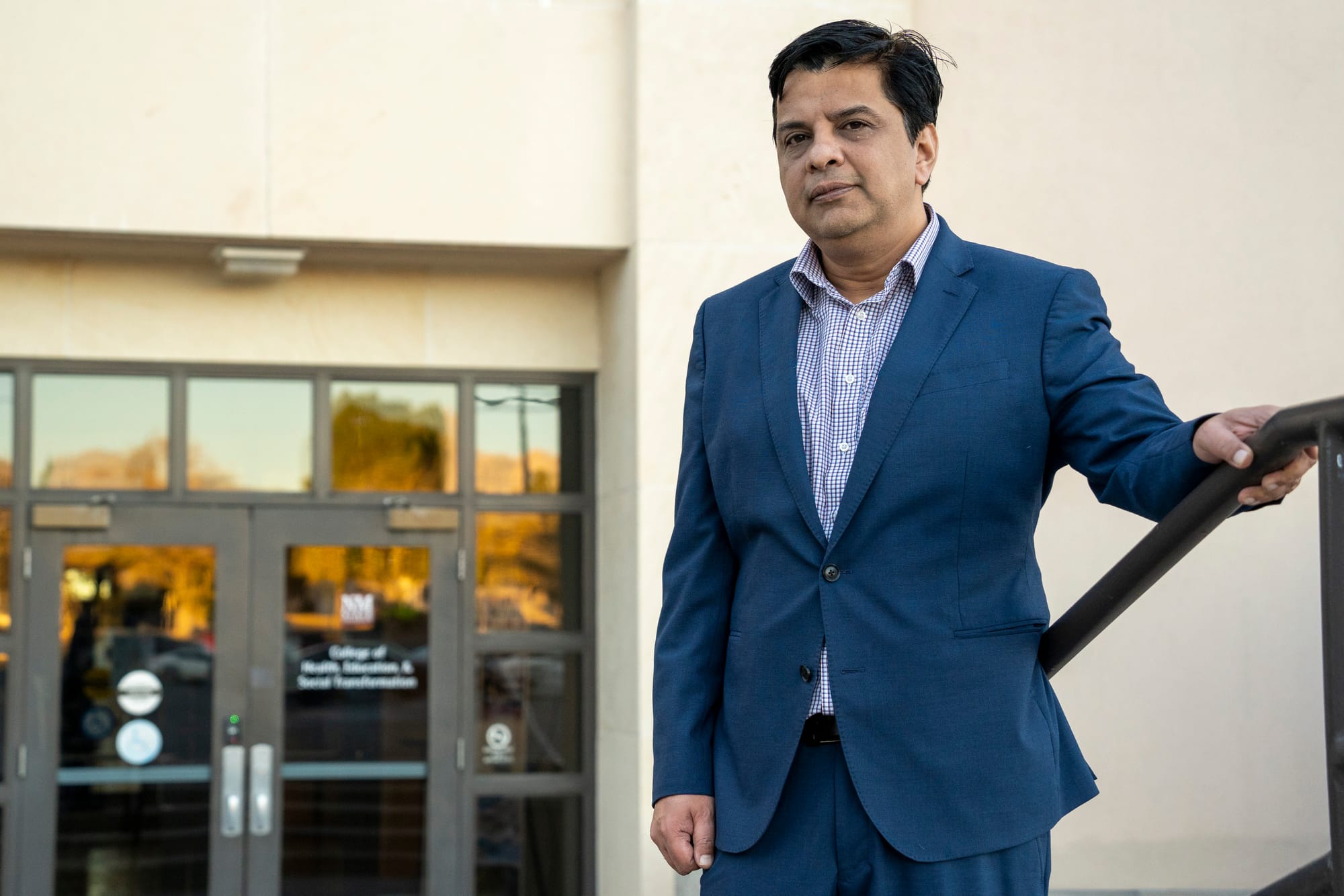
Dr. Jagdish Khubchandani, Professor of Public Health at New Mexico State University with expertise in epidemiology, explained that even though New Mexico generally has higher vaccination rates compared to surrounding states, there are still plenty of vulnerabilities that need to be addressed.
“We have rural populations with lower education and awareness. Unfortunately, we are surrounded by states where vaccination is a problem,” he said. “If you look at where we started in 2019, all the way up to 2025, there have been aggressive efforts to expand (the) public health workforce, to create awareness. So New Mexico has invested a lot in public health (in) the past five years. And that’s why the vaccination drives continue. The alerts continue. The state makes judicious decisions, but you know, despite all that, you have populations that are still vaccine hesitant, are not aware (of) getting vaccinated. And so we see dips in some counties.”
Measles is a highly contagious and consequential sickness. It lingers in rooms for up to two hours after an infected person leaves. Up to 90% of non-immune people exposed will contract it, with one in five infected individuals requiring hospitalization. But two doses of a safe vaccine known as measles-mumps-rubella, or MMR, can offer a person nearly 97% protection against the virus.
According to the NMDOH, out of the 100 affected individuals in New Mexico’s outbreak, 15 were vaccinated with at least one MMR dose, while 57 were unvaccinated, and 28 were unknown.
Vaccinations rise, but gaps remain
In New Mexico, parents or guardians may invoke only two types of exemptions, medical or religious, to bypass required childhood immunizations when enrolling their children in school. The medical exemption must come from a licensed physician, physician assistant, or certified nurse practitioner, while the religious exemption can come from either a recognized religious denomination’s official, or written by a parent or guardian affirming that their beliefs prohibit vaccination. The state does not allow exemptions based on personal objections, and unlike some other states, the immunization rules apply to home-schooled children as well.
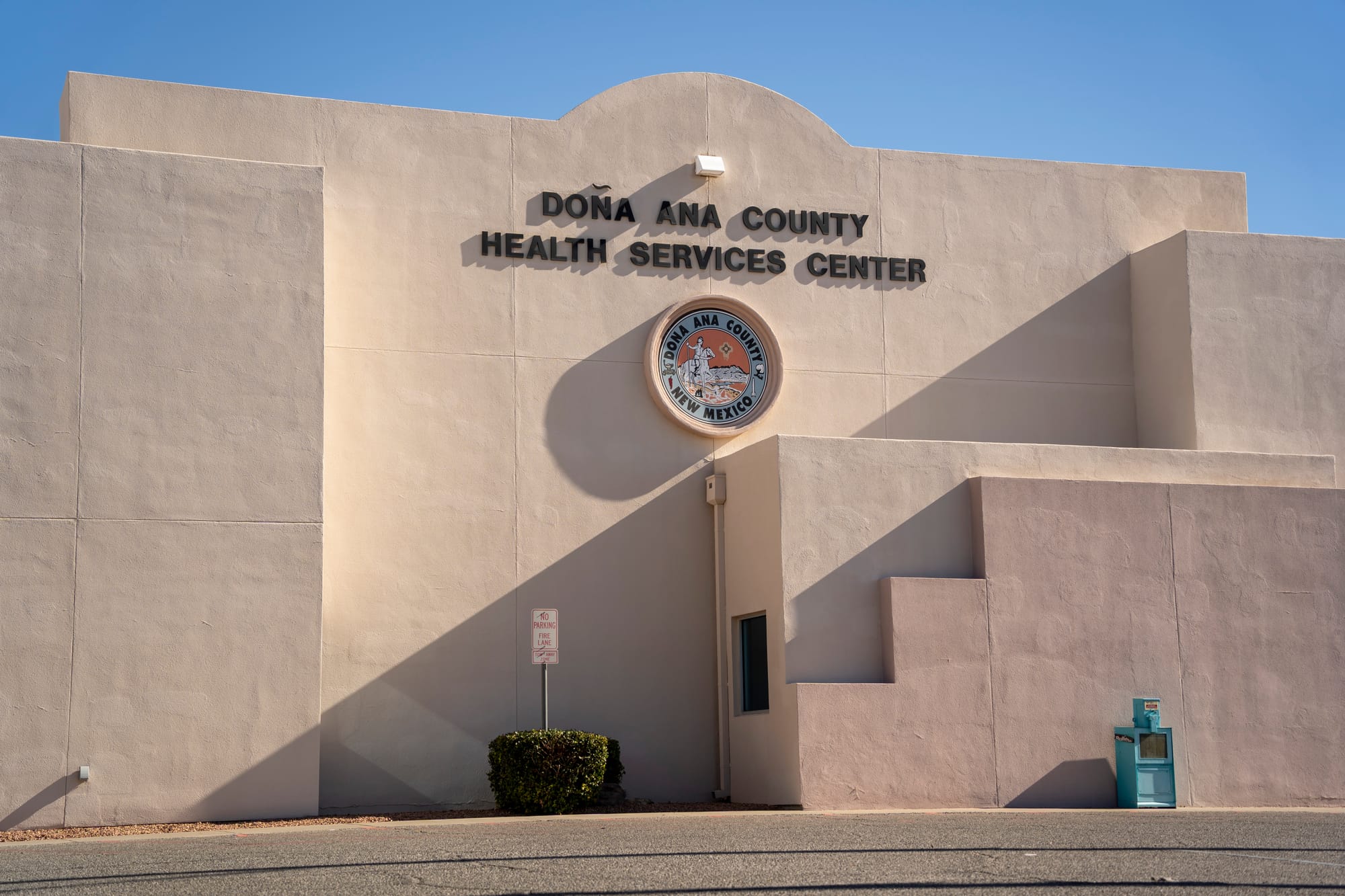
Since the measles outbreak earlier this year, NMDOH data shows a nearly 50% jump in the rate of administered MMR vaccines as compared to 2024. Despite that upswing, the latest data from the New Mexico Department of Health show that 21 of New Mexico’s counties still fall below the 95% vaccination rate for people aged 1-18, with both Doña Ana and Otero in the bottom five, with rates hovering around 88%.
And while there are a number of counties that don’t make it to the 95% threshold of herd-immunity, Andrea Romero, head of the New Mexico Department of Health’s immunization program, still feels that the state is in good standing.
“New Mexico is one of the few states in the country that are in the 90% area of vaccine coverage for children,” Romero said. “Looking at our kindergarten coverage rates for the ‘24 and ‘25 school year, we saw that there was good coverage at 95% for that age group itself. So we know that that age group has good protection; that’s what was really critical.”
Reach the New Mexico Department of Health Helpline at 1-833-796-8773 or text NMDOH (66364) to:
• Ask questions about measles, vaccines or other medical questions in English or Spanish.
• Get guidance on measles exposures.
• Access vaccination records.
• Report cases.
(Source: New Mexico Department of Health)
A look at Southern NM’s school children
The data for school-aged children backs up Romero’s statement. According to information obtained by the Southern New Mexico Journalism Collaborative from public records requests across Southern New Mexico districts vaccination rates are exceptionally high among students. For the 2025-26 school year, Las Cruces Public Schools saw an MMR compliance rate of 98.38%, Alamogordo Public Schools sat at 99.61%, Carlsbad Municipal Schools was at 99.67%, and Artesia Public Schools at 99.98%. New Mexico tends to have a lower rate of vaccine exemptions than the rest of the country.
But even strong numbers can hide pockets of vulnerability. When the outbreak emerged, districts across the south scrambled to identify at-risk students and staff. In Las Cruces, Director of Health Services for LCPS Shawna Bailey said her team immediately began combing through records.
“We know what their vaccine status was,” she said. “If we were to have a case at the school, we could run a report very quickly and find out who was not up to date. The problem came with staff members because they are not required to submit their vaccine records. A lot of them didn’t even know if they had the vaccine. If they did, they couldn’t find their shot records. So that was more of a challenge for us.”
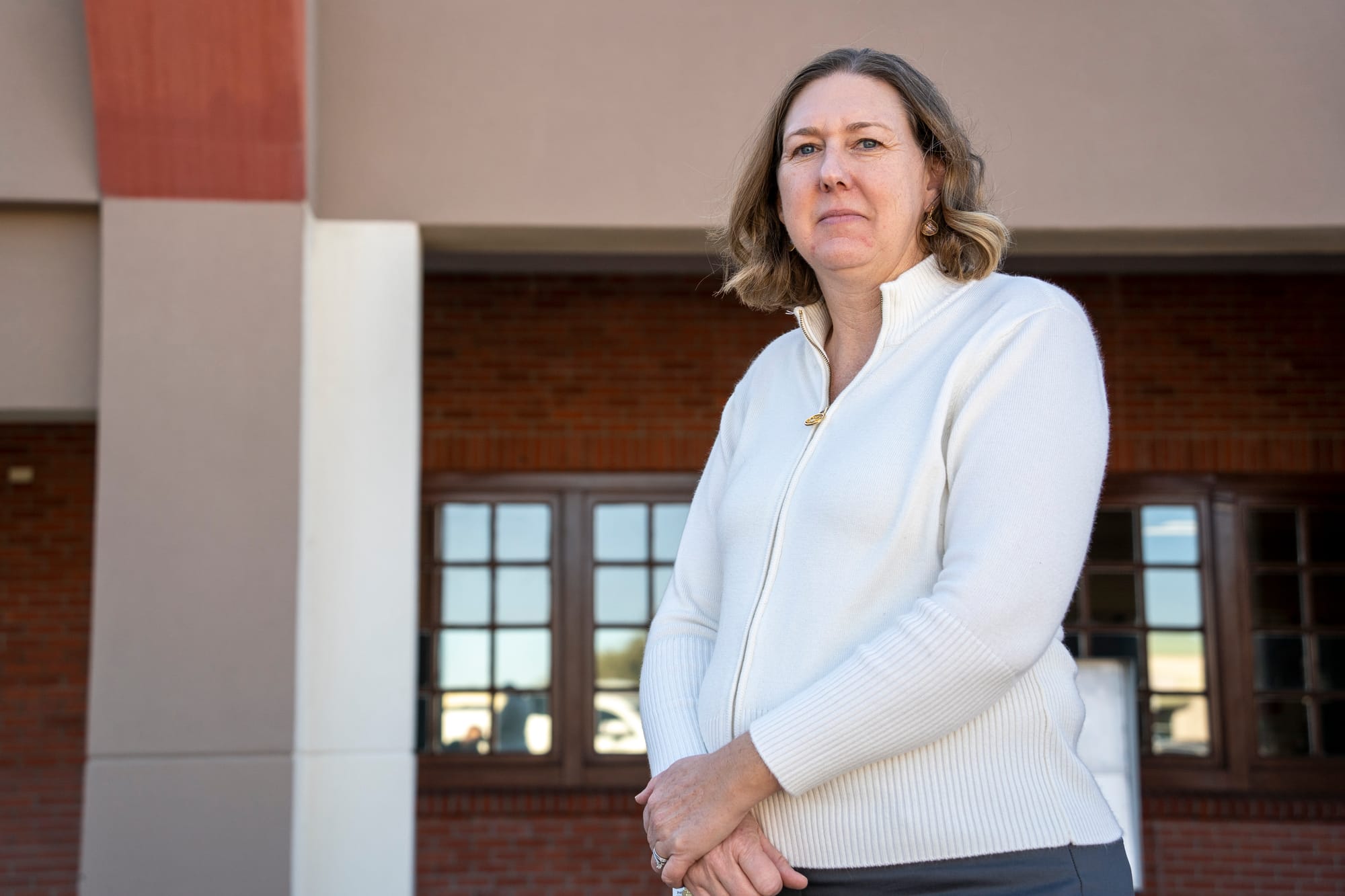
Schools rushed to set up vaccination clinics for both staff and students. Bailey said the district coordinated closely with local NMDOH staff every step of the way.
“We did not take any steps on our own,” she said. “Everything we did, we worked with them.”
But even in high-coverage states, a small cluster of unvaccinated individuals is enough to allow measles to spread quickly, as the disease is so contagious that it’s difficult to control.
“If parents are worried about their child being exposed, I would say your greater risk is when you’re out in the public, at Walmart, at the movies, wherever,” Bailey said. “At school they’re pretty safe because our vaccine percentages are really high.”
But Bailey said she’s concerned about declining vaccination rates among the youngest children, and said that some parents simply don’t fear measles because they’ve never seen it.
“Right now, if you look at our pre-K numbers, they’re at 89%,” she said. “[Some parents] think, ‘Oh, it’s just a little disease. They’ll get a rash and a fever and it’ll go away.’ But what they don’t realize is the long-term health problems that come with it.”
- Severe complications such as pneumonia (infection of the lungs) and encephalitis (swelling of the brain), which may require hospitalization and can be fatal.
- Hospitalization: About 1 in 5 unvaccinated people in the U.S. who get measles is hospitalized.
- Pneumonia: As many as 1 out of every 20 children with measles develops pneumonia, the most common cause of measles-related death in young children.
- Encephalitis: About 1 out of every 1,000 children who get measles develops encephalitis, which can lead to convulsions and leave a child deaf or with intellectual disability.
- Death: Nearly 1 to 3 out of every 1,000 children infected with measles die from respiratory and neurologic complications.
- Complications during pregnancy: Measles infection during pregnancy may result in premature birth or low birth weight.
- Subacute sclerosing panencephalitis (SSPE): A very rare but fatal disease of the central nervous system that develops 7 to 10 years after a measles infection.
Coverage gaps may exist among young children
Bailey’s concerns are well-founded. A recent article published in Nature Health, a new offshoot of the journal Nature, identified MMR vaccination gaps nationwide among children 5 and younger. Southern New Mexico and West Texas were among hot spot regions specifically mentioned in the report as having low vaccine uptake, boosting the risk for outbreaks. The researchers’ findings were based on surveys and modeling. This may indicate parents are delaying MMR vaccinations until their children reach kindergarten, when they’re forced to either get their kids vaccinated or seek an exemption.
Dr. Khubchandani said catching measles can have health consequences that many people are not aware of.
“Even if someone is fortunate to survive, there can be different types of sequences that can happen to the body,” he said. “People in Southeast Asia and Africa are desperate to get the MMR vaccine because they know what measles can do. And here, we are going into the Dark Ages again.”
Khubchandani said that with changes in federal health leadership, including the appointment of several vaccine-skeptics to key federal agencies, he’s worried about a change in public attitudes toward proven and safe vaccines, including MMR.
“The New Mexico Department of Health has a tough job ahead, and they’ll have to continue what they do good,” he said. “Officials here may want to, instead of waiting on the government agencies, do personal outreach, and make coalition teams, and join groups that have similar interests. We have the National Association of City and County Health Officials and National Association of Local Health Departments … So at the city level, county level, public health associations and officials could have their own small interest groups.”
In January, the Centers for Disease Control and Prevention in a controversial move scaled back its recommended vaccination schedule for children. MMR, however, remains on the list. Meanwhile, New Mexico maintains its own vaccination schedule that remains unchanged. Still, public health officials worry parents may see vaccinations of all kinds as less important amid the federal action.
Shawna Bailey echoed Dr. Khubchandani’s concerns and emphasized the importance of education and making data-based decisions when it comes to immunization policies.
“I’m very worried,” she said. “We are at a point where we don’t have these diseases because we’ve held that line and we’ve made sure everybody gets their vaccines like they should. And now with us rolling back on those, I’m scared we’re going to see these diseases that we haven’t seen before. It’s going to slowly come back in, and then we’re going to have to work really hard for a long time to get it back down again.”
Responses, outreach to continue
Andrea Romero, however, said New Mexico plans to continue what it’s doing, and to continue outreach and education efforts with the resources given to them.
“I can say just from the measles outbreak here, [that] we have a wonderful community,” she said. “They stepped up and they responded to protect themselves. So regardless of any changes that are happening, we continue to move forward on [educating] how vaccines protect us and keep moving forward on how those recommendations are important for all age groups.”
Despite the uncertainty, state officials and Dr. Khubchandani said the outbreak showed that New Mexico’s systems are strong.
“The ease and speed with which the state started wastewater assessments, started giving alerts to health care systems and citizens, and the vaccine drives soon after. That gives me a lot of confidence. Essentially, New Mexico has shown how to deal with a disease outbreak with the modern public health technology focused way. And this is the way to go forward.”
For Romero, the message of getting vaccinated is both scientific and personal.
“I have my memories from when my grandma and my mom took me to (get) vaccinated at school. When I think about those times, it was somebody that cared and loved me enough to protect me.”
Her job, she says, is to ensure that future generations have that same opportunity.
“Vaccines have shown to protect lives, and continue to do so.”
Jonny Coker is a freelance journalist working with the Southern New Mexico Journalism Collaborative, a partnership of newsrooms covering important topics. Reach us at SouthNMnews@gmail.com. Visit SouthNMnews.org or SurNMnoticias.org for more information.
Lawmakers approve literacy, math and special education reforms — Legislature advances statewide changes aimed at strengthening instruction and student support.
Grand jury indicts Sonia Jimenez in newborn death case — Charges move forward in a case that has drawn regional attention.
Wrongful death lawsuit filed against City of Las Cruces over Young Park mass shooting — Civil action alleges failures tied to the 2025 shooting.