
Two New World screwworm cases confirmed in Doña Ana County
Two New World screwworm cases have been confirmed in Doña Ana County. See affected-area maps, livestock precautions and how to report suspected infestations.
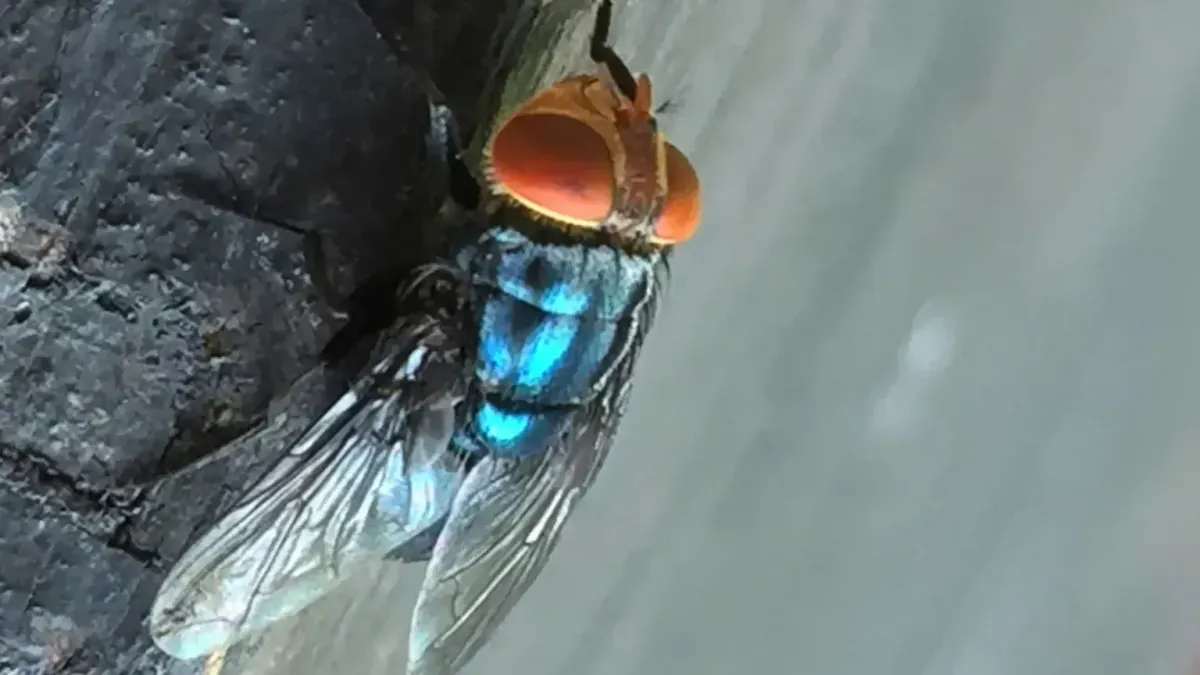
A ram and a bull are the latest animals infected as officials monitor the parasitic fly's spread across southern New Mexico.
Damien Willis, Organ Mountain News
LAS CRUCES - Two cases of New World screwworm have been confirmed in Doña Ana County, involving a ram and a bull, as animal health officials continue monitoring the spread of the destructive parasitic fly across southern New Mexico.
The cases were confirmed Oct. 25, according to the New World Screwworm Awareness for New Mexico website, a multiagency resource coordinated by the New Mexico Department of Agriculture. The U.S. Department of Agriculture also tracks confirmed animal infestations through its national surveillance system.
The detections bring New Mexico's reported total to eight confirmed animal cases, including three in Grant County and one each in Hidalgo, Lea and Otero counties.
New World screwworm larvae feed on the living tissue of warm-blooded animals, causing serious wounds that can lead to severe infection and death if left untreated. The parasite can infest livestock, wildlife, pets and humans.
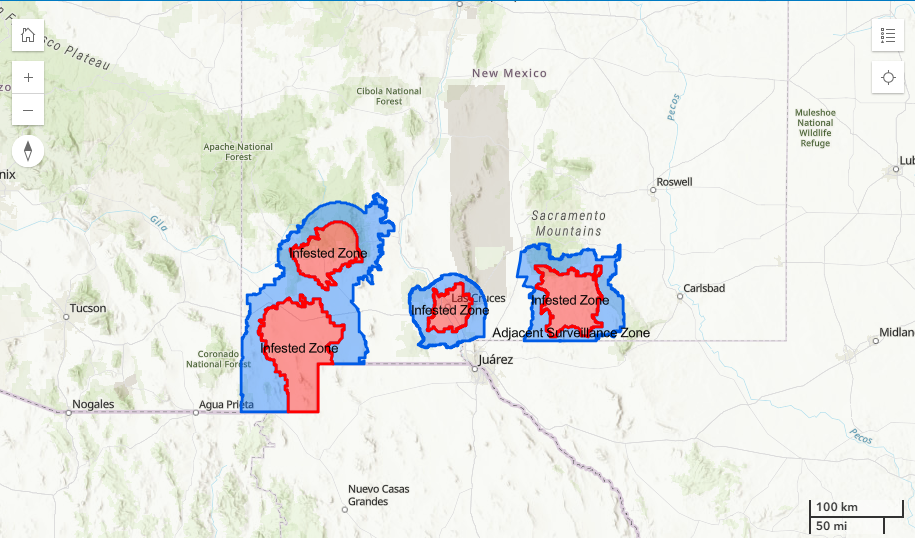
Infested zone includes Las Cruces area
An interactive map of New Mexico's affected areas shows an established infested zone encompassing part of the Las Cruces area, surrounded by a broader adjacent surveillance zone.
The map also identifies infested and surveillance zones in southwestern New Mexico and the Otero County region.
Infested zones are established around confirmed detections to help contain the parasite and prevent additional spread. Under the state's New World screwworm response protocols, animals within infested zones must be inspected and, when necessary, treated before being moved within or out of the affected area.
Adjacent surveillance zones allow state and federal officials to increase animal health monitoring and fly trapping to identify additional infestations.
In previous announcements, state officials said infested zones generally extend at least 12.4 miles from the location of a confirmed case, with broader surveillance areas established around them.
The precise locations where the two Doña Ana County animals were found have not been publicly identified in the information released so far.
What animal owners should watch for
The New Mexico Department of Agriculture and New Mexico Livestock Board urge animal owners to inspect livestock and pets regularly, particularly when animals have open wounds.
Warning signs include wounds that worsen or fail to heal, visible maggots, swelling, foul-smelling discharge and unusual behavior such as persistent licking, biting or irritation around a wound.
Animals with injuries from branding, castration, dehorning or surgery may be especially vulnerable. Newborn animals with exposed navels and animals with untreated cuts or bites also face increased risks.
Unlike most fly larvae that feed on dead or decaying material, New World screwworm larvae feed on living flesh. Untreated infestations can become life-threatening within days.
Animal owners who suspect an infestation should contact a veterinarian and report the case immediately rather than moving the affected animal.

Cases emerge amid broader regional response
The Doña Ana County detections follow additional confirmed cases elsewhere in southern New Mexico, including an Oct. 23 announcement involving a calf in Hidalgo County and an Oct. 21 announcement involving a beef cow in Otero County.
State and federal agencies have expanded surveillance and fly-trapping operations in affected areas to determine whether the parasite has spread beyond animals already identified.
The outbreak also comes as USDA gradually restores cross-border livestock trade following restrictions intended to reduce the risk of New World screwworm spreading from Mexico.
Cattle imports resumed at the Santa Teresa port of entry Sept. 24, while the Columbus port reopened Oct. 26. USDA says the phased reopening is subject to animal health safeguards and ongoing risk assessments.
How to report a suspected infestation
Suspected cases involving livestock, pets or wildlife should be reported to the New Mexico Livestock Board at 505-841-6161. After hours, animal owners can contact the AgroGuard hotline at 800-525-2782.
Reports can also be submitted through the New Mexico Department of Agriculture's online reporting form, available through ScrewwormNM.org.
Suspected human infestations should be reported to the New Mexico Department of Health at 833-796-8773.
Officials emphasize that early detection, prompt treatment and reporting are essential to preventing additional infestations.
Damien Willis is founder and editor of Organ Mountain News. If you have a personal story to share or a lead we should follow up on, reach out at OrganMountainNews@gmail.com or connect with him on X at @damienwillis.


