Opinion: The office you never think about handles your money every day
State treasurer candidate James Ellison argues for greater transparency in New Mexico's public investments, legislative reports and unclaimed property program.

Republican state treasurer candidate James Ellison argues for more transparent investment reporting, timely legislative oversight and changes to how New Mexico handles unclaimed property.
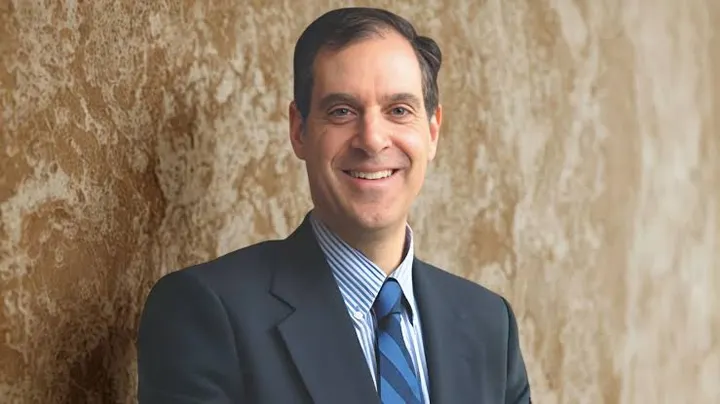
James Ellison, candidate for New Mexico State Treasurer
Opinion
Editor’s note: The opinions and assertions expressed in this commentary are those of the author and do not necessarily reflect the views of Organ Mountain News.
Most New Mexicans will never deal with the State Treasurer’s Office, and that is exactly why it is worth a few minutes of your attention.
When a teacher in Las Cruces is paid, when a contractor is paid for work on a state road in Otero County, when a county receives its share of a state distribution, the money clears through accounts the state treasurer manages. The office is the state’s bank. It holds roughly $20 billion in operating cash, invests it under limits set in state law and pays the state’s bills. Last fiscal year that investing earned $722 million. That’s money that went straight to paying for public services and wasn’t raised through taxes.
It matters to everyday New Mexicans more than it sounds. New Mexico fronts the cost of federal programs and is reimbursed later. When federal payments were paused in early 2025, tens of millions of dollars in reimbursements owed to the agency that runs Medicaid didn’t arrive for days — yet the state kept paying providers because it had cash on hand to cover the gap. That cash sits in the treasury. Managing it so it is both earning a return and available when the state needs it is the treasurer’s job.
Where does the money come from in the first place? Oil and gas production in Lea and Eddy counties, and the economic activity around White Sands Missile Range and Holloman Air Force Base, generate a disproportionate share of the revenue the entire state spends: severance taxes and royalties directly, and gross receipts and income taxes from the businesses and paychecks that follow. How carefully that money is handled while the state holds it, and whether anyone outside the office can see how well it’s managed, is a direct interest here, not just in Santa Fe.
But there are problems. Under the current state treasurer, the report that state law requires the treasurer to give the Legislature at the start of each session has arrived after the session adjourned, three years in a row. The point of the deadline is that the Legislature oversees the State Treasurer’s Office — if lawmakers see something amiss, they are still in session and can act on it. The fiscal year 2023, 2024 and 2025 reports were delivered on April 15, 2024, April 14, 2025, and June 12, 2026, respectively. These reports reached a Legislature that had gone home. Former state Treasurer Tim Eichenberg put it plainly: “That report is required for a reason. When I held the office, the Legislature had it while they were in session, every year.”
Another problem is that the reports do not let you judge how the money performed. Each one states that investments outperformed their benchmarks, but no benchmark is named, no benchmark return is shown and no margin is given. That is an assertion, not a report.
If elected, I will deliver the required report before each session begins, with benchmarks that let lawmakers and the public judge the results. I will publish a separate performance report for the public, in plain English, within four months of the fiscal year’s close, though no law requires it. And I will work to move the unclaimed property program from the Taxation and Revenue Department to the State Treasurer’s Office, where most states keep it. The state is holding about $390 million in unclaimed property and returned less than 5% of it last year. Some of that money belongs to people reading this.
I hold the Chartered Financial Analyst designation, the investment profession’s premier credential, and I served as a commissioner on the Public Regulation Commission, deciding cases that turned on complex financial questions.
I am the Republican nominee, and I know that gives some readers pause. So consider what this office does. It does not set taxes or decide spending. It manages the state’s cash and tells the public the truth about it. There is no Republican or Democratic way to construct a bond portfolio or write an honest report. This is one race where it is safe — and sensible — to vote on qualifications and plans rather than party.
James Ellison is a former commissioner with the New Mexico Public Regulation Commission and the Republican nominee for New Mexico state treasurer.
Community Voices
Want to share your perspective? Organ Mountain News welcomes community voices on the issues that matter in Las Cruces and Doña Ana County. Send commentary submissions to OrganMountainNews@gmail.com.