
Project Jupiter critics call foul over hearing officer’s discovery denial
Project Jupiter opponents say a hearing officer’s decision to deny discovery puts them at a disadvantage ahead of a Sept. 14 air-quality permit hearing.
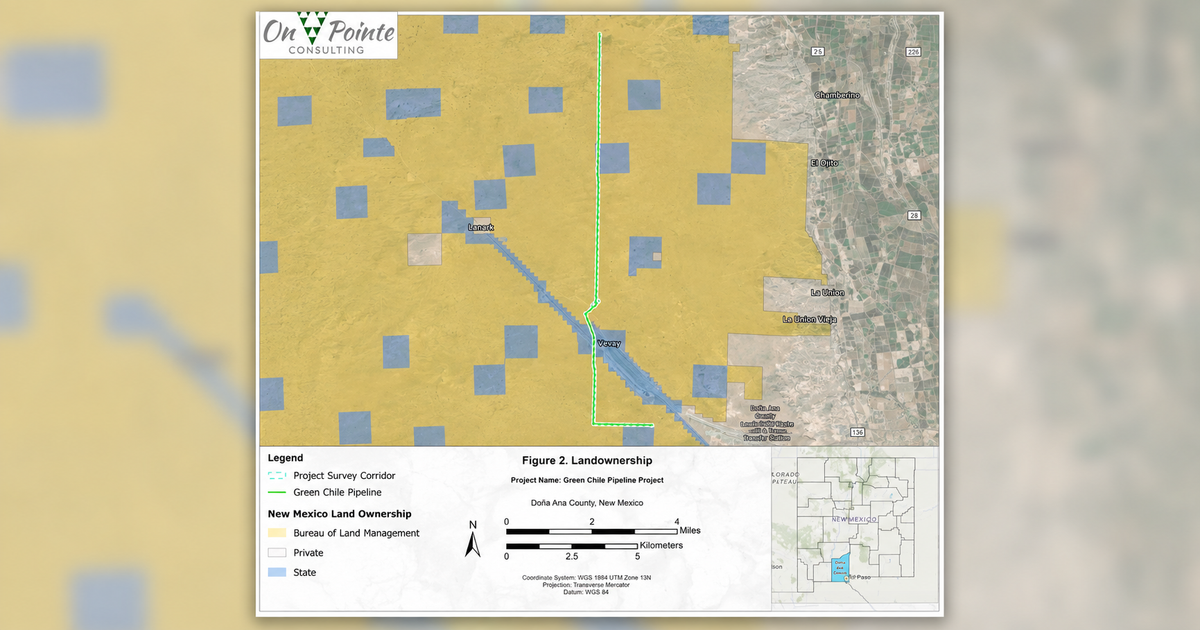
Opponents say the reversal leaves them without access to technical evidence as testimony comes due Aug. 24 and the air-quality permit hearing moves up to Sept. 14
Julia Gentin, Searchlight New Mexico
This article was originally published by Searchlight New Mexico.
In the latest reversal for the data center’s critics, a hearing officer for Project Jupiter’s application for an air quality permit denied discovery Wednesday, Aug. 12 — the process whereby opposing parties exchange evidence relevant to a case — after previously saying it would be allowed.
Max Shepherd, the New Mexico Environment Department air quality permit hearing officer overseeing the case, adopted language from the applicants — Yucca Growth Infrastructure, the developers behind the massive data center proposed in Santa Teresa — to renege on his “initial interpretation of discovery,” which “was incorrect,” his Wednesday order reads.
Shepherd wrote in an email his seemingly sudden reversal was due to “more research into the rules governing procedures in an air quality permit proceeding, which are different from the rules applicable in other administrative proceedings that I have [presided] over.”
Technical testimony — the written, direct record of the case’s witnesses — is due on Aug. 24, and the hearing, originally scheduled for October, now starts Sept. 14.
 Joshua Bowling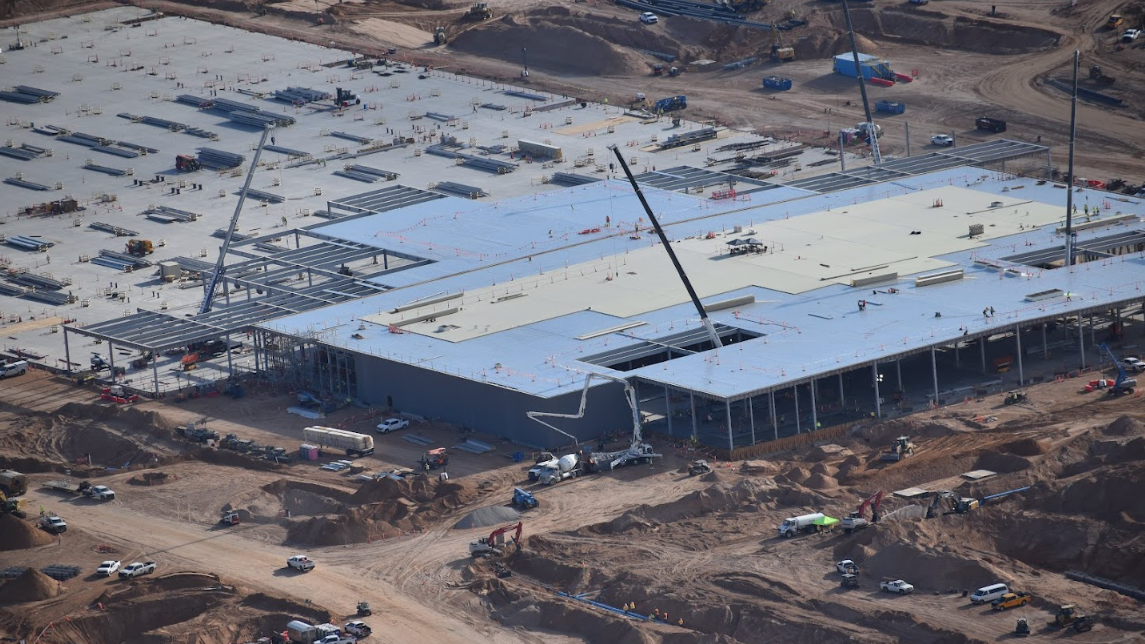
Between the hearing date being changed at the developers’ behest, the rejection of an attempt to get the application for a pipeline tossed and the latest decision not to allow discovery, conservation groups that oppose the data center are not happy.
“One of the huge problems with this whole sham hearing is the lack of transparency and the lack of information,” Colin Cox, senior attorney at the Center for Biological Diversity’s Climate Law Institute, said in an interview Thursday, Aug. 13. “This is the third time he’s reversed himself, and every time it’s in favor of the applicant. What’s happening here? Who’s he talking to outside of the hearing?”
Jennifer Bradfute, counsel for Yucca, wrote in an email the revised order “rests on the statutes and procedural rules that govern air quality permit proceedings in New Mexico.”
”[Direct] testimony will be publicly available,” she wrote. “Its witnesses will then answer questions relevant to this air permit application in the forum built for that purpose — at the September 14 hearing in Sunland Park, in public, under oath, and subject to cross-examination.”
Attorneys for the developers successfully pushed the Environment Department a couple weeks ago to move the hearing on the air quality permit up to Sept. 14, citing too little time between the scheduled hearing and the Environment Department’s Nov. 23 deadline to issue the permit.
New Energy Economy also filed a motion — that Shepherd initially supported, then on Sunday, Aug. 9, changed course on — to toss Project Jupiter’s application because the natural gas pipeline that would fuel the data center has yet to be legally authorized. New Energy Economy then filed a motion for reconsideration, which Shepherd similarly denied Wednesday.
“It is the latest effort at denying us due process. You can’t have a technical hearing while denying access to the technical facts,” Mariel Nanasi, executive director and president of New Energy Economy, said in an interview.
The organization’s earlier discoveries probed Project Jupiter developers on whether Bloom Energy, the company set to produce fuel cells for the data center, has the ability to manufacture their technology “at this unprecedented scale.”
 Joshua Bowling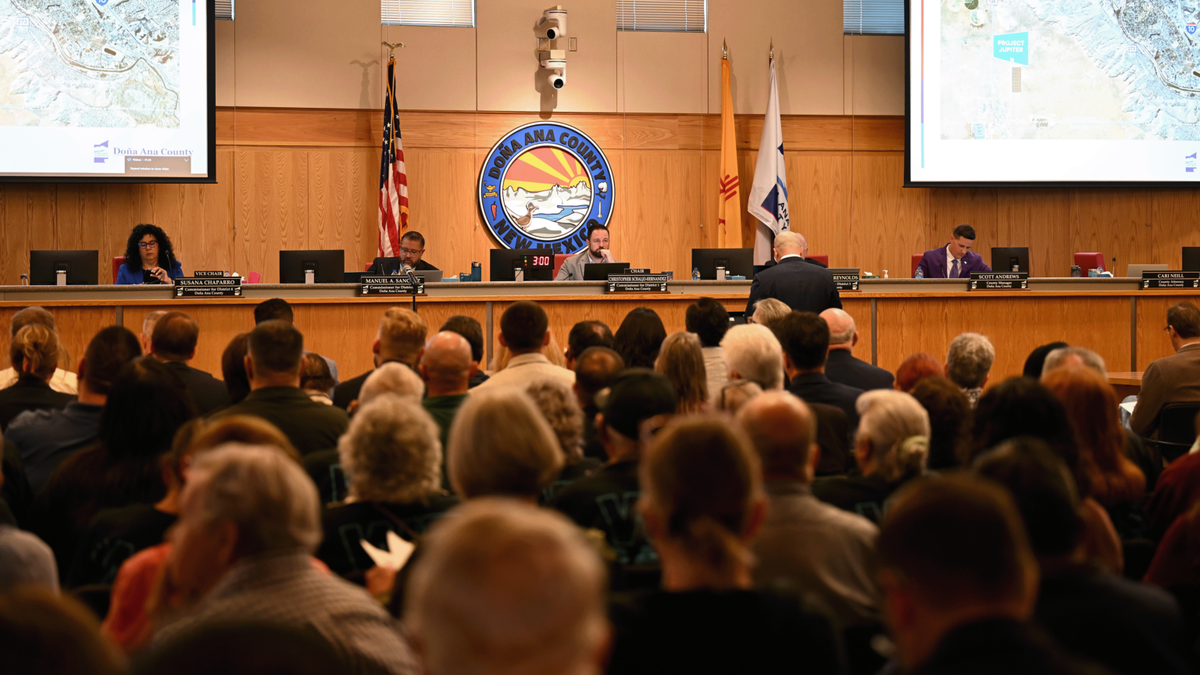
“When you strike discovery and you don’t let experts have access to that information, there cannot be meaningful cross-examination,” Nanasi said. “This is more of a trial by ambush than a process that allows for opponents to meaningfully develop their claims and defenses to the applicant’s proposition.”
Cox added that in proceedings like these, parties who file an entry of appearance are provided the administrative record, which — according to the environment department attorney, Cox said — is thousands of pages.
“We’re not even going to get that until the same day all our direct testimony is due,” Cox said. “It’s just really unfair. We’re at an enormous disadvantage because we’re supposed to create testimony and all we have is the application and a brief and anemic statement of basis from the department.”
An Environment Department spokesperson declined to comment.
“The New Mexico Environment Department cannot speak to the decision to deny discovery made by the independent hearing officer in this case,” Drew Goretzka wrote in an email.
Julia Gentin is an enterprise reporter for The Santa Fe New Mexican and Searchlight New Mexico through a partnership with Report for America, a national service program that places journalists into local newsrooms. She covers the Southern New Mexico region.
Keep Reading
LCPS says state estimate leaves Conlee school project $2.6M short — LCPS is set to vote Tuesday on a state design award for Conlee Elementary while saying the state’s project estimate falls about $2.6 million short.Opinion: Doña Ana needs a public benefit ledger for Project Jupiter — Gleb Tsipursky argues that jobs, local spending, training and environmental commitments should be tracked against what Project Jupiter actually delivers.
LCPS disables retention of student voice recordings after parent data concerns — The district says it has disabled retention of Amira reading-assessment recordings and will offer a paper option to parents who request one.


