Facing drought and low snowpack, Rio Grande states expect a ‘challenging’ year
Officials warned Rio Grande flows could rank among the lowest on record this year as drought, low snowpack and weak runoff strain water supplies across Colorado, New Mexico and Texas.
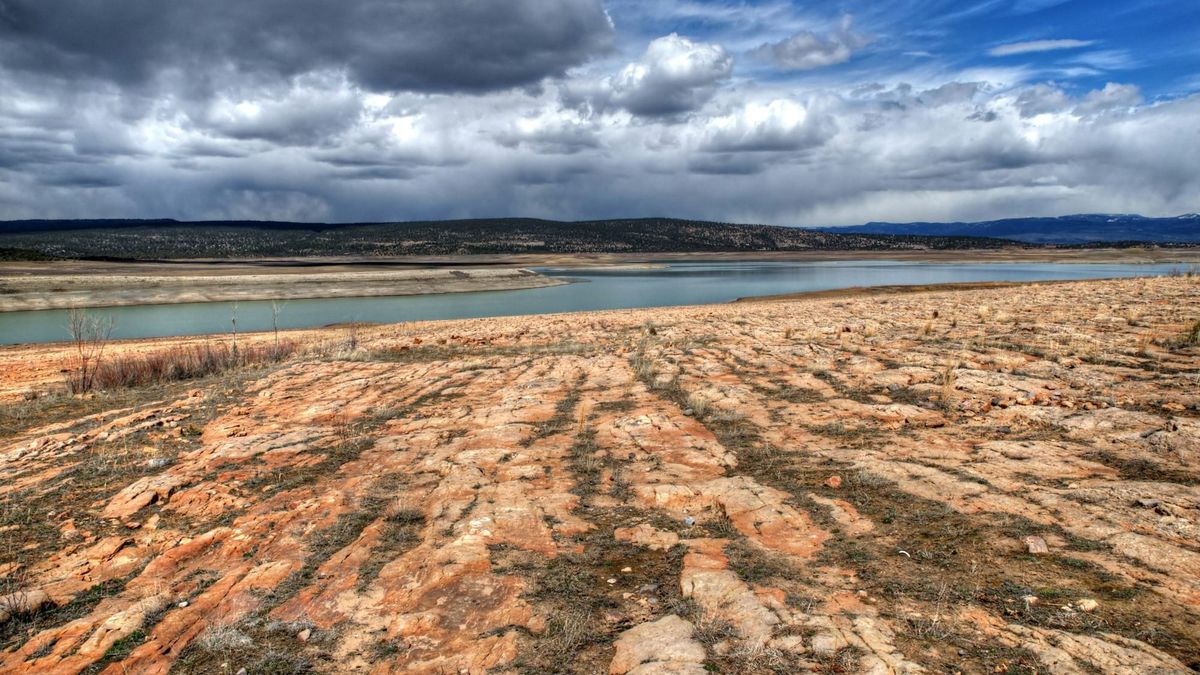
Officials at the annual Rio Grande Compact Commission meeting said that they expect river flows this year to be among the lowest in history
Martha Pskowski, Inside Climate News
This article was originally published by Inside Climate News. Reporting supported by the Water Desk at the University of Colorado Boulder.
SANTA FE - “Severe.” “Critical.” “Dire.” “Challenging.” “Record-low.”
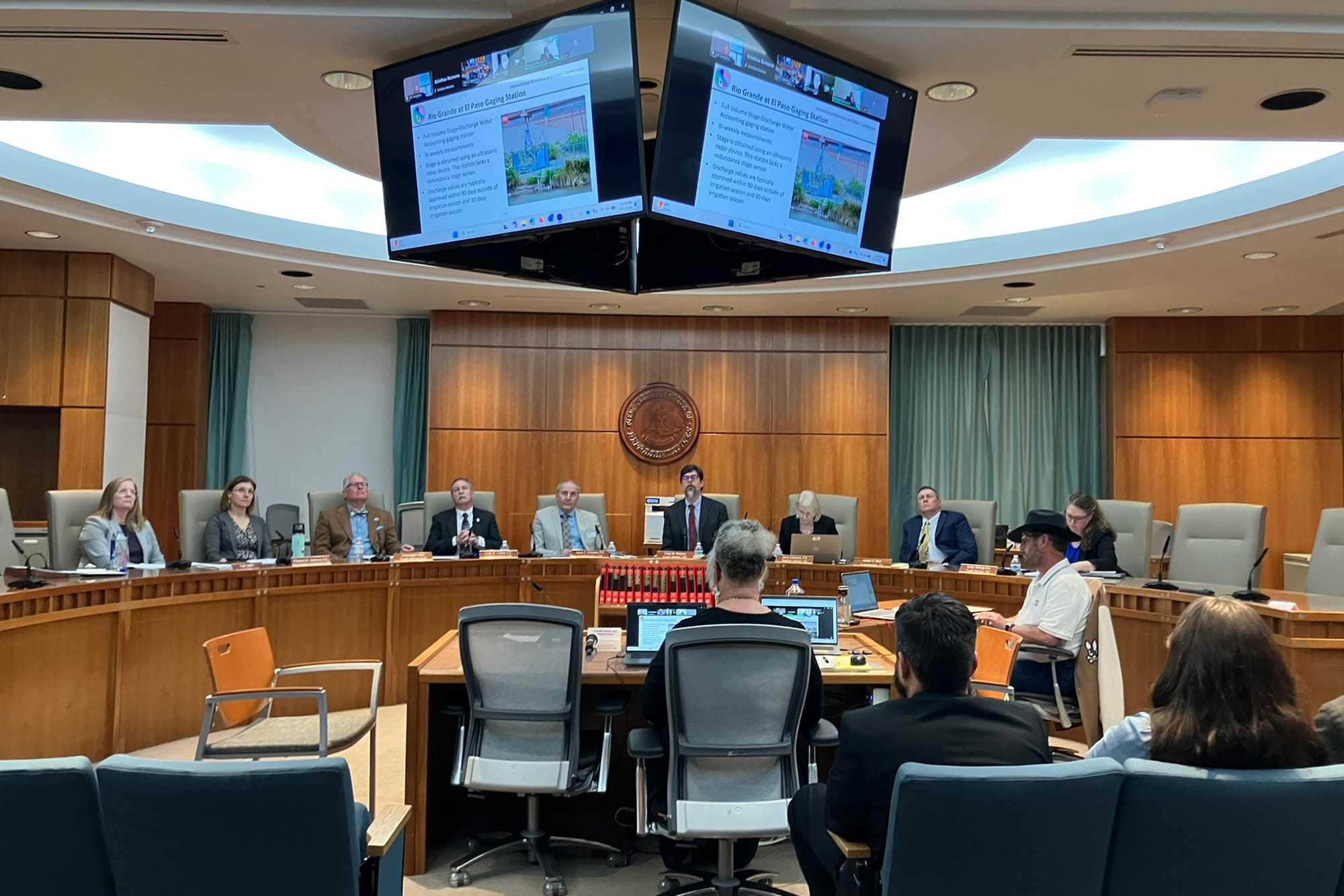
Officials at the Rio Grande Compact Commission annual meeting on April 17 worked through the thesaurus to describe the conditions on the river that flows out of southwestern Colorado.
Compact signatory states — Colorado, New Mexico and Texas — along with federal agencies that operate along the river presented their 2026 outlooks at the New Mexico Capitol in Santa Fe.
The three states signed the Rio Grande Compact in 1938 to resolve disputes over water rights along the Rio Grande from its headwaters in Colorado to far West Texas. Farther downstream in Texas, from Presidio to the Gulf of Mexico, Rio Grande water is managed under separate frameworks.
The compact lays out how much water Colorado must ensure reaches New Mexico, which in turn has to send another allotment to Texas. Climate change, the prolonged megadrought in the Southwest and water demands have made this task more difficult in recent years.
Snowpack in Colorado was well below average this winter and a warm snap in March sped up snowmelt. As of mid-April, snow water equivalent was at 13 percent of median for the Rio Grande headwaters. Elephant Butte Reservoir in Southern New Mexico is currently at less than 13 percent capacity, leaving communities and farmers downstream expecting to receive river water for only a short period of time this year.
The compact representatives laid out how these compounding factors drying the Rio Grande will impact water users and wildlife across the basin.
According to the U.S. Bureau of Reclamation, which manages reservoirs along the Rio Grande, most of the reservoirs are at less than 15 percent capacity. Summer monsoon rains have become less reliable in New Mexico. If the monsoon disappoints this summer, Elephant Butte could fall to 2 percent of its capacity by late August. Last year the reservoir fell to 3.8 percent capacity in August.
“We have had many years to prepare during this third decade of extended drought,” John Irizarry, the acting area manager of Reclamation’s Albuquerque office, said in a statement. “I am confident our team will work closely with all stakeholders to make the available water supply stretch as far as possible.”
Low water levels on the Rio Grande impact wildlife that relies on the river. Vance Wolf of the U.S. Fish and Wildlife Services Albuquerque office reported on the status of the Rio Grande silvery minnow at Friday’s meeting.
The endangered fish now only survives in a stretch of the Rio Grande in Central New Mexico. When low flows cause the Rio Grande to dry out in this area, biologists rescue fish from the riverbed to ensure the population survives. Wolf said that the agency observed a silvery minnow “population crash” in 2025.
“River drying may be some of the most extensive we’ve ever seen,” Wolf said, looking ahead to this summer.
Drying began in the San Acacia reach on March 27, the earliest recorded date it has dried in the past 30 years, according to the Bureau of Reclamation.
New Mexico State Engineer Elizabeth Anderson said that the “dire forecasts” will make for a “challenging year.”
“We will all need to work together to manage water supply for water users in the Rio Grande basin and meet our compact obligations,” she said during her presentation.
Anderson explained her office’s work to comply with the settlement agreement in the Texas v. New Mexico Supreme Court case. Texas sued New Mexico in 2013 over its water rights on the Rio Grande, arguing that groundwater pumping in Southern New Mexico was preventing aquifers from replenishing the river and depriving Texas of water it was owed under the compact.
The states reached a settlement last fall that Anderson said the Supreme Court is likely to approve this summer. Under the settlement, New Mexico will have to reduce groundwater pumping in the Las Cruces area to ensure enough water reaches Texas. Anderson said her office is developing a water rights acquisition program and is studying options for managed aquifer recharge and brackish groundwater desalination.
The Rio Grande Compact lays out a complex formula to determine how much water each state receives. The U.S. government also recognizes the “prior and paramount” water rights of the Pueblos along the Rio Grande. But while the Pueblos hold water rights, they do not have formal representation on the Compact Commission.
The U.S. Bureau of Indian Affairs (BIA) typically cedes some of its agenda time at the annual meeting to the Middle Rio Grande Pueblos. Since 2022, the coalition of six Pueblos—Cochiti, Santo Domingo, San Felipe, Santa Ana, Sandia and Isleta—have requested formal inclusion in the Compact meetings and a “seat at the table.”
Joseph Lucero, Pueblo of Isleta’s Tribal Council president and chairman of the coalition, repeated the call this year.
“Our message remains the same,” Lucero said. “We seek to build a collaborative relationship with the commission, so that we can address issues of mutual concern.”
He said that in 2023 the commission directed its advisors to develop a draft protocol for “government to government” engagement with the Pueblos but that no draft has been circulated.
Lucero said that restricting the Pueblos’ comments to the BIA section of the agenda does not honor their sovereignty. He reminded the commission that the Pueblos’ water rights “predate European invasion of our continent by thousands of years.”
“We understand that in difficult times, we must work together,” he said. “We must make good decisions together, to make the best use of a limited water supply.”
Martha Pskowski covers climate change and the environment in Texas from her base in El Paso. She was previously an environmental reporter at the El Paso Times. She is a former Fulbright research fellow in Mexico. Martha can be reached on Signal at psskow.33, or by email at martha.pskowski@insideclimatenews.org.
Keep Reading
DOJ sues New Mexico over immigrant detention law — The federal lawsuit specifically references the Otero County Processing Center, which ICE describes in court filings as “mission critical.”
Las Cruces approves land transfers for affordable housing projects — City-owned properties on Fifth Street, Tornillo Street and Campo Street will be used for affordable housing development.
Early voting opens strong in Doña Ana County as New Mexico primary season begins — More than 2,400 voters cast ballots statewide on the first day of early voting, with Doña Ana County posting one of New Mexico’s highest turnout totals.